Sunday retrospective

time-machineToday’s Sunday retrospective reaches back to the second half of October 2014, when I was writing the last third of Farewell to Kindness. I was reporting progress—and hiccups—as I went. I finished the month with a photo of the printed first draft of Farewell to Kindness and the heading #amediting. A couple of days before that, I posted a list called ‘Editing the book’ — everything I needed to do between finishing the first draft and sending the book for beta reading.

Criminal injustice was the post I wrote when I found out about the sea change in the British criminal justice system, and how this affected my plot. In 1807,  the old system was no longer working and the new system had not been invented.

Our modern view is that one law should apply to all. It doesn’t always work. Money buys better lawyers, for a start. But the basic principle is that we have laws that lay down the crime and the range of punishments, and judges who look at the circumstances and apply penalties without fear or favour.

The pre-19th century situation in England was far, far different.

I also posted on why I changed the name of my heroine in Farewell to Kindness in a blog post with the longest titleI have ever written: Ewww, just ewww: or the cautionary tale of the perils of naming characters in a whole lot of books at once and then starting one without reference to the real world.

I waxed philosophical about romance writing as a genre in a couple of posts that largely picked up what other people were saying:

  • Fear of vulnerability reports on research that suggests fear of vulnerability underpins the common dismissal of the romance genre by readers of other types of fiction
  • Romance novels are feminist novels has excerpts from a much longer article that directly confronts the view that all romance novels are trivial, and turns it on its head.

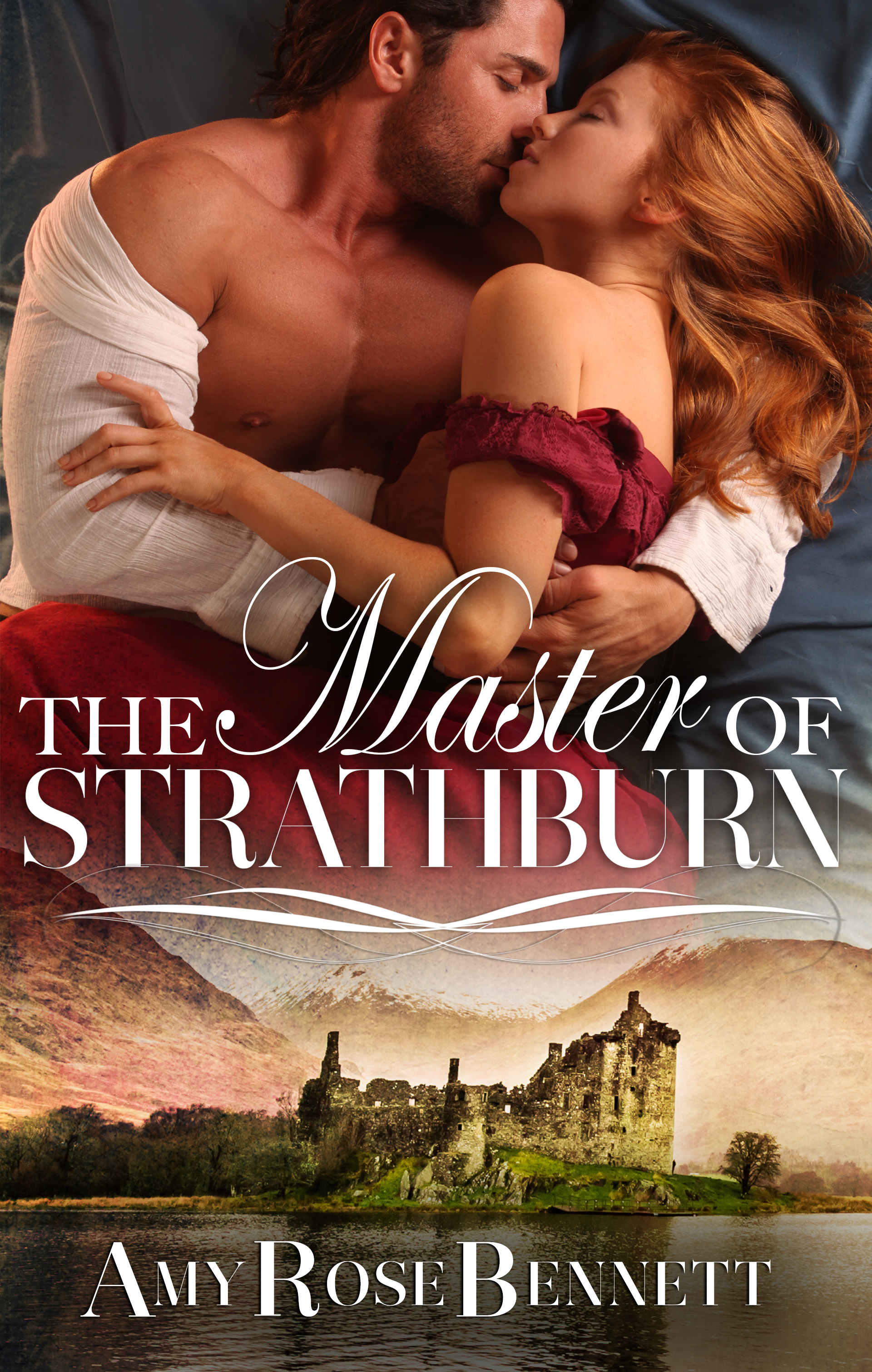
The first review I published on my website was for the wonderful Lady Beauchamp’s Proposal. Four months later, I was thrilled to find author Amy Rose Bennett as another potential Bluestocking Belle, and we’ve been colleagues and allies ever since.

And I also published a review of Darling Beast by Elizabeth Hoyt. In less than a fortnight, I’m hosting a Belles’ Book Club discussing another of the Maiden Lane series, Scandalous Desires. Elizabeth has agreed to pop in for an hour, so don’t miss it. You can join the event here: https://www.facebook.com/events/929180810491602/

Fights in WIP Wednesday

In the summer of 1892, Princess Pauline was the Honorary President of the Vienna Musical and Theatrical Exhibition and Countess Kielmannsegg was the President of the Ladies’ Committe of the Exhibition, and the two clashed over some of the arrangements for the Exhibition. (Several sources claim it had something to do with the floral arrangements.) Heated words were exchanged, and the two women agreed to settle their differences with a duel.

In the summer of 1892, Princess Pauline von Metternich was the Honorary President of the Vienna Musical and Theatrical Exhibition and Countess Anastasia Kielmannsegg was the President of the Ladies’ Committe of the Exhibition, and the two clashed over some of the arrangements for the Exhibition. (Several sources claim it had something to do with the floral arrangements.) Heated words were exchanged, and the two women agreed to settle their differences with a duel.

Today on work-in-progress Wednesday, I’m looking for fights. Physical or verbal. Arguments, fisticuffs or sword fights. Between any of your characters. Your choice.

Fights punctuate the action and ratchet up the tension. And talkative fighters let things slip in their anger, which can be very handy for driving the plot.

My piece is from Embracing Prudence: a confrontation between my hero David and his half-brother the Marquis of Aldridge.

“I won’t let you hurt her again, Aldridge.”

“Your turn, is it?” Aldridge mocked. “Who are you to judge me?  You’re swiving her, too.”

“She was an innocent when she met you, Aldridge.”

“She would not have stayed one, Wakefield. She was ripe to fall. If it had not been me it would have been one of the others, and they would not have waited to make sure she enjoyed it.”

David’s punch caught him by surprise.

“She did not enjoy being abandoned in a prison for a week, you self-centred, spoilt, idiot.”

Aldridge shook his head to clear it. “I will concede that was not one of my finest moments. I told them to treat her with every consideration. I found out later that the King’s man thought me a fool in the toils of a scheming woman, and countermanded my orders. By then she was gone, though.” He frowned. “I’ll never understand why. I would have given her anything she wanted, showered her with presents, set her up in style…”

“Anything except your name.”

Aldridge’s eyes widened at David’s comment. “She did not honestly think I meant marriage, did she? I could not marry a nobody, and one who wasn’t even pure.”

David punched him again

Sunday retrospective

Backwards Clock

Backwards Clock

I was a busy blogger in October 2014, and some of what I wrote about might be worth a second look.

I reported on research:

I also wrote about

And that just brought us to the middle of the month.

There were a few process and excerpt posts in there, too. Take a look around. Enjoy.

I’ll leave you with the contents of my post on having a jackdaw mind.

Elizabeth Boyle writes on synchronicity in the writing process; something I’m experiencing every day as I write Farewell to Kindness, and pieces go ‘click’.

…in writing, it is often a sort of synchronicity of pieces: a treasure exhibit, a line from a biography, and a literature degree that left me with a profound love of myths. None of them are truly connected, but they all came together for this story. I have come to believe that nothing in life is inconsequential. It all has value eventually. Just keep your eyes and imagination open.

At last, my jackdaw mind is finding a use for all those shiny facts and snippets.

First kisses on WIP Wednesday

Today, I’m featuring first kisses. With four works-in-progress underway at the same time, I have a few to choose from. Two of them are not at all far along, but I was in a party on Facebook where kisses were the theme of the day, so I wrote a kiss scene for each.

Below is the first kiss between Alex Redepenning and Ella Melville, hero and heroine of A Raging Madness, the second Golden Redepenning book. How about showing me yours?

In A Raging Madness, Alex Redepenning is rescuing the widow Eleanor Melville from her scheming relatives. Alex and Ella are fighting the attraction between them. I haven’t yet written as far as their first kiss, but I’m guessing it is going to go something like this:

“How is your leg?” she said, doing a creditable job of keeping her voice steady. Alex could not be so calm. He had nearly lost her!

She knelt beside him looking anxiously at the pernicious limb. To hell with the leg. “Ella!” She turned her head to meet his eyes. He said it again, his voice breaking. “Ella.”

Her eyes full of wonder, she lifted her hand to touch his face, and he noticed the holes in the crown of her hat.

“Your hat!” he managed. She untied and unpinned it; removed it and poked a finger into one hole and then the other.

“The bullet went through my hat!” She sounded surprised, but not alarmed.

“Too close.” Unable to bear the distance, he tugged her into his arms. “Too close, Ella.” He folded her close and tucked his face into her hair.

She pulled back, warning him, “Alex, be careful of your leg!” Her face turned up to him tempted him beyond measure, and he covered her mouth with his, the thwarted desire of a decade or more released by the fear of the last half hour.

Damn the leg, he would have said, but her mouth had risen to meet his, and he had no breath for speech; no mind with which to think. In all the universe, there was only Ella.

Sunday retrospective

time-machine-blog-imageIn this new regular feature, I’m going to link to posts from a year ago or more: sometimes mine, sometimes those I’ve commented on.

Today, I’m looking at September in 2014, when I chatted a bit about what I was doing (let’s not worry about that) but also wrote about the price of sugar in 1807 (and how I found out what it was) and the difficulties in finding out about seating etiquette at a formal late-Georgian dinner.

The timeline of stories that I posted remains accurate, though I’ve added some and changed the order in which I am writing.

And I asked my few readers way back there at the beginning of my blogging what they thought about lo-o-o-o-ng books, since I appeared to be writing one.

And I wrote a post that read:

Elyse writes in defence of romance novels on Smart Bitches Trashy Books.

In the end, it doesn’t matter what I read. It doesn’t even matter that I do read, quite frankly. What matters is that we live in a world where fiction aimed directly at women is perceived as garbage. That doesn’t say anything at all about me, it says a lot about what needs to change.

I’ve quoted the last paragraph, but read the whole thing. Cheers and cookies, Elyse.”

Valentine’s Day contest

Join the Bluestocking Belles Valentine hunt. Match the heroes with their heroines to be entered in a draw for their book. For entry details, see http://bluestockingbelles.com/valentines/ #BellesBrigade #Valentines #BellesInBlue

CONTEST OVER: Congratulations to

Catherine Maguire, Shadow Kohler, Louise Weiler, Evelyn Nathalia, Kimberly Lane, Lesley Walsh, ShaMona Hagan, Michiyo Robinson, Emma McCoy, Mary McCoy, Natali Horvat, Suszet Roberts , Laurie Bergh, Theresa Haack, Melissa  Dawdy, Dee Foster, Michele Hayes, and Melinda Zvan, who have won books by the Belles.

Bennett -Valentine's Day hero Harry Blake Ewing Heroine Margaret Templeton

Backstory on WIP Wednesday

mourning-picture-watercolor-and-gouache-on-silk-1810-nh-metpWe writers know a whole heap of stuff about our characters that never makes it into the final novel. We call it backstory, and every rounded character has one. The art is to trickle out just the facts the reader needs without making it boring, while hinting at further depth underneath.

So this week on WIP Wednesday, show me your backstory. It could be a scene that you have decided not to use, or it could be the trickle of facts that will probably make it all the way through to the final draft.

Whether the passage that follows will survive editing I don’t know. It’s the first few paragraphs of A Raging Madness, and I wrote them yesterday.

The funeral of the dowager Lady Melville was poorly attended—just the rector, one or two local gentry, her stepson Edwin Braxton accompanied by a man who was surely a lawyer, and a handful of villagers.

Alex Redepenning was glad he had made the effort to come out of his way when he saw the death notice. He and Gervase Melville had not been close, but they had been comrades: had fought together in Egypt, Italy, and the Caribbean.

Melville’s widow was not at the funeral, but Alex expected to see her when he went back to the house. Over the meagre offering set out in the drawing room, he asked Melville’s half brother where she was.

“Poor Eleanor.” Braxton had a way of gnashing his teeth at the end of each phrase, as if he needed to snip the words off before he could stop chewing them.

“She has never been strong, of course, and Mother Melville’s death has quite overset her.” Braxton tapped his head significantly.

Ella? Not strong? She had been her doctor father’s assistant in situations that would drive most men into a screaming decline. She had followed the army all her life until Melville sent her home—ostensibly for her health, but really because she took loud and potentially uncomfortable exception to his appetite for whores. Alex smiled as he remembered the effects of stew laced with a potent purge.

Melville swore Ella had been trying to poison him. She assured the commander that if she wanted him poisoned he would be dead, and perhaps the watering of his bowels was the result of a guilty conscience. Ella was the closest to a physician the company had since her father died. The commander found Ella innocent.

The fate of a fallen woman

oyster-rooms_0001Life in the real Regency wasn’t all Almack’s, balls, and house parties. Even in the households of the rich and titled, a woman’s comfort and happiness depended very much on the character of whatever man headed her household—father, brother, husband. And a highly structured society where women were expected to be chaste and modest, and men to have broad experience, meant an ever-present potential for disaster.

In the lesser ranks of society, a woman might be valued for her skills, her personality, her knowledge, or whatever underpinned the economic contribution she could make to her family. A slip from chastity could be forgiven. Even a child out of wedlock was not necessarily an irretrievable disaster. An extra pair of hands was, after all, an extra pair of hands.

A proper lady

For ladies of the gentry, any smudge on the character threatened the wellbeing of the family. Ladies were decorative rather than useful; educated for little beyond amusing themselves and running a household. Their economic value lay in the family connections created through their marriage, in the children, or more particularly the sons, they would bring into the world.

English landowners practiced primogeniture, a form of inheritance designed to keep an estate unified. Primogeniture meant that lands, titles, and rights were passed intact to the deceased lord’s eldest son. If the right to rule will be passed from father to son, then a family has a great deal invested in making sure that a wife sleeps with no one but, and certainly no one before, her husband. Virginity became a necessary precondition for a good marriage.

Assuring a potential husband of the virginity of a particular maiden meant—as we who read historical romances set in those times know—setting all kinds of restrictions around young ladies. It wasn’t enough to be a virgin; a marriageable girl of gentry class must never be in circumstances that allowed gossips to speculate about what she might, or might not, have done. Reputation was everything. The loss of reputation was the end of a girl’s (and her family’s) hope of a ‘good’ marriage.

Fallen from grace

Our romances offer many paths to those who fall from grace. Her family might rally round to prove our heroine’s innocence. An angry father or brother might force a marriage which becomes a love affair, or the other party to the offence might volunteer.  Exile to the country might lead to her true virtue being discovered by a neighbour, or she might be pursued by her seducer who has finally realised that he truly loves her.

In some books, the heroine becomes one of the tens of thousands of women earning her living from the sex trade in Georgian London. Generally a mistress of a man or a succession of men. More rarely, a prostitute in a brothel or in the streets.

That’s the premise for my character, Becky. In the novel, we meet her nine or ten years after her father threw her out. Just think of it. A gently-born girl, raised with few skills beyond flower arranging and embroidery, always treated with courtesy and respect, taught nothing about her own sexuality, suddenly cast into the streets to make her own way. What must that have been like?

In historical romance, our heroines survive the horror and the abuse (or, in some books, manage to bypass it all together) to eventually find the mandatory happy-ever-after. In real life, few were so fortunate. An early death was more likely: from sexually transmitted diseases, complications of pregnancy or abortion, drink and drugs taken to dull the senses, or all of these together.

A Baron for Becky has a happy ending, though not (I hope) an entirely predictable one.  In the end, I found myself writing about marriage rather than prostitution. Becky has had a hard life, and it has left scars. Her happy ending does not come easily. But then, that’s life.

Partings on WIP Wednesday

This week on work-in-progress Wednesday, I’m inviting you to post about partings. Do your characters leave a lover, a friend, a relative, an enemy? Do they part for an hour, a day, a month, forever? Show me what you’ve got.

(The video clip is the wrong period, but the right mood for my excerpt, which is below.)

In my current work in progress, the hero and heroine both work, and their commitments take them in different directions several times in the course of the novel. I like this parting.

Gren kept up a light patter of social conversation over the meal, and Prue made a valiant effort to contribute, though she was dreading the coming parting, and kept lapsing into silence to just watch David and soak up her last moments with him.

He was quiet, too, and Charrie oscillated from bright and bubbly to morose and silent. Without Gren, it would have been a dismal meal.

When the men got up to leave, Gren suggested to Charrie, “Shall we leave them the breakfast room for a moment, Charity? I know my brother wants to kiss her goodbye, and he doesn’t want to embarrass her in front of her sister.”

Charrie looked from one of the men to the other. “You are brothers?”

“Half brothers,” David confirmed.

Charrie opened her mouth, thought better of whatever she was about to say, and shut it again. Without another word, she left the room, Gren trailing in her wake.”

As soon as the door closed behind them, Prue walked into David’s arms.

“Travel safely,” she said.

“I’ll call for you on my way back.”

“No; I doubt I’ll stay long. I will go back to London. Come to me there.”

“Stay at my place, Prue. Mrs Allen knows to welcome you and make you comfortable. Treat it like your own home.”

“I will. I would like to.”

They kissed, and it was a hello and a farewell all at once. This one kiss would have to sustain them for a month or more. It lasted an eternity and was over too soon.

“I do not want to leave you,” David said at last, drawing his head back but keeping her locked in his arms.

“I do not want you to go. But we each have our duties. Go, David. Finish your enquiries and come home to me.”

David smiled, more a warmth in the eyes than a movement of the lips. “Home. Home is wherever   you are, Prue.” He kissed her again, a gentle benediction, then stepped away and opened the door.

New release: Samantha Grace’s Resisting Romeo

OnceUponARegencyCover2Today, Samantha Grace has joined me to tell us about her story in the new book Once Upon a Regency, and to share an excerpt.

French actress and aspiring playwright Claudine Bellerose recently closed the curtains on a bad romance and has returned to center stage at a small London playhouse where she is about to premiere her first production. Enter Russell Hawke, the new owner of the Drayton Theatre, to deliver disturbing news. If Claudine’s play doesn’t turn a profit, he’ll have no choice except to close the theatre. To further complicate matters, her leading man just suffered an accident and can’t perform. Russell is confident he is capable of stepping in to star opposite the lovely Claudine, but she quickly realizes his horrible acting is threatening to turn her romantic play into a farce. Her only option is to tutor him in his role, and hope she can resist the charms of this handsome Romeo.

Excerpt from Resisting Romeo:

The women took turns showing her how to punch, block, and evade capture if a man leapt out of the shadows.

“Miss Darlington was a splendid teacher,” Rachel said, “but I don’t see how a woman is supposed to flip a man to the ground if he attacks from behind. Won’t he be too heavy?”

Claudine smiled, recalling she had asked a similar question of Regina. “You don’t actually lift him. You throw off his balance. Size can work in your favor. The bigger the man, the harder it will be for him to catch himself, especially if he doesn’t have use of his hands. Let me show you.”

She waved for Anastasia to come forward for a demonstration. Claudine chose her, because she was nearly twice Claudine’s height. Anastasia often stood in for one of the male parts in shows simply because she was tall. A bit of make-up, padding, and a hat could hide her beauty well enough to make it somewhat believable, if she didn’t have many lines.

“I want you to grab me from behind,” Claudine said. Anastasia’s blond eyebrows shot up on her forehead. “I promise not to take you to the ground. I only want to show everyone the steps again.”

“Would you like an actual man for the demonstration?” Mr. Hawke called from the floor.

A delicious shiver ran through her at the thought of him touching her. “That isn’t necessary, sir. Ana will work well enough for our purpose.”

“I wouldn’t mind,” the actress said.

Rachel raised her hand as if Claudine had asked to take a count. “I would like to see Mr. Hawke stand in. I would feel more confident if I can see it is possible with a real man.”

The others agreed.

He was already climbing the stage stairs, and she couldn’t think of a valid excuse to refuse his assistance. Her body tingled in places she really wished it wouldn’t, as his long legs carried him across the stage with a stride that was deliberate, yet unhurried. When he stopped in front of her, a broad smile spread across his face and revealed a dimple in his left cheek. “I am at your service.”

“You may take my place,” Anastasia said and rejoined the group.

Mr. Hawke claimed Anastasia’s spot on stage. “Did I hear correctly that I am to grab you from behind, Miss Bellerose?”

“Yes, Mr. Hawke,” she said, adding in French, “and you better not enjoy it.”

He laughed. “I promise to despise every moment.”

She flinched, having forgotten he could understand her.

“I told you I studied French,” he said. “I also know German, Portuguese, and Spanish. Can you speak with an American accent? I barely understand a word they say. That would be a safe bet if you want to insult me without me becoming the wiser.”

He winked and the other women giggled.

“I wasn’t insulting you,” she said for the benefit of her fellow actresses. If Mr. Hawke closed the theatre after all, she didn’t want to be blamed.

“No, you didn’t, Miss Bellerose. I simply was offering you options in case you want to abuse me in the future.”

She wrinkled her nose at him. “Merci.”

She only knew French and English, and a few German words Tilde had taught her. Growing up, her father had always spoken French to her. He’d never stopped missing his native land, but as he’d often reminded himself, there was nothing left for them in France. Claudine was an infant when her father fled their home with her. When she was old enough to understand, Papa told her about the unrest in France and the rumor that he was to be called before the Tribunal. He said Maximilien Robespierre used the trials as an excuse to execute his political opposition, and Papa had been vocal in his commendation of the violence.

She and her father had arrived safely in England, but a distant cousin turned them away. Papa had always said he left everything behind except his most precious treasure. Sometimes he would pretend he couldn’t remember what it was and ask her to guess. She knew he was teasing about having forgotten, because at night, he would tuck her in bed and whisper, “Mon trésor.” Claudine had always felt fortunate that he loved her as he did.

She took a cleansing breath to bring herself back to the present, and turned away from Mr. Hawke. “Whenever you are ready, I want you to pretend to attack me.”

It must be instinct–or perhaps boys were taught how to grab a woman as part of their education–but it seemed all men tried to hook a woman around the neck when he meant her harm. Mr. Hawke was the exception. He draped his arm across her body, cradling her against his firm chest. His gentleness caught her by surprise, and instead of trying to break free of his hold, she closed her eyes and sank against him.

“If you promise not to hurt me,” he whispered in her ear, “you may take me to the ground.”

Sacre bleu. He smelled magnificent, like a cozy wood fire on a cold night blended with a hint of spice. She swallowed hard and nodded. “W-when a man grabs you, try to get your hand between his arm and your neck, so you have a little room to breathe.” She demonstrated as she walked through the steps. “Now hug his arm to your chest and duck low, throwing your shoulder forward and thrusting out your leg.”

Mr. Hawke pitched forward, tripping over her leg, and landed on the stage with a thunderous bang. She gasped as he winced.

“Mr. Hawke!” Rachel rushed to kneel at his side. “Are you hurt?” She glared at Claudine. “Look what you did. What were you thinking?”

Claudine was frozen, unable to speak or move. He peered up at her. She braced herself for the insults and derogatory names that were sure to come. Any moment she expected Mr. Hawke to rail at her–to shout insults and call her names.

He laughed.

Meet Samantha Grace

71mlzTw1iTL__UX250_RITA-nominated historical romance author, Samantha Grace, discovered the appeal of a great love story at the age of four, thanks to Disney’s “Robin Hood”. She didn’t care that Robin Hood and Maid Marian were cartoon animals. It was her first happily-ever-after experience, and she didn’t want the warm fuzzies to end. Now that Samantha is grown, she enjoys creating her own happy-endings for characters that spring from her imagination. Publisher’s Weekly describes her stories as “fresh and romantic” with subtle humor and charm. Samantha describes romance writing as the best job ever. Part-time medical social worker, moonlighting author, and Pilates nut, she enjoys a happy and hectic life with her real life hero and two kids in the Midwest.

Samantha Grace Author Website  http://samanthagraceauthor.com

Newsletter http://samanthagraceauthor.com/contact.html

Facebook https://www.facebook.com/Samantha-Grace-264436686918343/

Twitter https://twitter.com/SamGraceAuthor

Pinterest https://www.pinterest.com/samgraceauthor/