Writing process blog tour

dangerousworksToday, I’m having my moment with the torch of the Romance Writers’ Blog Hop. It has been passed from writer to writer for some time. Not only do you get to know a little about me and my writing process, but I get to introduce you to fellow romance authors so you can learn about their individual writing styles and processes.

I was nominated by my friend Caroline Warfield, writer of Dangerous Works and the forthcoming Dangerous Secrets (release date 18 March). With a 4.9 star average rating on Amazon, Dangerous Works tells the story of a scholar who dares scandal to learn what she needs to know to illuminate her study of Greek poetry, and the man she trusts to teach her.

You’ll find Carolyn on:

Her blog

Facebook

Twitter

Pinterest

My writing process

Now to answer the questions about my writing process.

What do I write?

AzedCompWords5Tempting though it is to give Hamlet’s answer (“Words. Words. Words.”), I’ll behave. So what do I write. The short answer is ‘historical romance’, but this is my blog, so I’m allowed to give the long answer.

The novel and novella I’ve written, the two I’m working on, and the ones I plan to write in the next few years are set in the early 19th century. I do a lot of research to get the details accurate, and I include snippets about world and local events as part of the background to the action.

So ‘historical’ works.

Every plot so far tells the story of two people being attracted to one another and falling in love, and finishes with the two main protagonists starting a ‘happy ever after’ that I try to make believable.

So ‘romance’ works too.

And the first three novels also include elements of mystery and thriller. So I’d be quite comfortable with those designations, too. (The novella, though, is a straight sweet historical romance.) If people like the protagonists of my 2nd novel, I may go on to write about more of the cases they investigate together, and those will be historical mysteries rather than romances.

Bath houseI have some book ideas for other historical periods: for example, the elves that whisper stories to me want me to write a murder mystery set in Edwardian times in Rotorua. But, at the moment, I’m sticking with the early 19th century.

I’ve also started (and abandoned) a number of sf books that I may go back to eventually. And the short stories I had some success with in the dim dark ages of my youth qualified as literary, being otherwise unclassifiable and universally gloomy.

What am I currently working on?

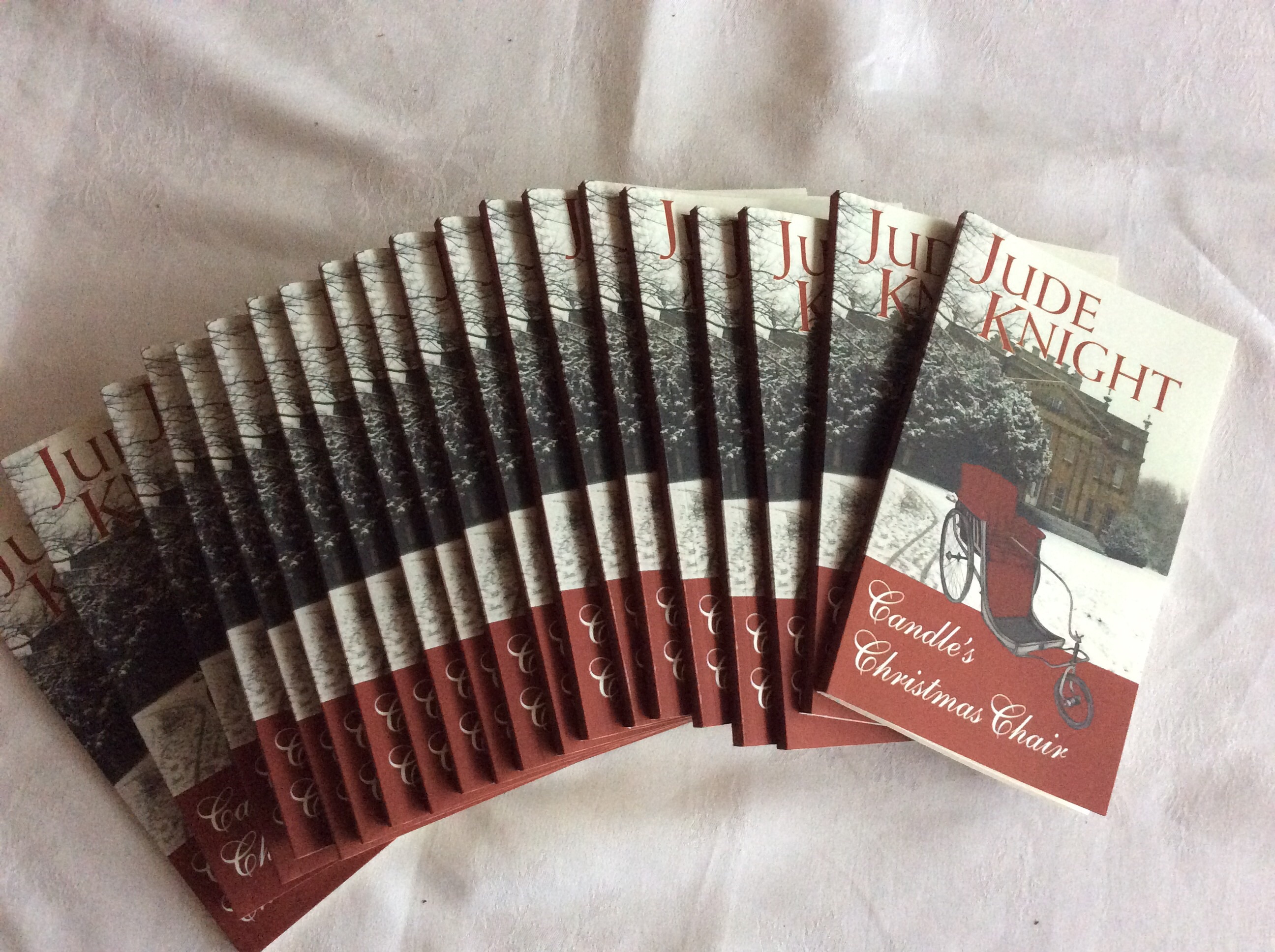
BookcoverCCC2I’m continuing to market my first published fiction in 30 years, my novella Candle’s Christmas Chair. Candle is available free from all major ebook outlets and is doing well — more than 25,500 copies downloaded in its first 5 weeks and over 100 reviews in various places, with an average rating of over 4 stars.

I’ve just sent my debut novel, Farewell to Kindness, to the proofreader. It will be on prerelease early in March and published on 1 April. In Farewell to Kindness, an earl on a mission of revenge is attracted to a widow who lives rent-free in one of his cottages, and whose daughter is the image of his predecessor, his deceased cousin. Rede, the hero, doesn’t want to be distracted from his quest to destroy the villains who killed his family. Anne, the heroine, wants to stay in hiding to avoid the villains after her and her family. Love is both unexpected and inconvenient. Farewell to Kindness is the first in the series The Golden Redepennings.

BookcoverEPI’m writing the first draft of Encouraging Prudence, starring the thief taker (bounty hunter) who helped Rede in Farewell to Kindness, and the spy he loves. Sent to investigate a blackmail scheme, the two uncover blackmailers, murderers, traitors, difficult relatives, and one another’s vulnerabilities.

I’m also researching for A Raging Madness, the second in The Golden Redepennings. Alex, Rede’s cousin, is coming home through Cheshire when he meets a woman he can’t stand and can’t forget. Ella thought Alex was the last person on earth she would turn to for help. She knows what he thinks about her. But when her evil in-laws seek to have her committed to an asylum, she is forced to seek his protection. I need to find out more about the canals through Cheshire.

And I’m beginning to plot a novella — another Farewell to Kindness prequel — for a boxed set I’m putting together for Christmas 2015 with a group of friends. Tentatively called Gingerbread Bride, it tells the story of a woman with a reputation for running away.

“Not away,” Mary said, definitely. “To. I run to. There’s a difference.”

“Away. To. It doesn’t matter. You’re a lady now; not a little girl. Surely you must see that you have to go home?” Richard didn’t expect Miss Waterford to listen, though. When had she ever?

“You can’t stop me, Lieutenant Redepenning. You can’t stop me, and you can’t catch me.” She flung her last words behind her as she heeled her horse into a flying gallop, striking his with her whip as she passed. “No-one can!”

Richard, shouldered to one side by the horse, sat where he’d landed, watching the two horses and the Admiral’s daughter receding into the distance. Annoying, arrogant, impudent, self-willed little bitch. What a woman!

How do my historical romances differ from others in the genre?

google-romance-novelBooks in the general category ‘historical romance’ cover a huge range of different eras, plot tropes, character types, tonal styles, and subcategories. And self-publishing has opened the door for writers to produce work that broadens the range still further.

I write strong determined heroines that, in ways that can be defended as historically feasible, refuse to accept the constraints society would place on them. I write heroes that can appreciate and respect my heroines. And I write villains that you’ll love to hate.

I also create complicated plots with a large cast of characters, and I enjoy using settings that don’t comply with the ballroom/house party scenes that are often found in historical romances.

My first two books take place in the same part of England, west of the Cotswolds. But Encouraging Prudence ranges more widely and finishes in another country altogether (Sweden, I think, but I’m not there yet).

I don’t stick to the world of the Beau Monde. Dukes, Earls, and Barons are fun and fascinating — the rock stars of their era. But the hero of my first book had a career as a fur trapper before he inherited an Earldom, and the heroes of the next two books are both commoners.

Why do I write historical?

enclosureI love reading historical romances, and I love doing research. I’ve been passionate about history since I was a little girl. One of my career aspirations during my teenage years was archaeologist. I fell in love with the late Georgian era when I began to read regency historicals that included information about canal building, balloons, the first gas lights, and all the other incredible innovations of the explosion of invention that changed society between the 1750s and the 1850s.

I see many parallels with today. To take just one example, my period includes the enclosure movement (it was started in England before it moved to Scotland). Intended to make farming more efficient, it resulted in wealthy landowners cut farm labourers off from keeping livestock and collecting foodstuffs from the commons. People who thought they had a historic right to use the common land to feed their families were suddenly cast into dire poverty. Today, companies are laying claim to intellectual property rights over plant and animal bloodlines, even human dna. And they’re taking ordinary people to court to prevent them from using what was once free to all.

Writing historical romances helps me to work through some of this stuff. The trick is to make it an essential plot point or part of the background, and not a lecture.

How does my writing process work?

Or, at least, will bie editing after work.

Coloured pens make everything better. Note the map of the village of Longford at top centre.

I’m still working this one out. I thought I was a planner, and I carefully planned each chapter of my first novel and my first novella. Then I went off in a different direction with each, following the characters on their own journey. This meant a lot of rewriting, going back to seed later ideas into earlier chapters.

With the current novel, I know where each quarter of the book takes place; I have a fair idea of the main plot pivot points; I know more or less what the main conflict is. But I’m only plotting in detail a chapter or two ahead. It’s going well, but I expect I’ll need to do a lot of rewriting, going back to seed later ideas into earlier chapters.

Two things that are working well for me are setting a daily word count and creating detailed character sketches of my key characters.

I started with no daily word count. I wrote when the inspiration elves consented to whisper to me. Then I set a count of 500 words a day and all of a sudden those elves started visiting me more often. Now, I’m writing a minimum of 1300 words a day, six days a week. And I need to keep that up if I’m to meet my writing schedule. According to my beta readers, the chapters I wrote more quickly are better than the ones that took me ages. Go figure.

I have an one page questionnaire for each minor character and an eight page questionnaire for my main protagonists. By the time I’ve worked my way through all the questions, I know them well, and once I know them well I know what they’ll do in any particular situation. I do the minor characters as I need them, but I do the protagonists before I start my first draft. I originally kept the character sketches in the OneNote database for the novel or novella I was working on, but my books cross in so many different ways that I’ve now created a new database in OneNote just for characters.

I also keep Pinterest boards for visual inspiration, and I draw maps and house plans so that, when my characters are moving around, I can visualise what they’re up to and work out what route they need to take and how long they’ll spend getting there.

Up next,  Jessie Clever

In the second grade, Jessie began a story about a duck and a lost ring.  Two harrowing pages of wide ruled notebook paper later, the ring was found.  And Jessie has been writing ever since.

Armed with the firm belief that women in the Regency era could be truly awesome heroines, Jessie began telling their stories in her Spy Series, a thrilling ride in historical espionage that showcases human faults and triumphs and most importantly, love.

Jessie makes her home in the great state of New Hampshire where she lives with her husband and two very opinionated Basset Hounds.  For more, visit her website at jessieclever.com.

Jessie just wrapped her Regency romance Spy Series, but as creativity often plagues those blessed with it, Jessie discovered a whole new story erupting from what she thought was the end.  So she is hard at work on the follow-up series she likes to refer to as the Spy Series: The Next Generation.

But before the next series debuts, be sure to check out the heroes and heroines of the Spy Series, starting with Inevitably a Duchess: A Spy Series Novella.

Inevitably a Duchess Jessie Clever Spy Series Novella 102214Blurb:

Richard Black, the Duke of Lofton, waited for her, watching as the agony of marriage broke the woman he loved.  Lady Jane Haven had to find a reason to survive, a purpose to carry on when it seemed God would not just let her die.  But when fate finally offers them a chance to be together, a treasonous plot threatens to keep them apart.  And when it becomes more than just a matter of survival, Jane must find the strength to be his duchess.

Meet Jessie on social media:

Facebook

Twitter

Google+

Pinterest

Goodreads

Where do you get your ideas?

I must be a writer. I’ve been asked The Question. If you’re a writer, you know all about The Question. If you’re not a writer, you might have asked a writer The Question. You know which question I mean. It’s up there in the headline to this blogpost.

Where do you get your ideas?

Neil Gaiman says that The Question is an occupational hazard, like being asked for an on-the-spot diagnosis if you’re a doctor, or for legal advice if you’re a lawyer. (Read his answer, and his exploration of that answer. It’s superb.)

Every part of the process (and ideas are only the starting point) takes practice. In an earlier post, I talked about the story games I play with children. Here’s another one; a perfect way of exercising the idea-generating mechanism.

On Facebook, a friend has been posting images as a jumping point for a story. A picture, a paragraph of setting, and a question or two. How do they feel? What happens next? I’ve been looking at paintings by Victorians who were reinventing the Regency through their own romantic filters. They’re great for prompting stories. Do you want to have a go? Just tell me in the comments what you think is happening in the picture. Here are some questions to get you started. What did he ask? What did she answer? How did the things get on the floor? Whose dress is on the couch? How does he feel?

renunciation

Meeting the neighbours – a Farewell to Kindness excerpt

Miss Pinkertons AcademyAnother Farewell to Kindness excerpt. Rede sees Anne for the first time:

The service wound to its final blessing, and the congregation followed the Rector from the church as the bells pealed.

He moved towards the door, through a rippling sea of bows, curtseys, touched foreheads, murmured ‘My Lord’s’. Out in the churchyard, the villagers and gentry stood in groups, exchanging greetings and enjoying the warm spring sunshine. Children ran in and out of the shrubbery in the adjacent Rectory garden, in a game of chase. Some had the look of the Rector, who introduced Rede to his wife. Mrs Ashbrook had a no-nonsense manner, direct light-blue eyes, and the well-padded shape of a matron with a growing family and a healthy appetite.

A trio of prettily dressed young ladies—the dark-haired girl from the Ashbrook pew, the Saxon-blonde Redwood and a remarkably attractive girl whose face was framed in brown curls—strolled arm and arm up and down the path to the church gate, as bright as butterflies in their light dresses and their charming bonnets, chattering away like starlings.

Rede stayed for a while, shaking hands with those who came for an introduction, catching up with those he’d met during the week, and generally making himself pleasant.

Several times, he met eyes as blue as his own, fringed like his with dark lashes. His predecessors had certainly left a mark on the population. Many of the poorer members of the community bore the certain sign that a female ancestor had caught a Redepenning’s fickle attention.

Mrs Forsythe, the tenant who lived unaccountably rent free, wasn’t introduced. He had been hearing her name all week. His tenants spoke of her warmly, and with respect, listing her good deeds, and praising her kindness. From what they said, she was a lynch pin of village life. Listening to their stories, he’d formed a picture of a mature widow; a gentlewoman of private—if straightened—means; a bustling matron with a finger in all the charitable activity of the parish.

The trio of young ladies on the path broke up, two coming over to be introduced as the daughters of the Rector and the Squire. The third young lady collected a child and another young woman from the Rectory garden.

The child was a little older than his Rita would have been; perhaps the age Joseph would have been, had he lived. She studied him curiously as she passed; meeting his blue gaze with her own. Indeed, he could have been looking at one of his own childhood portraits, cast in a more feminine mould.

She didn’t take her colouring from the two young ladies with her. And a quick glance after her showed that bonnets masked the faces of the two ladies they joined.

“Once my cousins arrive, we’ll invite the local gentry to dinner,” he told Mrs Ashbrook. “I’ve met some of them. Could you perhaps introduce me to others?”

As he’d hoped, she launched into a list of all the gentlemen and ladies in the neighbourhood, starting with those present. He listened impatiently as the objects of his interest moved further and further towards the gate.

At last, just as they passed under the arch, Mrs Ashbrook said, “and Mrs Forsythe and her sisters, the Miss Haverstocks. They were standing right there by the church… oh dear, you’ve missed them. They’ve just left.”

The slender figure hurrying away down the road with her sisters and daughter did not fit the picture he’d formed of the busy Mrs Forsythe. Not at all.

He continued listening to Mrs Ashbrook, commenting when appropriate, murmuring pleasantries to the people she took him to around the churchyard. And with another part of his mind he planned a change in the order of his tenant visits.

Meeting Mrs Forsythe, owner of the trimmest pair of ankles he had ever noticed and mother of a Redepenning by-blow, was suddenly a priority.

Review: A sense of the ridiculous

Ridiculous Final ArtHeather King‘s delightful book, A Sense of the Ridiculous, tells the story of Jocasta, a squire’s daughter who begins the novel disappointed in the calibre of her suitors. Surely somewhere, she thinks, there must be someone who laughs at the same things she does?

Jocasta is also beset by a great aunt who disapproves of Jocasta’s hoydenish ways. After a week of lectures on her behaviour, Jocasta has had enough. She breaks out, and meets with disaster, thrown from her horse and knocked unconscious.

Enter our hero Richard, the son of an inkeeper, who is surprised to discover that the unconscious boy he takes home is actually a rather lovely girl.

The happy ending was never in doubt (to the reader; the protagonists had a few nasty moments). But the journey is great! King adds some fun twists and turns along the way: amnesia, a brother who sees his search for his missing sister as a fine opportunity for attending sporting events, a robbery that threatens to derail the hero’s courtship.

King writes characters with depth: Richard and Jocasta are finely drawn, and the supporting cast also come to life on the page. I particularly liked the brother, and hope to see him in a future novel. He has some growing up to do in order to find his own happy ending, and that should be fun to read.

The dialogue sparkles, particularly the exchanges between Richard and Jocasta, where they share their sense of the ridiculous. All in all, a great read. I recommend it.

Streets of London

Here are a couple of neat resources for those who want to picture places when reading (or writing) a story set in historical London.

This one is an animated flythrough of 17th century London streets.

And this one shows London street views and a little bit of history about the houses featured, including their occupants during the 19th century.

cropped-theme-header4

Click on the link in the text above, or the image, to go to their website.


My hero disports himself in a brothel

house of sinTime for another excerpt? Here’s the hero of my current work in progress, Encouraging Prudence. David is visiting a brothel in the course of his investigation.

He arrived at the Admiralty steps just as Captain Talbot passed the guard on the front door.

“Sir,” he said, putting on his persona of eager disciple, “I cannot thank you enough.”

Talbot smiled, expansively. “Ready for a night on the town, young Walker, eh?”

Their first stop was, predictably, a brothel – an expensive brothel, by the youth of the workers and the quality of the fittings, but with the same sickening smells of cheap perfume, sex, sweat, and despair as the others his work had taken him into. He allowed himself to be introduced to Fanny, a statuesque redhead who was considerably older than she was made up to appear, and followed her to one of the rooms.

He looked longingly at the bed. He was beginning to feel the loss of a night’s sleep.

“Don’t bother,” he told the prostitute, as she began to unbutton her blouse. “When were the sheets last changed?”

“Maybe three days.” She looked uncertainly at the bed and back at him. “How do you want me then?”

David explained. “What I’d like you to do is sit in the chair over there, and wake me in half an hour. Before we leave this room, I’ll give you double what I gave your mistress. And when we get back out there, you’ll pretend to everyone, especially my friend, that we’ve coupled.”

The prostitute frowned. “You’ll pay me. Just to sleep in the bed.”

“On the bed, but yes. Miss Fanny… or is it Miss Frances… you’re very desirable, but I’m very, very tired, and I’d rather nobody knew…”

She nodded. “It’s Dorothea, really. But Old Hatchet-Face, her as owns the place, she said that weren’t a good name for a whore.”

“Do you have a way to tell the hour, Miss Dorothea?” He’d removed his coat, but he laid it on the bed and stretched out beside it. No point in putting temptation in the woman’s way. He’d wake in an instant if she approached the bed to check his pockets.

She nodded. “I can hear the clock tower down the street. Chimes the quarters, it does. It’ll be just on the half I wake you.”

“Good. Thank you.” His nose wrinkled, but he’d slept in places more rank. Willing his body to relax, he closed his eyes, and Mist was suddenly there stretched out beside him. No. He was here to sleep, not to fantasise about the only woman he desired.

“Mister? Mister Walker?” He woke to the woman’s whisper. “It’s been half an hour.”

Yes. He could hear the half still chiming. Half an hour was not enough, but it took the edge off his weariness. He’d cope.

In the main sitting area, Dorothea poured him a glass of wine, and perched on the arm of his chair, leaning against him while he waited for Talbot. Her silence money safely in the pocket she had tied to her waist under her skirt, she had obviously decided to throw herself fully into her part.

Talbot arrived some minutes later, buttoning his pants. His companion was smiling admiringly up at him, but David caught the contemptuous grimace she passed to her companions behind Talbot’s back.

“That’s the ticket,” Talbot said to David, grinning at the way Dorothea was draped over him. “Can’t get enough of you here, can they? They should pay us for servicing them, eh? Hah! That’s a good one. They should pay us, eh?” And he slapped the bottom of his companion with expansive glee.

“You want another round, Walker? Or what about an exotic dance, eh? I know a place where the girls…” he gestured expansively, shaping improbable globes in the air.

“That sounds very exciting, Sir,” David said, back to being suitably grateful. “Is it a place we could get something to eat, Sir? All that exercise…”

“Good lad. Worked up an appetite, eh? Oh, to be young again. Come on, then, lad. The night is young, eh? We’ll stop at a coffee house and then go on to Sultan’s Palace.”

David saluted Dorothea with a kiss on the cheek and received a warm smile in return. “Best half hour I ever spent in this place,” she told him loudly, “and that’s the truth.”

Journaling to become a better writer

JournalingCongratulations to Danielle Hanna, whose book ‘Journaling to become a better writer‘ has been released today. Here’s her bio, as published on her website:

Danielle Hanna has been penning fiction since she was only four and keeping a journal since age five. In “Journaling to Become a Better Writer,” she bares pages from her own journal to illustrate the emotional depth and storytelling skill that can be achieved simply by writing the events of your life.

Side-by-side with her examples, she delves deep into techniques to explore what makes a story worth telling, what goes into real-life story structure, how to get in touch with your emotions, how to observe the world around you with laser focus, and how to bring passion into every word you write.

Along the way, she shares the most traumatic plot twist of her own life: the stripping away of her family and her search for someone to finally call “Daddy”–a quest which almost claimed her life.

Part writing how-to book, part memoir, part self-discovery guide, this volume will go far beyond breathing inspiration into your journaling and your novel writing. Whether you’re a multi-published author, a life-long journal writer, or have only dreamed of putting pen to paper, discover the story you were born to tell.

Hanna has written a ‘how to’ book, and illustrated it with compelling excerpts from her own life. The book can be read on several levels: as her personal story, as a guide to writers on how to improve their craft through journalling, and as a guide to everyone on how to use writing skills in their journal to improve their self-awareness and get a better handle on their personal journey.

She is a highly skilled writer with an excellent grasp of structure and pace. I really liked the format – journal entry then lessons to draw. I loved her sense of humour. I loved her raw honesty. I wanted to cry in places, and I was so happy that Sam turned out to be the Daddy she needed.

Most of her how-tos I do, and her system is great. People will find it really helpful. I know this, because descriptions are my real raw spot. Definitely not my strength! I’ve been applying her step by step approach ever since I read this book in beta version, and it really helps.

Adventures in self-publishing – some reports to watch

Thanks to a share on Facebook, I’ve discovered Author Earnings, the website of a group of people who are collecting data about book sales.

They have a range of reports that crunch data from authors and publicly available information to compare earnings across different publication methods. If you’re trying to make a decision about how to publish (and where, and in what format), these reports are a must read.

The tenured vs debut author report reveals startling information that most people just entering the market will want to know. Here’s their summary:

  • Big-5 publishers are massively reliant on their most established authors to the tune of 63% of their e-book revenue.
  • Roughly 46% of traditional publishing’s fiction dollars are coming from e-books.
  • Very few authors who debut with major publishers make enough money to earn a living—and modern advances don’t cover the difference.
  • In absolute numbers, more self-published authors are earning a living wage today than Big-5 authors.
  • When comparing debut authors who have equal time on the market, the difference between self-published and Big-5 authors is even greater.

And one chart (the report has lots more).

top-3000-authors-log

In the Print vs Digital report, they show that actual unit sales of the top 100 selling books are 61% digital, 39% print.

The October report looks at the impact of Kindle Unlimited on author earnings in each of the publication categories.

The July report has a graph showing that independently published books without DRM sold twice as many copies as those with DRM.

drm-author-earnings-by-price

Many of the reports focus on Amazon sales, but the site also has two reports on Barnes & Noble sales.

All in all, a great resource.

By the way, the Kindle e-store currently has in the region of 3 million titles for sale, and around 75,000 available free.

Farewell to Kindness releases in 78 days

fredericksoulacroix_the_tea_party_thumbI’ve promised to send Farewell to Kindness to the proofreader by the end of next weekend. Still lots to do. Pressure. Pressure. Here’s another snippet to be going on with. My heroine has just talked my hero into donating prizes for the children’s races at the village fête.

He would have liked to continue their private conversation a while longer, a realisation that startled him. What was it about this woman that made him want to spend time with her? She was, of course, delectable. But many women had faces and forms as lovely.

Since Marie-Josèphe died, he’d felt the stirrings of lust from time to time—and more than stirrings. Acting on those stirrings always felt like too much trouble, though.

In his private desires, as in all the rest of his life, he saw the world as if through a thick blanket that numbed feeling. He went through the motions of looking after his business interests and the Earldom, of acting appropriately in social occasions, of charming his tenants and his neighbours—but all the time, he was acting a part, as if he had been buried with his wife and children, and was reaching from the grave to operate his own body like a puppet.

Except when he woke each morning with his grief still raw. Except when he was planning how to make his enemies pay. Except when he read the reports David sent him every week.

And now, something beyond his vengeance was reaching through the blanket of unfeeling and bringing him back to life. Or, rather, someone.