Farewell to Kindness is on Manic Readers today

Today, I’m featured on Manic Readers, with a post on happy endings and some information about Farewell to Kindness. Thanks, Ivy.

the kettle is on

And here’s the excerpt I promised:

What was it about this woman that made Rede want to spend time with her? She was, of course, delectable. But many women had faces and forms as lovely.

Since Marie-Josèphe died, he’d felt the stirrings of lust from time to time—and more than stirrings. Acting on those stirrings always felt like too much trouble, though.

In his private desires, as in all the rest of his life, he saw the world as if through a thick blanket that numbed feeling. He went through the motions of looking after his business interests and the Earldom, of acting appropriately in social occasions, of charming his tenants and his neighbours—but all the time, he was acting a part, as if he had been buried with his wife and children, and was reaching from the grave to operate his own body like a puppet.

Except when he woke each morning with his grief still raw. Except when he was planning how to make his enemies pay. Except when he read the reports David sent him every week.

And now, something beyond his vengeance was reaching through the blanket of unfeeling and bringing him back to life. Or, rather, someone.

He studied her for a moment, as he stood apart from the group. He couldn’t put his finger on what made her different. Perhaps it was that she talked to him, and not to his title or his wealth. He enjoyed her wit, her humour. He liked how she treated him with no more and no less deference than she did Will or the Squire or the innkeeper’s wife.

Today, she was dressed far more like a lady than a cottager, in a light-coloured dress in the modern style, modestly covering but shaping to her bosom, and dropping from there to a flounced hem. Yesterday’s apron had defined her slender waist, but the dress beneath it had hidden her shape entirely. Today’s dress left her waist a mystery, but clung to her hips and legs as she walked…

It would give the villagers confidence to see their lord working side by side with the other local leaders. Rede had run large teams of trappers, invested the money into multiple enterprises and made a not inconsiderable fortune by finding managers he could trust and inspiring them to give their all to serve him. He knew the value of showing his tenants and neighbours that he counted himself one of them.

His decision to help was for the village at large, not to impress the lovely Mrs Forsythe.

“And,” he admonished himself as he rode away, “if you believe that, I have a village built of pure gold in Upper Canada that I’d like to sell you.”

Because… life

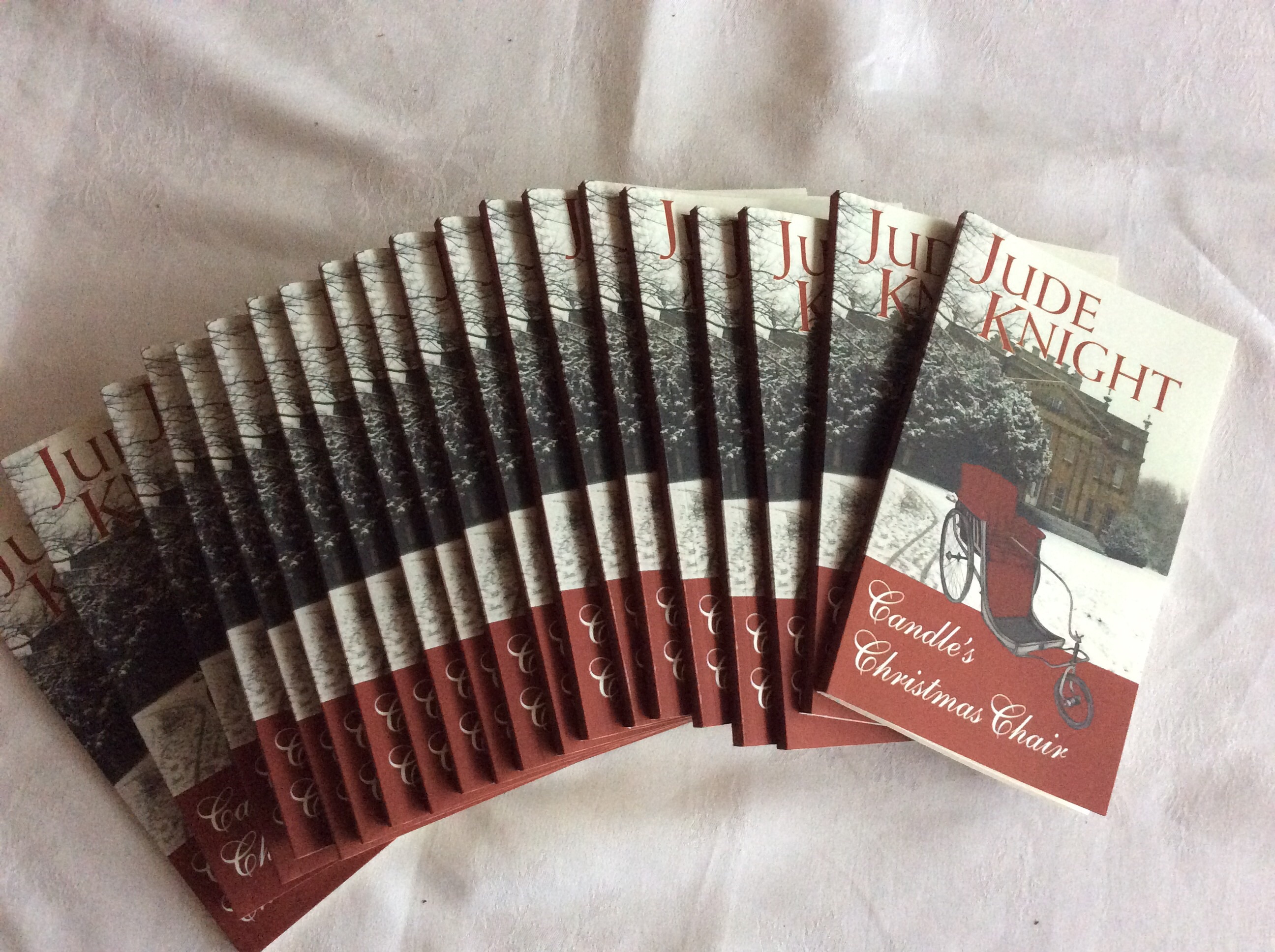
I was doing so well. A blog post every day. 1000 words a day minimum on the work in progress, Encouraging Prudence. Candle’s Christmas Chair published and Farewell to Kindness well on its way. I’d even organised some time off in March, figuring that I’d need to do some major promotion in the lead up to Farewell’s publication date.

Then, life happened. My commercial writing work got really busy, right when three people in the team left for other pastures. One of our daughters was seriously injured and spent 10 days in hospital (she’s on the mend now, thank you). A neighbour and dear friend fell from a ladder and died.

So I haven’t nearly finished the first draft of Encouraging Prudence, I’m behind on organising the launch for Farewell to Kindness, and my recent blog posts have been few and far between and not as interesting as I usually try to make them.

But Farewell is still going to be published on 1 April, I’ve created (and tweeted) some memes to promote it (like the one posted below), and I’ve been having a lot of fun meeting other writers and readers amidst the ongoing madness the Bluestocking Belles have created at our Housewarming Party site.

In the next few days, I’ll post excerpts from Farewell, and links to articles and reviews from the blog tour Enchanted Book Promotions are running for me. And then, I hope, normal service will resume. Thank you for your patience.

Rockfall meme FtK

How low can I go? Doing the cover limbo rock

And here’s another view – this time in with a whole lot of other covers (some of mine and most belonging to other people). Most people will see the covers on a virtual bookshelf. On the scrolling ‘People who bought this book also bought’ list on Amazon, the images are small, and in the chat threads on Goodreads they’re even smaller – not too different in size to what you see below.

Can we make our covers work at this size? I think some of these work. You can still read my name on the Candle cover, and Lucinda Brant’s Dare Devil is striking, though only the face and her name are legible. Her name is legible on Autumn Duchess, further down the page, too.

Some are beautiful, but they’re not legible, and they’re not noticeable put in with a heap of other books.

This experiment changed my mind about the blue cover. I just don’t think it stands out enough. What do you think?

book covers

Troubles in coverland

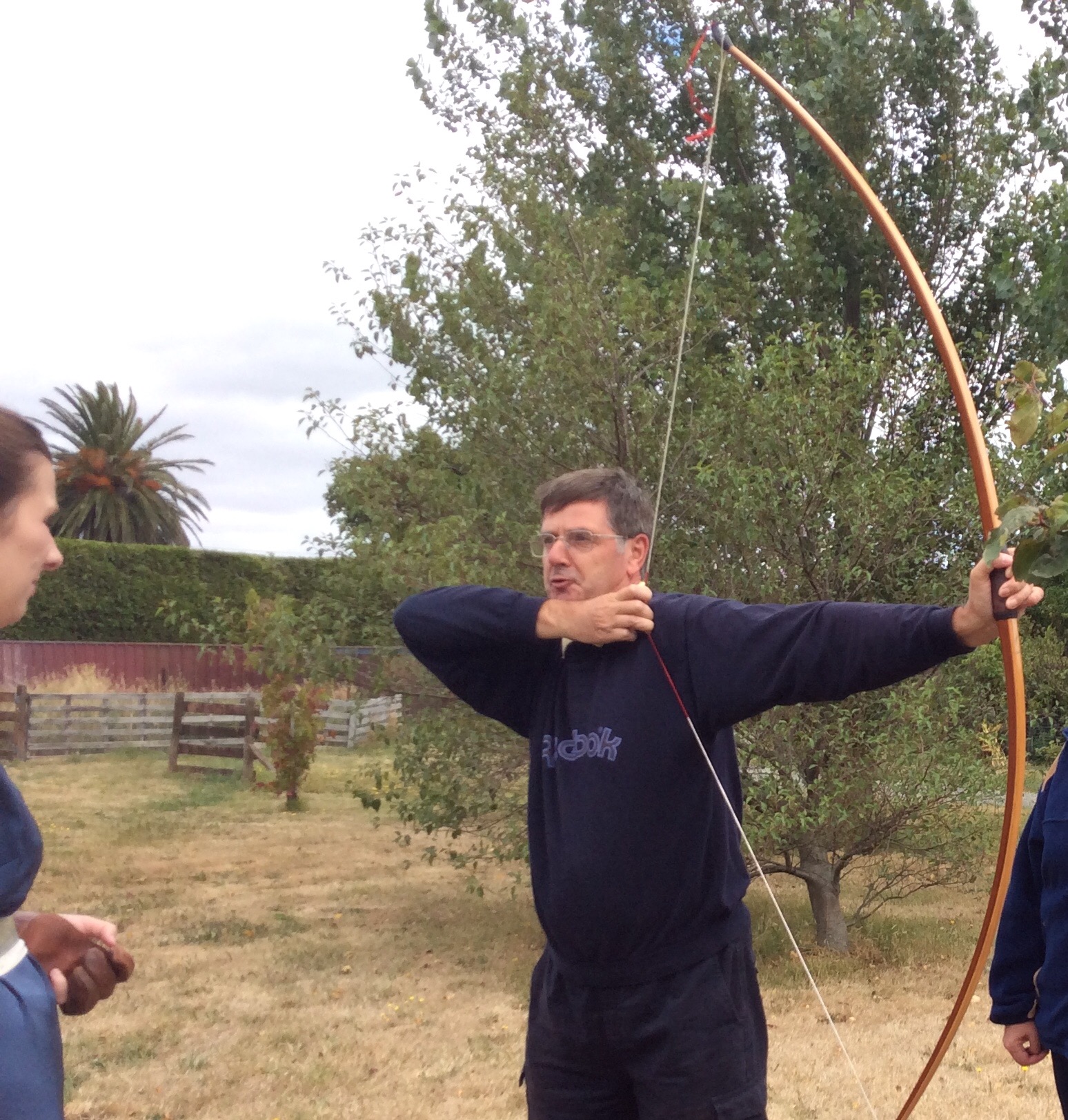
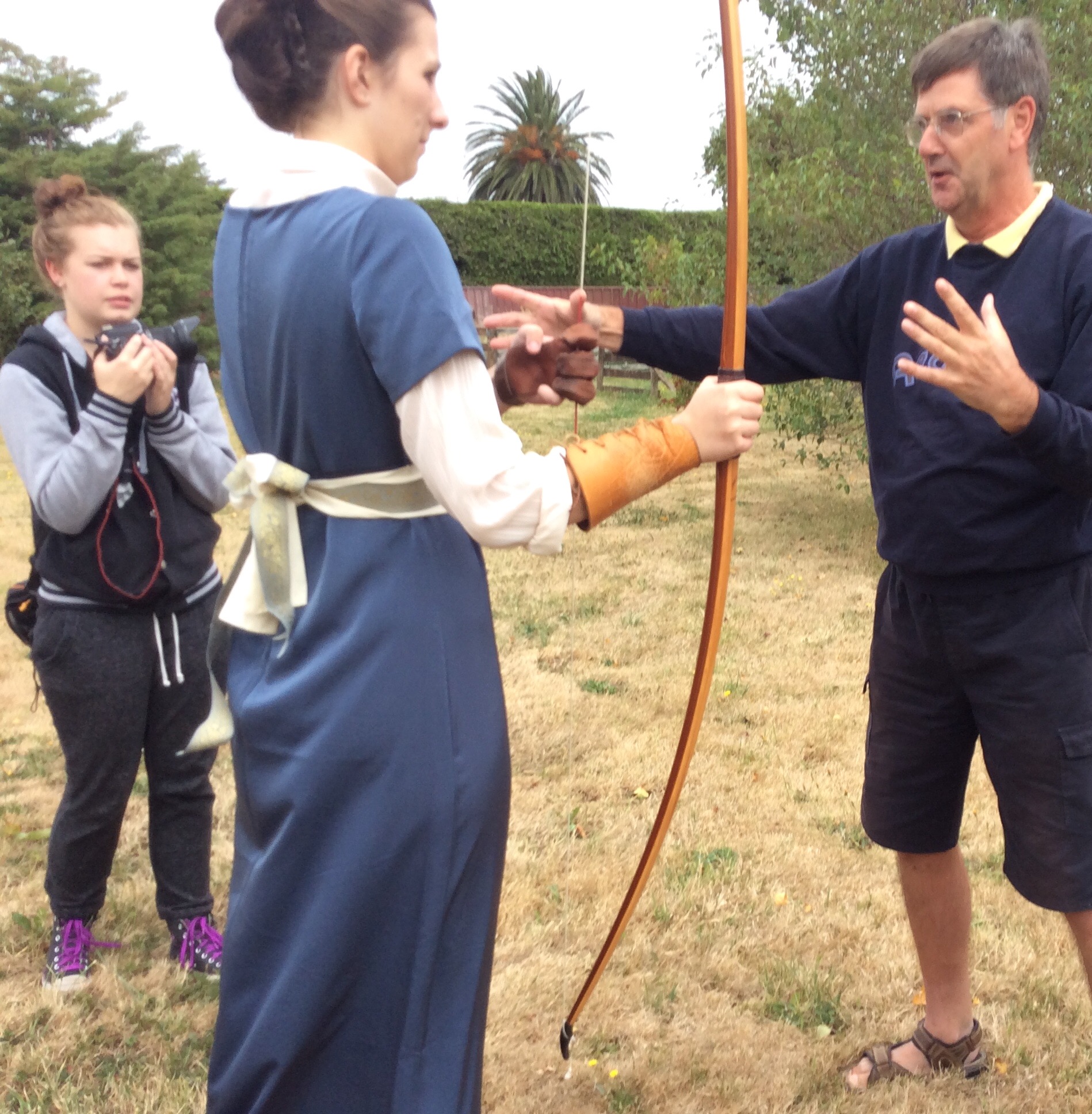
BookcoverFtK4I do make trouble for myself. I have this concept for the cover of Farewell to Kindness. Since Anne’s ability as an archer is a pivotal plot point, I want the cover to feature a woman in regency dress with bow and arrow. I put the image on my working cover together from several other images – one person’s hair, another person’s body, and a random background. But all along, I’ve planned a cover shoot for the real cover.

I have a photographer (the charming Britt, who drew the chair for Candle). She has organised a model. We have a selection of places for the shoot. But do you think that we can find someone who will let us borrow their long bow?

I’ve tried the prop hire firms. Long bows are apparently not much in demand for New Zealand movies and television shows. I’ve tried the archery clubs. Some archery clubs do have long bow enthusiasts, but not within easy driving distance of my model and photographer.

I’m pinning my hopes on the re-enactment societies. I’ve made several approaches to different groups, and I think I may be getting somewhere. Yesterday, I spoke to someone who has spoken to someone… But no call last night, so if that hasn’t worked by next weekend, I’m off to the annual joust half an hour from here, where they’re advertising traditional archery.

Watch this space!

Meanwhile, here are the four designs (wrong photo, but experiments to look at typography and placement) Britt has sent me as concepts. What do you think?

Rough draft 1 Rough draft 2 Rough draft 3 Rough draft 4

Farewell to Kindness deleted scene – Anne’s trip to Bristol

I’m travelling today, and so I thought I’d post the deleted travelling scene from Farewell to Kindness. I enjoyed writing it, remembering all the times I’ve travelled with my own children or entertained someone else’s children on a train or a bus. But it didn’t help the pace of the story, it introduced a whole heap of characters who never appeared again, and the single plot point could be carried in the one or two paragraphs that replaced it.

The photos of luggage are from my Pinterest board Farewell to Kindness trip to Bristol.

Behind time

A few minutes later, they were away. This was the shortest part of the trip. Some of the passengers had left Gloucester at 7.00 in the morning, but now there was just 15 miles to go. They would break the trip only once more, at Winterbourne.

Anne was squeezed between a large woman who had not woken during the Chipping Niddwick stop, and a small balding man who offered her a tentative smile over the top of his glasses. On the opposite seat, a young man was trying to keep a small boy occupied with cats’ cradle patterns in wool, while his wife rocked a sleeping little girl.

18th century luggageBefore long, the boy lost interest in what his father was doing, and became restless.

“You look like a boy who enjoys stories,” Anne said to him. The boy looked to be of an age with Daisy, who had a robust taste in adventure, preferring Anne to spice her tales of fairies and princess with wicked pirates and hungry dragons. Playing down the fairies and playing up the dragons should work for a boy.

He looked at her with hope and suspicion. “He does love stories,” his father said, his own expression all hope. Then hastened to introduce himself and his family. “This here is Georgie, and that’s Millicent with my wife, Mrs Norris. George Norris, that’s me. And that there lady by thee, that be my mother.”

So Anne introduced herself before launching into a tale that she made up as she went along, in which a coach travelling through the Gloucestershire countryside was magically transformed into a ship that – beset though it was by storms, pirates, dragons, and a rather large giant who wanted to take it home for his bath – nonetheless managed to come safely to port not quite an hour and a half later as the coach pulled into Winterbourne.

By this time, young Georgie was leaning on Anne’s knee, anxious not to miss a single word of what she said, and Anne’s voice was growing hoarse. “The End,” she finished, with a sense of relief.

At the inn in Winterbourne, the older Mrs Norris woke, and levered herself out of the couch asking for the necessary. The guard poked his head around the door into the couch. “Does anyone else need to get down? We’ll be here 10 minutes. And we don’t wait for no-one.”

Georgie whispered something to his father, and they left the coach, followed by the small balding man.

“Can George get you a drink, Ma’am?” Mrs Norris said softly over the head of the sleeping girl. “Thy throat must be that sore from all that story. Why it was as good as the players that come to Christmas fair, and so it was!”

wallpaper boxAnne turned down the drink, wanting to avoid her own trip to the necessary, but thanked Mrs Norris for the thought and the compliment.

Mrs Norris senior clambered back into the coach. “Move over, Lilly, do. How’s my Milly?”

Mrs Lilly Norris, who had relaxed into the middle of the seat, shifted sideways again to accommodate her mother-in-law’s bulk, and dropped the little girl’s head so that Mrs Norris could see her.

“You should wake her, you should.” Mrs Norris turned to her son as he put his son up into the coach and followed. “I’ve been telling Lilly she should wake Milly, else she’ll not sleep tonight.”

The guard poked his head in the door again. “Are we all aboard, then?”

“There is still one gentleman to come, I think,” Anne told him.

The guard said something scathing about passengers, adding, “Not present company, ma’am. Best take your seats. We’ll be off in just a tick, whether the gent comes back or no.”

Mrs Norris was still organising her children and grandchildren, and took no notice, but it didn’t take her long to set Norris next to Anne, and settle herself beside her grandson, with her yawning granddaughter on her knee.

“There, now we shall be comfie,” she announced, with satisfaction. “Feel under the seat, young Georgie, and tha shall find summat tha’ll like, I warrant.”

Georgie obeyed, pulling out a rectangular basket just as the thin balding man attempted to climb into the coach.

“Here, be careful, fellow,” the man said.

Norris apologised, and helped Georgie hoist the basket onto the seat between his wife and his mother.

He sat back just as the coach started with a jerk, and Georgie fell backwards against the thin man, prompting more apologies.

“Tha’ll have one of my apple turnovers, and all will be well,” offered Mrs Norris, digging into the basket with one capacious hand, while steadying the child on her knee with the other. And she and her daughter-in-law proceeded to hand out food from a seemingly bottomless basket – pork pies, apple turnovers, gloucester tarts.

Anne accepted a tart, offered shyly by Lilly Norris. “Tha should have a pork pie, ma’am,” Mrs Norris told her, frankly. “Tha has no meat on thee.”

The thin man shared his name after the first apple turnover, and the reason for his journey after the second. He was Frank Durney, and he was on his way to Bristol to take up a job as a clerk in a counting house. This coach, which he had joined at Chipping Niddwick, was his second of the day.

After his third tart, Durney complimented Anne on her story, and after the basked had been packed away, he launched into a song that, he said, had always amused his own little one.

It involved dancing for all kinds of rewards, and the others knew it. Norris and his wife joined in the singing, and Mrs Norris danced little Milly on her knee to the music, until both children were weak with giggling.

painted basketNorris produced another basket from under the seat, and pulled out a jug of cider and some wooden beakers, which he passed out to everyone in the coach, even the two children.

“And what about yourselves?” Durney asked. “It’s a long trip for the children. Cheltenham, was it, you came from?”

“Gloucester,” Norris told him, leaning out to see Durney around Anne. “But Mother has always had a yen to see Bristol, and Mrs Norris here,” he raised his cup in a salute to his wife, “she wants to stay at the seaside. So we’re off on holiday, we are, just like the nobs.” He said the last with great satisfaction, then looked at Anne with alarm. “Saving your presence, Ma’am.”

“All that way for a holiday!” Durney sounded shocked.

“What I say,” said Mrs Norris cheerfully, “is you’re a long time dead. That’s what I say. Let’s go and have a good time, I said to George here.

“But such a long way. And so much money!” Durney was clearly having trouble grasping the concept.

“Business is doing well, lad, and George deserves the time off, I told him. You’re a long time dead, I said.”

Durney looked inclined to continue arguing, so Anne hastily changed the subject. “The ride seems much smoother.”

This worked, as Durney had information he wanted to share. “We’re on the Bath road, Ma’am,” he told her. “Up till now we’ve been on lesser roads, but the Bath to Bristol road is a major post road. The toll charges are higher, but they put the money into keeping the road up.”

The following dissertation on road maintenance soon lost Anne, but clearly fascinated Norris and his son, and Anne ended up crossing the coach to sit between Lilly Norris and Mrs Norris, so that the two men could talk about various methods of road surfacing and maintenance while the boy listened.

“We will be in Bristol soon, I think,” Anne told Milly, who was shifting restlessly on her grandmother’s knee.

“I going to the sea,” Milly told her, before putting her thumb firmly back in her mouth.

“How exciting. Have you seen the sea before?”

Milly had never been to the sea, it appeared, and neither had any of her family. Anne talked to them for a little while about walking on the sand and wading in the surf, and about the shells, and strangely shaped wood, and other things that washed up on the beach.

She was surprised when she realised they were coming into Bristol. This last part of the trip had gone very quickly. Both children abandoned the adult conversations to press their noses up against the coach windows.

Before long, they turned into the yard of the coaching inn.

The-Cambridge-Telegraph-a-mail-coach-about-to-depart-English