First lines on WIP Wednesday

Just for fun, let’s post the first paragraph of several chapters from our current work-in-progress. You pick the number of excerpts and which chapters. Mine are from The Realm of Silence, book 3 in The Golden Redepennings.

Chapter Two:

Four years since he had last crossed verbal swords with Susan Cunningham, and she looked no older. Did the infernal woman have the secret of an elixir of youth? She had been widowed long enough to be out of her blacks, and back into the blues she favoured: some concoction that was probably the height of fashion and that both hid and enhanced her not insubstantial charms.

Chapter Four:

The goddess fought him every inch of the way right through dinner, and went up to her room still determined to do without his support. Gil’s blood ran cold at the thought of her facing the perils of the road with none but her elderly groom to defend her safety and her honour. Especially a groom who would take bribes, as the man Lyons did when Gil found his room above the stables. Gil paid the old man to warn him when the goddess ordered her carriage, and set his own man to watching the groom.

Chapter Seven:

180 miles north, in Newcastle
“No dawdling,” Mam’selle Cornilac commanded, setting a rapid pace through the busy market. For the first time on their travels, they had stopped for the day in the mid afternoon, and Mam’selle had taken full advantage of several used-clothing vendors, determined to reclothe her two unwelcome companions.

Tea with Toad

In this excerpt from Never Kiss a Toad, Eleanor Haverford has travelled to Paris shortly after her granddaughter has been compromised and her honorary great-nephew, Toad, has been sent away in disgrace.

Never Kiss a Toad is a Victorian novel I’m co-writing with Mariana Garbrielle and publishing one episode a week on Wattpad.

Toad felt the heat rising in his cheeks. At eighty, Aunt Eleanor had an old woman’s tendency to truth-telling, which made her one of his favourites among Sally’s relations, but could be deuced uncomfortable.

“It is always good to see you, of course, Aunt Eleanor, but I am confused. How long have you been in Paris? Have we an appointment I have forgotten?”

“My, my, Abersham. Demanding an appointment of a duchess four times your age? Winshire and I realized we had similar problems to be addressed in France and popped over for a few days.” Eleanor took a sip of her tea. “As for my problem, I am dissatisfied with the information I have gathered about the liberties you took with my granddaughter.”

He stared at her with his mouth flapping, unsure what to say. “Haverford told you?” He flushed and stood to pace before the fire, running his hand through his hair in a gesture he shared with his father. “You? I cannot believe he would…” He stopped and stared at her in horror. “It hasn’t become generally known, has it? She’s not been ruined?”

“No, it has not, praise heaven. Most of my information comes from Sally herself. Haverford told me only what I could glean from monosyllables; Wellbridge still less, but at volume. Cherry and Bella were somewhat more forthcoming, but they naturally do not wish to make themselves or their husbands appear culpable, and they may well be. So, yours is the last viewpoint I must consider.”

Toad looked around and took his pacing to the fire, where he added a shovel of coal.

“How do you fare here in Paris, my boy? Are you well and happy?”

Toad opened his mouth to answer, then closed it, then opened it again, but still did not speak. He finally said, “I am well, Aunt Eleanor. You?”

She sighed. “A little tired, dear.” She patted his hand to reassure him. “Sally made her debut last week, and I find I do not recover from late nights as quickly as I once did.” At Sally’s name, his hand jerked as if burned, and she withdrew hers, watching him closely.

He stiffened and looked away. “I am sure it was… lovely.”

“It was and she was, which is what you most and least wish to hear, I expect.” He ran a hand through his hair as she said, in an annoyingly blithe tone, “I have launched debutantes before, of course, but few as fetching. These modern fashions suit her very well. In white, of course, which is a very hard colour to wear well, but Sally has the hair and complexion for it. She wore the Haverford pearl-and diamond parure, of course, and her gloves, fan, and shawl were all silver. She was a fairy princess, Abersham, all moonbeams and stardust.”

He smiled and swallowed hard, caught up in envisioning his beloved in a wedding gown. “I love to see her in white.”

Aunt Eleanor snapped her fingers in front of his face. “Abersham. Abersham! Are you addled, boy? I said… I wish to hear from you.”

“What do you wish me to say?”

Her exasperated look was tinged with affection. “Silly boy. The truth, of course, as you see it, about your unfortunate plans for the ravishment and elopement of my granddaughter.”

She had timed it to the sip of his brandy. She must have, so skilfully did she make him choke. Once finished coughing, he started, “I am surprised she spoke of it. Is she…”

He was so close to the information he sought that his heart beat faster. “Can you tell me; is she well? Does she think of me fondly, or have I hurt her irreparably? I cannot tell a thing from the letters she writes under Haverford’s eye.”

“She is certainly better than she was when I arrived back in London, but still not back to her old self. Of course, she is proud; she will put on a good show.”

Before Toad could respond, a knock at the door revealed Blakeley. “My lord, as you requested earlier, dinner will be ready in three-quarters of an hour, if it pleases you.”

He looked over at Aunt Eleanor with one cocked brow. “Will you stay for dinner?”

“Thank you, Abersham. I am not dressed to dine, but if you will not regard it, nor will I.”

Once Blakeley had gone and shut the door behind him, Aunt Eleanor began again. “I would have your side of the story, dear lad, before I am too old to comprehend it.”

He laughed a bit harshly. “I set out to make Sally my wife and was thwarted and exiled. What more is there to say?”

She finished her tea, put her cup back on the saucer, then examined him carefully. “That was why you met her, was it? You compromised her to force a marriage?”

He flushed and turned his eyes away. “No! I did not mean to compromise her. Nor to marry… not yet, anyway… not from the first… but… soon after.”

Eleanor held out both hands to Toad and when he took them, said, “Collect yourself, Abersham.”

He took a breath and pulled his hands back. “She sent a note and said she needed my help. I thought she was planning a prank, or escaping her governess for an afternoon, and of course, I would help her with anything of the sort she asked.”

Her lips twitched. “Of course you would. And instead of coaxing you into a lark, she was curious about kissing.”

He gave a short nod, turning away from her incisive stare.

“And you agreed… Why?”

He stammered and rose to pace again. “She is… I had never thought she would… I mean…” He finally stopped and looked her in the eye. “She is everything to me, Your Grace, and has been since we were ten—before that, probably—and I hadn’t any idea she felt the same. I always thought she looked at me as… a friend… a brother. I thought we would marry. Our parents have talked of nothing else for years. But I wouldn’t think of seducing her. I just assumed she would… I assumed the love of a man and wife would grow from friendship… after we wed. After I could… show her my devotion without causing her dishonour.” He blushed and stammered the next words. “I agreed to kiss her because I could not resist the chance to kiss the woman I have loved since childhood.”

“Hmm.” The duchess looked at him thoughtfully. “If that is so, it seems odd you have always bedded any willing woman who came near enough.” She held up a hand to his incipient objection. “No, I believe you believe you love her. You told her you did not know how to love a wife, Abersham. How has that changed?”

What had changed between declaring himself a free man and declaring himself to Sally, was not a question he had stopped to ask.

“I had not thought myself ready to love a wife, no. But I cannot lose her, Aunt Eleanor.” He worked to keep the pleading out of his voice, but not successfully. “And I do love her. If she is my wife, I will love her the same way I do now, as I always have, but we will be allowed to… er… we will no longer live apart.

“That you can please a wife in bed, I have no doubt, given Wellbridge and Haverford. Can you be a good husband in every other sphere of your lives? What say you to the rumours you have not slept alone, or with the same girl twice, since you came to Paris?”

His hand shook as he poured. “I say they are much overblown.”

She lifted a dainty eyebrow. “Untrue? Or exaggerated?”

He downed the rest of his brandy in one gulp. After not having had a drink in several days, out of necessity as he studied for examinations, and now far too many in quick succession, it went to his head rather faster than he was accustomed to.

“Most likely both, as gossip always is. I will be faithful to Sal, if that is your concern. I have no interest in any other women if I have her. I cannot…” he blushed to the roots of his hair. “I have no interest. Must we speak of such things? You are practically my grandmother. It is not natural to discuss… marital relations with you.”

He took a gulp of his brandy, not waiting for it to warm.

To follow the adventures of our star-crossed lovers, see my page on Wattpad or Mari’s.

https://www.wattpad.com/user/marianagabrielle

https://www.wattpad.com/user/JudeKnight


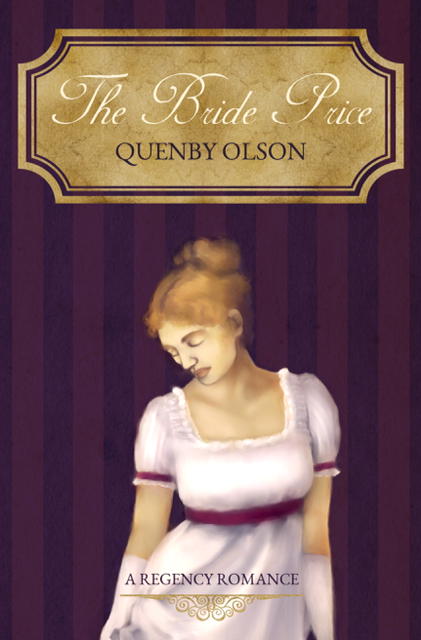
Spotlight on The Bride Price

I first read The Bride Price on Wattpad, following each episode and waiting impatiently for the next. Quenby has updated and polished , and I’m looking forward to reading it again now that it is published. It is a tale of ruination and recovery, of a fall from grace that opens the way to joy, of long hidden love finally rewarded. I loved it.

The Bride Price

To save her family from scandal, Emily Collicott must marry.

Ruined in her first season in London, she is given no choice but to wed her father’s pick for a husband, or be cast out from her home. Emily agrees to marry William Hazlitt, a man she hardly knows. But William remembers her. Growing up as a tenant on her father’s estate, he admired her from afar, their lives kept separate first by class, and then by loss.

Emily seeks to begin a new life with this quiet man to whom she finds herself wedded. But the scandal she escaped in London soon finds her again, the very man who destroyed her reputation threatening to tear down the happiness she’s found with her new husband. To keep from losing everything, she must either make a deal with a devil… or learn how to defeat one.

Amazon ♦ Amazon (UK) ♦ Amazon (Canada)

Excerpt

It did not take long for Emily to learn of her lowered status among the members of London society, many of whom had welcomed her into their homes only days before. Josephine relayed the gossip, much of which had to be amended throughout the day as another round of afternoon teas were concluded or a new report passed through the lower quarters of the house.

“Scandal is like a living, breathing thing,” Josephine informed her near the end of her second day in seclusion. “It grows and it changes, acquiring new features and discarding old ones as quickly as one changes a hat. Today, you might be viewed by some as nothing more than a naive young girl who was set loose on London without proper tutelage or guidance. By tomorrow, you could be the Whore of Babylon, come to destroy us all.”

By the beginning of the third day, Emily was made aware of the prevailing opinion currently soaring through every drawing room and traded over every breakfast table.

“A fortune hunter,” Josephine had told her, getting directly to the point without a hint of delay. “Come to London with the sole intention of trapping a wealthy husband, by any means necessary.”

Emily nodded. If she had been in another person’s place, hearing such salacious gossip from every corner, this would most likely be the easiest theory to believe. “So everyone thinks—”

“—that you sought out Marbley, hoping to be caught in a situation, of sorts.”

“Which I was,” Emily pointed out.

“And thus forcing him to make an offer for you. Except—”

“—he didn’t make an offer,” Emily finished for her. “Instead, he left me to bear the brunt of their condemnation.”

“While he is applauded and celebrated for having made an apparent escape.” Josephine twisted her mouth into an expression of displeasure. “If I were a man, I would call him out. A bullet in his shoulder would serve him very well, I believe.”

“Only his shoulder?” Emily looked up with some surprise.

“Oh, I wouldn’t wish to make a martyr out of him,” she replied, and pulled at a thread that had escaped from the edge of her sleeve. “But a nice, lingering wound would do. Perhaps something disfiguring.”

“The tip of his nose,” Emily chimed in, buoyed along by the sparkle of humor in her friend’s voice.

“Or maybe a chunk of ear,” Josephine said, all mock seriousness. “Only superficial injuries, of course.”

But the levity of that moment had faded too quickly, and Emily once again receded into a depression. Not from any sorrow at her own predicament or because of the opinions of those members of society with whom she was hardly acquainted, but rather from the feeling of absolute helplessness that threatened to overwhelm her.

She was a gentlewoman, and so raised to expect a life devoid of struggle and exertion. She’d been given no training for anything beyond embroidery, music, a vague smattering of French, and composing lengthy letters that covered such fascinating topics as the weather and inquiries about one’s health. And now. . .

Now she was a pariah. Her chances of making a fortunate match had been reduced to nothing. And so she was trapped, a prisoner to her own gentility and the infuriating fact that she’d been born a female.

Meet Quenby Olson

Quenby Olson lives in Central Pennsylvania where she writes, homeschools, glares at baskets of unfolded laundry, and chases the cat off the kitchen counters. After training to be a ballet dancer, she turned towards her love of fiction, penning everything from romance to fantasy, historical to mystery. She spends her days with her husband and children, who do nothing to dampen her love of the outdoors, immersing herself in historical minutiae, and staying up late to watch old episodes of Doctor Who.

Facebook ♦ Twitter ♦ Website ♦ Goodreads ♦ Amazon Author Page

I love research

I know I’ve mentioned this before, but I love research. I even love research when I have a perfectly delightful plot that falls apart when research proves it couldn’t have happened. Working out what might be historically probable instead, or at least plausible, has allowed me to drop down many an exciting rabbit hole into research wonderland.

For example, in  A Raging Madness, my hero Alex has a leg full of shrapnel, and is currently helping my heroine to escape from relatives who are determined to lock her up in an asylum for the mentally unwell.

Shrapnel? What kind of shrapnel? What munitions carried shrapnel at that time? What battles were they used in? How were shrapnel wounds treated? What was the long term prognosis? How about complications? And did they even call it shrapnel?

It took me a while to find a suitable battle, but eventually I put Alex the right place to be on the business end of a canister shell, a cannon ball with a weak outer shell filled with scrap metal. When the cannon fired, the shell burst apart, and a broad fan of metal caused devastation among the enemy troops. And, in my case, on the body of the assigned escort of a British diplomat who was observing the battle.

Ella, my heroine, was the daughter of an army doctor, and I figured she’d solve all of Alex’s problems by removing the shrapnel (and no, they didn’t call it that). But not so. Then, even more than now, removing shrapnel or even bullets (unless they are lead) was a very bad idea.

Even today, going in after a splinter of metal might cause more harm than good, and the world is full of people walking around with bomb fragments buried inside. Back then, with no antibiotics and no anaesthetics, the treatment of choice was to leave the mess alone.

Over time, one of three things would happen. The body and the shrapnel would adjust to one another. The body would reject the shrapnel, moving it piece by piece slowly out to the surface. An abscess would form, and the poisons from the infection would kill the patient unless someone acted to drain the abscess.

Hurrah! I had my intervention. Poor Alex developed an abscess.

But escape? Alex can barely walk, let alone ride. Ella is recovering from addiction to the laudanum that her relatives have been force-feeding her. (Another rabbit-hole: what does laudanum withdrawal look like? Feel like?)

I needed a plausible way for two such invalids to escape.

I chose a canal narrowboat for a number of reasons.

One: I loved the idea of the villains haring all over the countryside looking for them while they ran away by the slowest form of non-pedestrian transport ever invented.

Two: I’ve always wanted to go on a canal cruise, and this way I got to watch YouTube clips and call it working.

Three: By 1807, when my story is set, the canal network stretched from the Mersey (with access to Manchester and Liverpool) all the way to London. Travelling by narrowboat was feasible. Canals were a supremely profitable way to move goods in the early 19th century, and had been for a number of years. At a steady walking speed, a horse could move fifty times as much weight on a boat as it could on a road. The canals provided still water and tow paths to ease the travel, and locks, tunnels, and viaducts to overcome obstacles. Later, canal boats were mechanised, and later still the railways put the canals out of business. But in 1807, Alex and Ella hitched a lift with a charming Liverpool Irishman called Big Dan.

Four: I could put my hero and my heroine in close confines, calling themselves married, for five to six weeks. Not only did they have heaps of time to talk and even to succumb (or nearly succumb) to their mutual attraction, they were also in deep trouble (or Ella was) if anyone found out. They used false names. They stayed away from fashionable places. But even so, their novelist made sure that someone with no love for Alex saw enough to cause trouble.

Five: The time frame let Alex develop an abscess and recover from the operation, all before he needed to be on hand to save Ella when rumours spread about the two of them and their canal interlude.

And down the rabbit hole I went.

Scandal on WIP Wednesday

After: William Hogarth

Scandal, or the threat of it, is a useful tool in historical romance—and in many other types of fiction. Indeed, much of history revolves around what happens when people try to avoid scandal, or when a scandal breaks.

Today, I’m looking for an excerpt to do with scandal: past, present, possible, imagined, or actual.

Mine is from A Midwinter’s Tale, my box set story for the Speakeasy Scribes. It’s the scandal that wasn’t, because they managed to keep their secret.

Tee would have loved to have sisters, or at least known the ones her mother told Uncle Will about. Two older sisters, and a brother who was her twin, and who escaped with her mother. If the escape was real, and not just a kind story Uncle Will made up to comfort a grieving toddler.

After all, it could not be true. Her mother could not have walked out of the twentieth century into a tavern in nineteenth century Boston and then skipped two hundred years to frozen Jogenheim. That was Uncle Will’s story—his pregnant great grandmother had made a double time jump, first to the past and then to her future, where she gave birth to twins. Tee and her brother.

When the PED tried to scoop her up to add to the breeding pool, Tee’s mother and brother stepped through the tavern door into history, leaving Tee to be raised by Will, who was her great nephew and also sixty years older than her.

Tee snorted. More likely, her mother escaped the breeding pool long enough to have Tee, was then locked up, and would arrive once more on their doorstep when her breeding days were over. Breeders who coupled with unlicensed males or hid their babies lost their freedom of movement. Everyone knew that.

If they caught Tee, they would lock her up, too.

Tea with Aldridge

This week’s Monday for Tea post is a little bit of backstory to A Baron for Becky. The Duchess of Haverford interferes in the love life of her son, whose life as a rake has been interrupted by his devotion to his mistress.

“Mama?”

At the sound of Aldridge’s voice, Eleanor, Duchess of Haverford composed her face, smoothing the slight frown that creased her forehead and forcing a smile as she greeted this beloved guest.

“My love,” she said, as he crossed to press a kiss on the hand she raised for him, and then on one cheek. The boy looked well. He had a spring to his step that had long been missing, his eyes were clear and bright, and his cheerful grin had lost the cynical twist so pronounced a bare few months ago—to her eye, at least.

Eleanor hoped what she had to say would not cast him back into melancholy.

Aldridge had been raised with the finest manners money could buy. He took the seat he was offered, complimented her on the success of her most recent entertainment, asked about the book her companion was reading, discussed the likelihood of rain on Tuesday next, and generally kept up his end of the conversation without once showing impatience or asking why she had sent for him.

He must be wondering, though. “Cousin Judith,” Eleanor said to her companion, “I would like a few minutes of private conversation with my son. Would you leave us, please? I will send when I want you.”

“What do you plan for that one, Mama?” Aldridge asked. Haverford had an army of indigent relatives, with nothing to do but hang on the ducal coat tails. Eleanor had long since formed the habit of taking the women one by one as companions, finding their talents and interests, and helping them into positions that suited their skills.

“Not, I think, a marriage, my dear. A library perhaps. She is happiest with her head in a book. Or, I begin to think, perhaps she might be persuaded to try her hand at a memoir or a Gothick. She writes the most delightful letters. I can see her living with Cousin Harriet in a comfortable little house, writing spine-chilling stories and having a most wonderful time.”

Aldridge chuckled. “Cousin Harriet, is it? The one that breeds dogs and hates men? Mama, you are a complete hand.”

“I collect that is a cant expression, Aldridge darling,” she said attempting to be disapproving, but twinkling back at him. He really was a sweet boy.

“You must be wondering why I sent for you,” she began.

He leaned over to kiss her cheek again. “Because you missed me?” he suggested. “I have neglected you shamefully, Mama, these past weeks.”

An opening. Eleanor took it. “These past six months, Aldridge. Since you took Mrs Winstanley into your keeping. You have been much engrossed, I take it.”

Aldridge sat back, his eyes suddenly wary. “I am sure discussing one’s mistress with one’s mother is not de rigueur,” he complained.

“Introducing one’s mistress to one’s Mama opens one to such comments, dear,” Eleanor teased, ignoring the subtle withdrawal evidenced in the suddenly bland voice, the stiffness of his posture.

As she’d hoped, Aldridge relaxed, a fleeting grin lifting one corner of his mouth.

But the matter was serious enough. “One hears remarks, my dear. Hostesses who lack the Merry Marquis at their affairs; gentlemen who must play their cheerful japes without their boon companion; even His Grace your father has commented you have abandoned your usual pursuits.”

“His Grace has no reason to complain. I do my work.”

“Yes, my love. You are an excellent manager. But, Aldridge, I am concerned.”

“You have nothing to be concerned about, Mama.” It would be an exaggeration to say her tall elegant son flung himself to his feet, but he certainly rose more quickly and less smoothly than usual, and then stalked with controlled deliberation to the brandy decanter she kept for him on the sideboard. “May I…?”

She nodded her permission, and he poured a drink while she decided how to approach her topic. It was harder than she expected. She yearned to tell him to do what pleased him, to stay in the fools’ paradise he was building with the lovely Becky.

But she could not ignore the duty owed to the young woman. Eleanor, who seldom allowed herself to feel such a plebeian and useless emotion as guilt, was aware she should have given Becky the means to escape when they met six months earlier. She had quite deliberately put Aldridge’s need for Becky’s brand of comfort ahead of Becky’s evident desire to abandon the life of a courtesan. She did not feel guilty. But she did acknowledge a debt.

“You are not the one for whom I am concerned, Aldridge,” she said.

He had been studying his brandy, but glanced up at that, a quick look from beneath level brows before he drew them into something of a frown.

“Who, then?”

“Mrs Winstanley, dear. I am concerned for Mrs Winstanley.”

Another quick movement, this one sending the brandy sloshing in the tumbler, but he steadied his hand before it spilled. “No need, Mama. Becky and I are very happy.”

“You spend all your time with her, Aldridge. If you are not at her townhouse, she is in the heir’s wing. If you travel, she travels with you. Last time you went to Margate, you stayed with her in the town rather than at Haverford Castle.”

“You are very well informed, my dear.” Eleanor knew that cold ducal tone, but from her husband’s lips, not her son’s. Almost, she stopped. But no; she would do her duty; she had always done her duty.

She matched his tone with her own. “You employ Haverford servants, Aldridge. They answer my questions, as they should.” But this was not to the point. Better to just spit it out.

“If you continue as you are, you will break Rebecca Winstanley’s heart, Aldridge. She deserves better from you.”

Whatever he expected, that wasn’t it. He was too controlled to openly gape, but the muscles of his jaw relaxed. He recovered himself and took a sip of his brandy, gaining time while he thought. It was a trick she used herself.

“What can you offer her, Aldridge? A year? Two? And then what? You cannot marry her, of course…” Was that a flare of longing she saw, quickly suppressed? Merciful heavens, had it gone so far, then?

“You cannot, Aldridge. Even if we could find a way to conceal her past—and with the interest your marriage will attract, every tiny detail of your wife’s history will be uncovered and inspected—she is lower gentry, if gentry at all.”

“Lower gentry,” he conceded, reluctantly. “But what does that matter, Mama? Peers have married beneath them before. What of Chandos? Or, if you want a more recent example, Marquis Wellesley? ”

Eleanor struggled to show no hint of her alarm, keeping her voice level as she said, “And their wives have suffered for it, Aldridge. Their estates, too. You would be doing Mrs Winstanley no favour, Aldridge, even if her past did not come to light. And it would.

“Besides, your duty to your name precludes such an action. You will be Haverford. Your wife will be mother of the next Haverford.

“And consider your little half-sisters, who will only be able to overcome the circumstances of their birth if Society continues to pretend they are my protégées and not your father’s base-born daughters.

“You cannot marry your mistress.”

He opened his mouth to argue, but suddenly the fight drained out of him, taking, it seemed, his ability to stay upright. He sank into a chair, all the joy gone from his face leaving it bleak and lonely.

“I know, Mama. Truly.”

He fell silent again, cradling his brandy in front of his chin and staring into nothing.

She had to ask. “Does she seek marriage, my son?”

Aldridge’s short laugh was unamused. “Becky? Of course not. She has no expectations at all. Not even of common courtesy or kindness, let alone of being treated like the lady she is. And I am a scoundrel for taking advantage of that. Were I the gentleman I pretend to be, I’d set her up as a widow somewhere and leave her alone. After the life she has had… I doubt she would marry me even if I asked. She is grateful to me, but gratitude only goes so far.”

He glared at his mother. “But I will not give her up, Mama. We have the rest of this contract term, and another after that if I can persuade her to a second term.”

“I am not asking you to surrender your domestic happiness, my dear. Just to reduce it a little for Mrs Winstanley’s sake.”

Aldridge cocked one eyebrow in question, but said nothing.

Should she tell Aldridge his mistress was in love with him? She had seen them in the park:  Becky, her little daughter, and Aldridge—by chance as she returned from an unusually early errand and then deliberately several more times. Her son was so absorbed in the woman and the little girl he never noticed the stopped carriage where she sat observing the three of them together.

No. She would say nothing. If he had already considered the logistics of marrying the woman… “You will have to let her go, Aldridge—at the end of the contract, or in any case when you find a suitable bride. The parting will be much harder, for both of you, if she fancies herself in love with you.”

“Spend a few nights a week away from her, my dear. Let her know you are seeing other women. Help her to armour her heart against you, if you love her.”

“Love, Mama? Can Grenfords love? I like her. I respect her. I enjoy being with her. She makes me happy, Mama. Is that so terrible? I’m not sure I know what love is, but I know I don’t want Becky to leave me, or—worse—to hate me and stay.”

“I have every faith in your charm, Aldridge. You will be kind. You will be gentle. And you will do your duty by your mistress as you always do your duty in all things.”

As Eleanor always did hers, she reflected after her son left, and duty could be a cold and thankless  master. Aldridge would not soon forget her role in this day’s work, and Becky would be ungrateful if she ever found out. But it was for the best. She had to believe it was for the best—not just for the Grenford family, but for Aldridge and Becky as well. She hoped it was for the best.

Transport on WIP Wednesday

Boat, carriage, horse, train, rocketship or shanks pony, our characters need to get around. In today’s WIP Wednesday, I’d love to see your excerpts about travel. Mine is from Forged in Fire, my Bluestocking Belles’ box set story for 2017. My characters are tourists in New Zealand’s Rotorua in 1886.

Lottie was pleased to be on the road again. The morning had been a trial with Myrtle determined to exact vengeance for Lottie’s avoidance of her trap. She might calm down a bit now they were once more with the rest of the party, since Mr. Farthingale was avoiding Lottie’s gaze and speaking to her as seldom as politeness allowed, though a gleam in Mr. Farthingale’s eye suggested she should be careful not to let him catch her alone.

The Pritchard family normally took one carriage, while Mr. Farthingale joined Myrtle’s party in the other. How could Lottie avoid the horrid man? Fortunately, her interests and Myrtle’s aligned, and when Myrtle suggested that the two Misses Pritchard might like to join her carriage to discuss London fashions ‘to while away another boring bush trip’, Lottie eagerly seconded her, but lowered her lids to veil her eyes when Mr. Berry climbed up to take the seat opposite her. If Myrtle caught a hint of how Mr. Berry affected her, Lottie would never hear the end of it.

The road wound around the shores of the lake, and then struck up into the hills. They would spend two nights at Te Wairoa, since the trip to the famed terraces of Rotomohana would consume the day in between.

Mr. Berry was distant today, too, but he smiled when he caught her looking at him, so she acquitted him of prejudice and just wondered what had him out of sorts. No. Sad. Something had happened to distress him, though he hid it well.

She left him to his brooding and Myrtle and the young ladies to their discussion, all but pressing her nose to the window. Boring? By no means. Lottie could not see enough of the ever-changing textures and the unending variety of greens in the passing scenery.

Tea with Morag and Caitlinn

London, 1790

Eleanor Haverford welcomed her guests to her private sitting room. Thank goodness the duke was not in residence! He would never approve of such company for her.

In the three years since news of their marriages rocked the ton, the two women before her had made no attempt to join Society. Instead, they had remained on the the most northern of the Duke of Kendal’s holdings; a Scots estate, complete with castle, that had formerly belonged to the most ancient enemies of his family, the Lorimers of Lorne.

As had her guests. The remaining two women of the Lorimer family had married the last surviving men of their traditional foes.

Society had been beside itself when the news broke. Michael Normington, Duke of Kendal, had wed his housekeeper, disappointing dozens of marriage-minded mamas and their tedious offspring. Worse, the housekeeper was worthy of the position, even though she had been hiding her own lofty origins for twenty years. And if she had been concealed in the duke’s household, no one suggested for a moment she had been up to anything unseemly, unless it was with the duke himself. Marriage covered any such sins.

Worse, for those who wanted the ducal title for a grandchild, the duke had found evidence for his first marriage, elevating his base-born son to legitimacy and a courtesy earldom. Which would have been good news if Lord Farringhurst, the new earl, had not married his new step-mother’s cousin, the two couples plighting their troth in a dual ceremony weeks before the news made its way south to Town.

“Scots ways,” her husband had declared. “Barbarians the lot of them. Even Kendal, who is English born. No idea of the proper way to behave.”

But now the Kendals and Farringhursts were in London, and a chance meeting at an inn had led them to accept Eleanor’s hospitality when the roof on their own house proved to be leaky. How her rivals in Society would seethe to know she had stolen a march on them. And Eleanor would be happy to help smooth the way of these new friends if she could. She very much liked what she’d seen of them. Why, the duchess and countess fed their own babies at the breast, and spent every spare minute in the nursery!

Eleanor placed a hand on her abdomen as she swore silently that this child, if it lived, would have the same maternal care.

“We must thank you again, duchess,” said her grace of Kendall. “We will not long trouble you. Our husbands swear the repairs will be completed in a week.”

“Indeed, an inn would have been difficult for the children,” Lady Farringhurst agreed. “We cannot thank you enough.” Upstairs in the Haverford nursery, four Normington infants were being tended by a small army of servants, from both ducal households. Her own nursemaids were glad of something to do, her son, the Marquis of Aldridge having long since been released to the schoolroom.

“It is no trouble,” Eleanor assured them. “I am delighted to have the company.” She blushed. “I do not go much into Society at this time.” With a bare two months until her confinement, and four babies lost in the ten years since Aldridge was born, she would obey her doctor’s every directive.

“Then you must call me Caitlin, and my daughter-in-law is Morag, and we shall be comfortable together,” the duchess declared.

Eleanor smiled broadly. If these were Scots ways, then she much preferred them to the ways of the haut ton. “I am Eleanor,” she said.

Morag and Caitlin, and their husbands, are the lead characters in The Lost Treasure of Lorne, which will form part of my next collection of stories, Lost in the Tale. Lost in the Tale will also include The Lost Wife, My Lost Highland Lass, and possibly one or two others. If I get myself into gear, this will come out late next month or early in September.

Sunday Spotlight on Daring and Decorum

Daring and Decorum, the first volume in what the author hopes will become a series, is a highwayman’s tale with a delightful twist, due out August 1 from Supposed Crimes. It features rambles across lonely moors, daring rides on horseback, sword-fights, unexpected desire, a bit of botany, and endless cups of tea.

The second volume, covering the period of Elizabeth’s first book publication and art showing in London, is entitled Silence and Secrecy. It deals with the secrets Elizabeth must keep to lead a life she never could have imagined choosing, but which now seems the only possible one for her. The author hopes to see it published sometime next year.

Both books feature as a background (and sometimes as a foreground) the political milieu of mid-1790s England: poverty contrasted with lavish wealth, bread riots, calls for political reform, counter-charges of treason and sedition, the movement for abolition, and above all, the fear of the French revolution being imported to British shores.

A separate story involving the highwayman will appear in an upcoming holiday box set from The Final Draft Tavern (which will also feature stories from Jude and Mari Christie!).

Buy Links for Daring and Decorum:

Amazon | Amazon UK | Website | Smashwords

Excerpt from Daring and Decorum

Miss Elizabeth Collington and her widowed friend, Mrs. Rebecca Burgess, have just emerged from a concert in Bath’s Upper Assembly Rooms when they are accosted by an old friend of Elizabeth’s.

I enjoyed the concert, but in truth I found Bath’s constant round of entertainments rather a chore, and was already beginning to long for the quiet routines of home. I was about to voice this thought to Rebecca as we emerged from the Upper Rooms after the performance, when I spotted Anthony and two other gentlemen in the crowd, moving toward us. They made a distressing sight. Anthony appeared not to have changed clothes since the previous night, and had even slept in them, judging by their disheveled state. His cravat hung limply from his collar, its diamond stud missing. His tailcoat remained unbuttoned, and his waistcoat was only partly fastened. His companions were in a like state of undress. Worse, they leaned on one another and staggered together as if they were under the influence of strong drink.

Rebecca pulled on my arm, whispering in my ear, “This way, Lizzie. Pay them no mind.”

But it was too late. Anthony had seen us, and had already tipped his felt hat to us. I could not give my oldest friend the cut direct, no matter his condition. I felt a measure of sympathy for him, and concern over what evils these companions might even now be encouraging in him.

“Lord Burnside,” I greeted him, giving a brief curtsy. I did not smile, but let my eyes show my concern. Rebecca, standing to my left, regarded me for a moment before at last giving her own curtsy.

“Lizzie—” Anthony said with a slight bow. He seemed the soberest of the three. “Miss Collington, I mean.” He turned to Rebecca and did the same. “Mrs. Burgess.” As he straightened, he tried to stand more erect, and to restore some semblance of propriety to his countenance while fumbling at the buttons of his tailcoat. “I hoped we would find you here.” Remembering his manners, he turned to his companions. “Allow me to introduce my friends, Lord Hartwood and Lord Petersly.”

Anthony might have recovered something of his gentlemanly manners, but his companions had not. Before either of us could curtsy to them, the one standing next to Anthony, Lord Petersly, exclaimed, “So this is the one you’ve been pining over. Damn me, Burnside, I can see why!”

Anthony gave him a cutting glare. “Petersly, remember where we are.” Around us, the crowd leaving the Assembly Rooms was thinning as sedan chairs carried people away, but we were still in danger of creating a scene.

As Anthony seemed unable to control his friends, I turned to see how Rebecca would manage the situation. She glared coldly at the three, meeting Anthony’s apologetic gaze at eye level. She had to tilt her head back to look up at Lord Hartwood, who now moved up to her on her left, returning her glare with his own frank appraisal of her person. “I always did like a tall woman. Mr. Burgess is a lucky man.” With an arch grin, he stepped within an impertinent distance of her.

“Stand a pace farther off, my lord,” Rebecca said, fiddling with the sleeve at her right wrist. I had never heard her voice sound so grim and hard.

Just then my attention was directed away from her as Lord Petersly grasped my right hand and pressed it to his lips. Never had I been so glad of my kidskin gloves! Even still, I could feel the rasp of his unshaven chin through the cloth. “It is the greatest pleasure to make your acquaintance, Miss Elizabeth,” he said.

I pulled back at his use of my Christian name, which he should not have known, but he still grasped my hand in his own. Anthony looked on in mortification, but seemed incapable of the slightest attempt at restraining his friend.

“Burnside may have a family that thwarts his desires,” the lout went on, “but I assure you I do not. I would be glad to pay my attentions to a young lady of such blushing manner and attractive person.” His eyes roved up and down, taking in every inch of me.

Finally Anthony had heard enough. “Come now, Petersly.” He grasped his friend by the shoulder to pull him away, stepping in between us as he did so.

Just then there was a jostling on my left as Lord Hartwood gave a cry. I turned to see him sprawling into the street, Rebecca looking down at him as she rearranged the skirts of her gown. All around us the remaining concert goers gasped and paused to watch. “You’re in your cups, my lord,” Rebecca said, “and you’ve trod on my gown.” She put a protective arm around me as the fellow got clumsily to his feet.

“You—” he stammered. “She—”

“What?” Rebecca snapped. “Are you saying a woman threw you to the ground?”

“No, of course not! That would be absurd!” He stared around in confusion. “Apologies for my clumsiness, madam, and—for treading on your gown.”

Rebecca turned me away from them. “Come, Miss Collington, let us leave the young lords to their entertainment. We have an early start tomorrow.” We didn’t bother waiting for chairs, but made our way down the square in front of the assembly rooms toward Alfred Street.

We had not gone far when Anthony made to follow. “Please! Wait!” he called after us. “You must accept my profoundest apologies for my friends’ reprehensible conduct. Please, won’t you allow me to escort you?” He seemed almost sober now.

Rebecca froze and turned halfway to him. “Oh, certainly! We never know when we might be accosted by a trio of drunken wastrels.”

Meet Larry Hogue

Lawrence Hogue’s writing is all over the place and all over time. He started out in nonfiction/nature writing with a personal narrative/environmental history of the Anza-Borrego Desert called All the Wild and Lonely Places: Journeys in a Desert Landscape. After moving to Michigan, he switched to writing fiction, including contemporary stories set in the desert and fanfiction based on the videogame Skyrim. He’s a fan of folk music, and got the idea for Daring and Decorum while listening to Loreena McKennitt’s outstanding adaptation of Alfred Noyes’ poem, The Highwayman. When not speaking a word for nature or for forgotten LGBT people of history, he spends his white-knighting, gender-betraying energies on Twitter and Facebook, and sometimes on the streets of Lansing, MI, and Washington DC. He’s been called a Social Justice Warrior, but prefers Social Justice Wizard or perhaps Social Justice Lawful Neutral Rogue.

Website | Twitter | Facebook | Pinterest | Amazon

Relatives on WIP Wednesday

This week’s post is about relatives. All of our protagonists have them, even the orphans. And, dead and alive, they contribute to our hero’s and heroine’s situation, if only by helping to form their character.

As always, I invite you to put an excerpt in the comments where a relative of your hero or heroine is mentioned or appears. Mine is from Forged in Fire, my story for the Bluestocking Belles 2017 boxed set.

Bother. Botheration. Not for the first time since Cousin Myrtle had offered her a refuge from her disgrace, Lottie wished she had dared a few of the choice epithets she’d heard her brother use. He always apologised for offending her delicate sensibilities, and at the time, she had been shocked, as her upbringing demanded. But oh how she wished he was still alive to shock her again.

She tucked her guilt and her grief back where they belonged, deep below the surface. This evening would be trial enough. Mr Berry was waiting for an answer, his eyes fixed on hers.

“Thank you, but I suspect that will just make things worse. Mr Berry, I should warn you that my cousin is very likely at this moment impugning your reputation to the other guests. I am very sorry. I should not have come, or at least, I should have asked for a maid to accompany me.”

The brows dived inwards as he frowned. He really was remarkably good looking; the contrast between his workman’s muscular build and sun-darkened skin, and his gentleman’s speech and good manners, only adding to his appeal. “My reputation? And yours? But we have not been alone, Miss Thompson.” He waved to the group of natives who were chatting just outside the door, Mr Berry’s partner, Mr Te Paora, among them. A magnificent young woman with a tattooed chin waved back.

“I did not realise that the old harridan was your cousin,” Mr Berry continued. “My commiserations. Why would she spread malicious gossip about her own relative?”

To keep Lottie under her thumb, of course. Myrtle had been a bully from the first, but when Lottie recovered enough from her grief to rebel, she found herself trapped. Without money of her own, she needed a paid position or a husband, and in the circumstances of her disgrace, Myrtle had the perfect weapon to keep her from either. It was old news now, more than a decade gone. But Myrtle had added to it over the years with supposition and outright lies. And circumstances like this, which were not what they seemed.