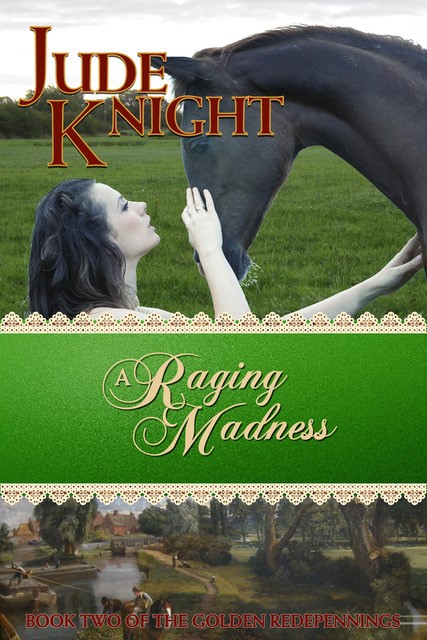
Book tour for A Raging Madness

A Raging Madness went live three weeks ago, and is still in the Hot New Regency Release list on Amazon.

It’s the second in The Golden Redepennings series, and stars Alex who waltzed in a wheelchair in the first. He’s recovering from a crippling injury that nearly cost him a leg. Ella, the heroine, is escaping in-laws who have been keeping her drugged and imprisoned. Together, they search for answers and a future.

Follow the book link for buy links and the blurb, and I’ll keep adding links as they go up.

I’ve been on a virtual tour to promote the book. Check it out here. There are prizes!

Antisepsis pre-Lister

According to a quick Google search, antisepsis was invented by Joseph Lister. A number of study sites make this claim, so it must be right. True? No, false. Lister pioneered the widespread use of carbolic acid for surgical instruments and operation theatres. That’s true. But the history of antisepsis is older and much more interesting.

Antisepsis is the use of special cleaning practice for cleaning a sick, delivery, or operating room and any wound. Anti=against and sepsis=the presence of harmful bacteria and their toxins in human tissue (or, in other words, infection).

And human beings have been fighting infection by various means since the dawn of time.

A little of what you fancy

Observation gave our ancestors lots of information about what happened when a person had an open wound, how likely the patient was to sicken and die, and what the carers could use to improve the odds.

The Ancient Greeks, the Egyptians, the Chinese, and the doctors of the Muslim World all wrote about and practiced antiseptic techniques. They used various substances to clean rooms, clothes, equipment, and people. They covered wounds with dressings coated in other substances. And all long before Lister. Wine or vinegar or alcoholic spirits. Honey. Certain muds. Mouldy bread. Distillations of sulphur, silver, or mercury. Herbs and mushrooms. Green tea. Lime and iodine. Even fire, to cauterise a wound or burn away a corpse or a patient’s clothing and dressings.

Something in the air

They were disadvantaged by not knowing the enemy they fought.

From the time of the Ancient Greeks, western medicine believed that wound infection was caused by air; that wounds became inflamed and then full of pus and eventually gangrenous because they were exposed to air.

It made sense. A person with a simple fracture healed with no infection. A compound fracture that broke the skin frequently led to infection. Similarly the difference between an internal wound and an exterior one. A person might die of some internal ailment, but their chances of infection were hugely increased by surgery to fix it.

So what was it about the air? Our medical pioneers had a couple of theories.

One was that cold was the precipitating factor. The inside of the body is a nice warm place. If the person has an injury or surgery, cold air gets into the wrong place and makes the person sick. So get the wound covered as quickly as possible with something that will keep the air out.

The other was to do with smells. Everyone could see for themselves that more people got sick in bad smelling places. And fewer of those who were sick survived. Moving a soldier out of the hospital where everything smelt awful and into a tent or barracks increased his chances of survival.

Hence the plethora of techniques to counter the smells of disease and corruption.

The techniques worked. Sort of. Some of the time

It was all very hit and miss, and how could it not be when germ theory had not yet been imagined, let alone proven? But mouldy bread, if it is the right kind of mould, will help to prevent infection in wounds, as will honey, and washing instruments in alcohol or boiling water or even simple soap will also help, as will thoroughly washing hands, changing bed sheets, and wearing clean clothes (rather than, for example, going straight to an operation from changing a dressing on a patient whose wound is infected).

The eighteenth century was a time of codification and discovery, laying the groundwork for the great advances of the nineteenth. The word ‘antisepsis’ appears in print for what was probably the first time in 1721, and both British and French doctors explored a variety of ways to prevent wounds from going bad.

My personal hero is Dr Alexander Gordon, a naval surgeon on half pay who became a general practitioner at Aberdeen Hospital, specialising in obstetrics. He wrote compellingly of the connection between contagion and puerperal fever 50 years before the pioneer Semnelweiss, and who even suggested parallels with the type of fever that appeared in wounds or after operations. His Treatise on the Epidemic Puerperal Fever of Aberdeen said:

By observation, I plainly perceived the channel by which it was propagated and I arrived at that certainty in the matter that I could venture to foretell what women would be affected with the disease, upon hearing by what midwife they were to be delivered, or by what nurse they were to be attended during their lying-in; and in almost every instance my prediction was verified.”

Touchingly, he admitted:

It is a disagreeable declaration for me to mention, that I myself was the means of carrying the infection to a great number of women …

What a guy. Clear headed, not so stuck on doing things by the book as to miss what was happening in front of his eyes, and ready to take responsibility when he realised that women only suffered from the illness if they were attended by nurses, midwives, or doctors who had attended a previous sufferer.

Not long after he published his theory, Gordon was called back to sea, where he contracted tuberculosis. He died in 1799.

Link with A Raging Madness

In A Raging Madness, my heroine was the daughter of an army doctor. As a girl and young woman, she had worked alongside her father, and she uses the skills she learned to operate on an abscess to save the hero.

She mentions her father’s agreement with Gordon’s theories to explain why she insists on cleanliness while operating. How did she and her father hear about them, since they were away overseas at the time? Ella’s father died in 1797, and the Treatise was not widely known.

Fortunately for me (but not for Aberdeen), the second of two epidemics of puerperal fever in Aberdeen was in 1792. I’m assuming that Gordon and Ella’s father were friends; perhaps they served together at the same hospital when they were training. And perhaps they corresponded after Gordon joined the navy and Ella’s father the army. It’s all possible, right?

Beginnings on WIP Wednesday

A Raging Madness is in the Pending Review queue on Smashwords, and I’m celebrating by writing a short story for next week’s newsletter.

So this week, I’m thinking about beginnings. Use the comments to show us an excerpt of a beginning (of your book or of a chapter). Here’s mine from the as yet unnamed story I’m currently writing. Subscribe to my newsletter if you want to know what happens next.

“It’s too dangerous,” Wakefield reported as he approached, shouting to be heard above the wind and the sound of the brook. Not a brook today; twenty yards of seething roiling water stretched bank to bank, branches and entire trees rolling and colliding in their frantic race to the distant sea.

Blade had waited with the horses while the other two checked whether the bridge was safe to cross. He frowned across at the far bank, just visible between gusts of rain. So close! Natching Brook marked one boundary of the Collingwood lands; another twenty minutes would have seen them at the manor.

But the twenty yards might as well be miles. They’d not end their journey today. Even from here, he could see the bridge shuddering as its piles were battered: by the water, the trees, bits of fence post or building or boat, the occasional pathetic corpse of an animal swept away by the flood. And more. That constant grumbling rumble was boulders washed from the banks and rolled by the force of the brook, a giant watery hand playing at bowls.

The third member of their party joined them. “The bridge at Stenforth may still be passable. The river is wider there.”

“Stenforth has a decent inn,” Blade remembered. “Stop there and carry on in the morning?” He made a question of it, and added a belated “my lord.” Baron Collingwood was eager to return to the ancestral estate that had ejected him so violently ten years ago, but it would be rank foolishness to carry on in this weather at this time of day. He and Col had not survived so much and for so long just too lose all on the last hand.

Col nodded, and within minutes the three of them were mounted and heading back up the river. Col led the way, Wakefield next, and Blade brought up the rear, his eyes scanning constantly for threats, though what villain would be out in this storm was more than he could say.

Here came another corpse, washing towards him on a flat section of planks; a sheep perhaps. No; a white dog, sheep-sized and woolly. It was almost level with him when it lifted its head. Alive? Not for long, in this torrent.

Blade did not stop to think. In moments, he had his horse wrenched around and galloping back to the bridge. He hurled himself onto the rickety structure, stretched full length to distribute his weight, and reached down into the current just in time to grasp the poor beast by handfuls of fur.


Tea with Alex

The best way to move Alex downstairs, his sister had decreed, was to press a chair into use and set a stout footman on each leg. Susan insisted he spend part of each day out of his room, and in truth he was going mad with only the same four walls, the same ceiling, to distract him from the pain and the craving for the oblivion of poppy juice. To which he would not surrender. He might be in agony, but at least he was in his right mind.

So here he was, dressed at least above the waist, ensconced on a sofa in the smaller of the two drawing rooms with a view out over the early Spring garden.

The blanket draped over his bandaged broken legs to hide them from sight and protect the modesty of the maids was the lightest Susan could find, most of its weight taken on cushions either side of the useless appendages. They would heal. Or so the doctors promised, though weeks ago they had proclaimed he was certain to die, so perhaps they were wrong again.

Susan had left him with a pile of books and a pack of cards, all within easy reach, and had promised him visitors to amuse him. Even so, he did not expect the butler’s announcement.

“Her Grace the Duchess of Haverford. The Marquis of Aldridge.”

Decades of conditioning had him attempting to rise—a poor effort that died in a white blaze of pain, and the gracious lady had seated herself and was holding his hand in a firm grip before he fought it back enough to be conscious of her again. And of her son, who was returning across the room from the brandy decanter, a glass in his hand.

“Redepenning,” he said, in greeting, handing over the drink. Alex let it burn down his throat, not waiting for it to warm. Breathe. In through the nose, out through the mouth. And again.

“Don’t try to talk until you are ready, Major Redepenning,” Her Grace cautioned. “The sick bed is no place for conventional manners. Besides, Aldridge and I have come to entertain you, not make you feel worse.”

Even a serving officer (at least one from his family) knew the Duchess of Haverford entertained visitors At Home on a Monday, and surely today was a Monday?

But Her Grace answered the unasked question. “I have been anxiously waiting to see for myself how you are, and today is the first that Mrs Cunningham allowed you to have visitors. So here I am, though it is a Monday, and Aldridge swears that the world shall wobble in its orbit at my departure from practice.”

“But one would not wish to be predictable, Mama,” Aldridge teased.

Alex cracked open an eyelid and then another. The room was no longer spinning, and the brandy had helped settle his nausea. He had been wrestling with his pain for long enough that the servants had brought in a tea trolley.

“Thank you for your good wishes,” he said, his voice calm, if a little strained.

The duchess gave his hand another squeeze and released it so that she could prepare herself a cup of tea. Aldridge, Alex noted, had helped himself to the brandy.

“I can see you are in pain, and look half-starved, my dear,” Her Grace said, “so I will need to take your sister’s word that your condition has improved, and forgive her for being so protective. Now. We shall not remain long, so what do you wish from us on this first visit? Shall Aldridge give you the news? Or shall I show you what we have brought to amuse you?”

“I have war, government, and court news,” Aldridge offered, “and Mama knows more than me about what is newsworthy in Society. If you want to hear about less disreputable matters,” he slid a glance sideways at his Mama, “we will ask Her Grace to step into the next room.”

The world was carrying on without him, and Alex could not summon the energy to care. “Presents, Your Grace? You are too kind.”

“My dear Major, you were raised almost a brother to my dear nephew, you are my good friend’s son, and I have known you from the cradle. I can spoil you if I wish. Besides…” She lowered her voice, “Her Majesty has told me something of the circumstances of your injury, and I am grateful on her behalf.”

Alex grimaced. All the gratitude in the world wouldn’t give him back the use of his legs.

But the duchess intended him to make the most of sitting in one place. In the ten minutes that was all she allowed herself, she loaded him with gifts, some purchased and others made specifically for him.

First, she had Aldridge and a footman bring in a table made with two legs so that it would fit across the sofa, and informed him that one with higher legs had been delivered to his bedroom.

“Now that you can sit up, Major Redepenning, you will find this surface more stable than a tray for taking meals, keeping up with your correspondence, playing cards, or whatever pleases you.”

A long procession of packages followed: books, a games board marked for backgammon on one side and chess on the other, the pieces in a matching box, several packs of cards, note paper, an inkwell that Aldridge assured him was non-spill.

So many, each showing the giver’s awareness of his interests and his limited abilities, but when Alex roused himself to express his gratitude, the duchess claimed that Aldridge had been her deputy in choosing what to bring, and Aldridge brushed off his thanks with a challenge to a game of backgammon “In a day or too, when you are more the thing.”

By the time Susan returned from whatever errand had taken her out, Alex had slept for a restless half hour and was laying out a solitaire game of patience on his new table. He greeted her with a smile, and she exclaimed with delight, “You are feeling better, Alex. I hoped you would.”

And he was, he discovered. The pain was no less, the legs no more co-operative, but the visit had done him good, reminding him that he had friends who loved him, and that the wide world still waited on the other side of this long stretch in the sickroom. He would get better. He vowed it. He owed it, after all, to the doctors, having confounded their expectations once.

This scene takes place some time in March 1807. Readers of Farewell to Kindness will see Alex, a secondary character in that book, still recovering but able to get around on crutches and in an invalid chair. My forthcoming novel, A Raging Madness (published 9 May 2017), begins in October of that same year, as does A Baron for Becky. Alex is the hero of A Raging Madness, and Aldridge could have been the hero of A Baron for Becky, but chose to please his family rather than follow his heart. Poor Aldridge.

Rakes, Rapists and Alpha-jerks

This is the flip side of my ‘In praise of decent men‘ post. In this post, I’m going to talk about ‘heroes’ you won’t find in my stories (and a little about heroines that I won’t write, too).

You can’t reform a rake

One enduring trope of romantic fiction is that reformed rakes make the best husbands. Nothing wrong with that. It ignores inconveniences like illegitimate children and sexually transmitted diseases, and embarrassments like knowing your husband has slept with half the women you meet at any given social occasion, but this is, after all, romantic fiction.

It also makes the possibly erroneous assumption that said rake’s conquests depended on an application of charm and technique that could later be applied to the lucky wife. I’ve written comparing the rake of fiction with the real rakes of history, but again, let it pass. Undoubtedly, some rakes were both charming and skilled, so why not the hero?

I don’t object to heroes who have been rakes and who reform to become devoted husbands. Some of my favourite novels have ex-rake heroes.

What I don’t like and won’t write is the concept that all the rake needed to reform was the love of a good woman. I mean, I know this is fiction, so I’m not looking for fact, but I am looking for truth. We all know what happens to any female who takes this trope seriously and tries to apply it in real life. Maybe he’ll behave for a few weeks, or even a few months. But soon enough someone else’s perfume lingers around his shirts, and he spends more nights out than home (working late again? Yeah, right.)

You can’t reform a rake. The rake can choose to reform, and falling in love may be the impetus for the final shift in behaviours. But I’m looking for signs that he was already changing his way of life before the heroine came along, or the book goes.

At the worst end of the scale is the guy who falls in lust with the woman, seeks to seduce her thinking that will get her out of his system, and then is converted to true love by the power of her Magic Vagina.

Do Not Finish. Hate that Hero. Don’t much like that Heroine.

No doesn’t mean try harder

Rape was purportedly popular in romantic fiction decades ago. The heroine is in the hero’s power, and he uses that power to coerce her into sex, which she absolutely loves. She then goes on to fall in love with him, thanks to the potency of his Magic Penis.

I’m okay with seduction, and it is even more fun when it’s a game two people are playing, neither one aware of the intentions of the other. I absolutely abhor forced seduction, of any kind.

An arranged marriage story can be beautiful, if carefully handled. I’ve even read a story or two that I really liked where the heroine is in the hero’s power. If he’s the right kind of hero, he will leave her room to give true consent, and if he doesn’t, he’s no hero.

If one of the sexual partners has not consented, then it isn’t intercourse, it’s rape. Simple. Doesn’t matter if the unwilling partner then enjoys the physical sensations. In fact, the betrayal of one’s own body probably makes it worse.

Do Not Finish That Book. Throw At Wall.

Alpha-jerks are still jerks

Woman who trusted an Alpha-jerk

The Alpha, Beta, Gamma classifications have fallen out of favour in animal psychology, so I’m told. Pack dynamics are more complex than people thought. But they still have some useful application in writing romantic fiction, as I’ve discussed in a post called ‘Alpha and Omega‘.

An alpha hero is a natural leader; the man everyone turns to when things go wrong, the man who makes the decisions and keeps the group strong and together.

That doesn’t make him a good man or a good hero. It just makes him the boss.

Is he bossy, domineering, unwilling to listen to anyone else or to give credit to others? He’s not a hero; he’s an alpha-jerk. Stand clear. Do Not Breed From This Man.

Holidays, Holydays, Carnivals, Festivals, and Vacations

We’re on holiday this week, away for some rest and recreation. This is the third year that my beloved and I have met my brother-in-law and his wife in Rotorua, which has been billing itself as New Zealand’s thermal wonderland for more than 100 years.

The getaway has become part of the rhythm of our life; something we do each year as Autumn slides down towards Winter.

Other regular patterns are punctuated by the liturgical year of our Catholic faith. We’ll be home for Palm Sunday, to be followed by Holy Week and Easter. Ascension Thursday, Pentecost (which the English used to call Whitsunday), the beginning of Advent, Christmas, and around again to Lent. And lots of other feast days and commemorations along the way.

Some of these have also become secular celebrations, joining national commemorations like Anzac Day and Waitangi Day. And sports adds another whole layer of seasonal markers: duck-shooting season, the first day of rugby or cricket or athletics for the year.

Then there are the markers particular to our family: anniversaries of good things and sad. Weddings, births, deaths. The night my beloved and I first kissed. (August 3rd 48 years ago! Where did the time go?) The day we experienced our first snowfall after moving from the North Island to the South. Births of children and grandchildren. The day my mother died. Milestone events, many of them at crossroads on my life’s journey.

In the past I write about, those living in the English countryside still measured their years by the changing seasons, with the liturgical year intertwined around the natural rhythms. The English term for holiday comes from the old English word for holy day. In medieval times, holy days meant only basic necessary work. Peasants worked long hours, of course, during spring planting and the harvest season, but they expected, and got, time off in the rest of the year. (Relatively speaking. No swanning off to the coast for a week; animals and people still had to be fed.) Even better if the holy day was also a festival, for the term festival comes from the Latin word for joyous, and by the 14th century had already taken on the connotation of an abundant meal, a feast.

Feast days punctuated the year; major feasts like Easter, Christmas, the Epiphany, and the feast day of a local Saint; minor feasts for other saints. And all of them had their own special food: in England, Simnel Cake, Twelfth Night Cake, Tansy Pudding, Shrove Tuesday pancakes, and on and on.

Carnival is an interesting word. It comes from an old Italian word meaning ‘to remove meat’, and originally meant the day before Lent, a time of penance when no-one in the Catholic world ate meat. Or does it? Some scholars think it predates Christianity and has something to do with the worship of the goddess Carna, to whom worshippers sacrificed pork and beans. At first glance, their rationale seems to be based more on not wanting the origin to be Christian than on actual evidence, but there you go.

The last word on my list is vacation, which is what they call holidays in the United States. The term is a more recent one, and has Puritan roots. The Puritans didn’t think much of holidays. Six days a week you worked, and the seventh you prayed. However, school worked by different rules, if only because the children were needed at home to help with the harvest. The teacher and students vacated the classroom; in other words, they went on vacation.

I appear to be falling into the habit of including annual celebrations in my Golden Redepenning novels. Farewell to Kindness revolves around the week following Whitsunday; A Raging Madness (out in May) reaches its climax at Easter; the one I’m writing now, The Realm of Silence, takes place over midsummer. And the research is fascinating. In the early 19th century, many of the old traditions survived, at least in country areas and among the ordinary people. A few still survive into the modern day. What traditions do you and your family keep?

Also see: To everything there is a Season; Festivals on WIP Wednesday


Shopping on WIP Wednesday

Crowe, Eyre; Johnson (1709-1784), Doing Penance in the Market Place 

Do your characters shop? Go to the modiste, the tailor, or the milliner? Buy a horse or a carriage at Tattersalls? Buy flowers from a girl on the corner?

This week, I’m looking for shopping excerpts. Mine is from A Raging Madness, which is coming out on 9 May. (I hope to be adding buy links within the week.) In this scene, my hero and heroine have been forced into travelling disguised as husband and wife, which is causing some discomfort. The market is in the town of Stowe-on-Trent.

They wandered the market, stopping first to buy some meat turnovers, rich in gravy and with crisp, flaky pastry that clung to their fingers so that Alex stopped at another clothing stall to buy a rag for them to wipe their hands. They shared a jug of small beer, and Alex purchased a pear each to crunch on while they continued around the stalls.

Pat returned, and trailed them at a distance, keeping them in sight but leaving them to one another’s company. They bought some supplies to put into the housekeeping on the boat: leaf tea, a ham bone with plenty of meat still on it, some vegetables, a loaf of bread. Alex bought her a bunch of Michaelmas daisies from a flower girl, which she held in the hand not tucked comfortably into the crook of his elbow, warm against his body.

The proximity heightened the thrum of awareness that had been plaguing her for days. Years. For years, she had kept the gorgeous Major Redepenning at a distance with a cool reserve, ruthlessly suppressing any outward signs of her unfortunate reaction to his physical presence.

Under the circumstances, her defences were in ruins. He had rescued her, believed in her, put himself at risk to help her. The least she could do was to respond to his conversational overtures, laugh at his jokes, enter into his plans for the rest of the day. Besides, for at least the rest of the canal trip—weeks though it may be—they had to play the part of newlyweds, whatever that cost her in uncomfortable dreams, asleep and awake.

No other man had ever affected her so. Perhaps if she had lusted for Gervase the way she yearned for Alex, they might have made something of their marriage? But no. Gervase would still have been a bully and a cheat. And besides, by the time she met him, it was too late. She was, sadly, a one-man woman. And Alex—though he would never know—Alex was the man.

A stall selling herbs and elixirs attracted her like a bee to nectar, and she was soon in deep discussion with the stall owner over the bundles and packages and bottles, while Alex leaned against the side of the stall and looked on with a smile.

Tea with Ruth

Ruth Henwood had taken tea with the Duchess of Haverford several times, and each time had felt out of place; a pit pony in a herd of thoroughbreds; no, a metal kitchen mug somehow displaced in among the exquisite oriental tea cups.

Today was a thousand times worse. On every previous occasion, she had trailed along as companion to Lady Chirbury or one of her sisters, to be included in the conversation not because she belonged, but because the ladies she worked for loved her and because the duchess was kind. Today, she was alone, and here by personal invitation.

She had reread the perfumed note several times; checked that the inscribed name was indeed her own; traced the signature with one mystified finger. Eleanor Haverford. What did Her Grace want?

Had she somehow discovered Ruth’s less than stellar origins? She had been born into the lower reaches of gentry as her improvident father and foolish mother made the final fall into poverty, orphaned before she was twelve, and educated only through the mercy of a charity school and a sponsor with a kindness for her mother. At her very first job as a governess, she had failed to protect herself or her charges. Somehow, years later, she found herself treated as an extra sister by the ladies of an earl. Surely they would stand up for her if the duchess was inclined to expose her to Society as the fraud she was?

She shifted uncomfortably then stilled her limbs. A lady did not fidget. A lady sat with her hands folded neatly in her lap and her face composed and calm, not matter how much turmoil disturbed her mind and her heart.

“Miss Henwood? Her Grace will see you now.” Ruth rose and followed the maid from the little room where she had been deposited to await the duchess’s pleasure. No. That was a sour thought. She had arrived early, and had waited not above ten minutes, for all it felt like hours.

The duchess was waiting an elegant room Ruth had seen before, but it seemed somehow larger and richer with only the two of them present, for the maid simply opened the door for Ruth and withdrew.

At the duchess’s invitation to take a seat, Ruth realised she had been frozen just inside the room. Only years of practice at hiding her thoughts allowed her to cross to the indicated chair; to keep up her side of a harmless conversation about the weather and Ruth’s beverage preferences.

What was the duchess up to? Even if Ruth dared put that question to the exalted lady, she would not receive an answer until Her Grace was good and ready. The duchess was known both for her near omnipotent knowledge about those who were broadly called Society, and her ability to keep her own council. She would speak if and when she was ready, and not before.

Ruth finished her tea and accepted a second cup, ate one of the dainty savoury tarts, discussed the dangers and benefits of the new gas lighting, and agreed that the fashion for square necklines would be very flattering to Kitty, Lady Chirbury’s sister.

Indeed, several of the gowns ordered for Kitty’s coming Season had that neckline. Ruth managed not to frown; the duchess herself was sponsoring Kitty at the Queen’s first Drawing Room in the new year, with her debutante ball to follow right here at Haverford House. The social whirl Kitty had so eagerly anticipated for several years was almost upon them, but last summer’s experiences had sucked the joy from her.

“Yes; I am very pleased with our purchases so far,” the duchess commented. “I am not so pleased, however, with what I observe of our dear Kitty.” She held up a hand as if to stop Ruth from commenting. “She jumps at shadows, and I see shadows in her eyes, Miss Henwood. Something has happened. She manages to hide it very well, especially when her sister is watching, but she has consented to this Season to please Lady Chirbury and not because she wishes for it.”

That was true. Kitty had even cited Anne’s desire to give her a Season when Ruth had suggested they could postpone if Kitty felt unready.

“You must see that I need to know, so that I can protect and support her, Miss Henwood. I cannot ask Kitty herself; not when all I have is guesses and rumours. Nor will I ask Lady Chirbury, given her condition. So I depend on you. What happened to my protegée? And what did Lord Selby have to do with it?”

Ruth is a secondary character in Farewell to Kindness, and a witness to at least one of the experiences that changed Kitty from a carefree and confident young woman to one who is papering over the cracks in her composure by sheer force of will. Kitty will have her turn as heroine later in The Golden Redepenning series, in The Flavour of Our Deeds.

Also see Tea with Anne, Tea with Kitty, and Tea with Rede.

In praise of decent men

“All your heroes are too decent,” a friend told me. “You need someone different. A real scoundrel.”

So here’s the thing. I like decent men, and I’m none too fond of scoundrels.

Let’s define our terms

A decent man may have his problems. But he won’t deliberately pursue his own needs and desires careless of the consequences. He will make sacrifices without expecting a reward, because the happiness of someone else is important to him.

To a scoundrel, on the other hand, other people are not fully real. They exist as background, tools, playthings, or obstacles, but not as people. Even when he loves, he loves himself first. If he makes sacrifices, it is in full expectation that he is surrendering one thing to win another.

In fiction, as in real life, people sit somewhere on the continuum, from thoroughly decent to entirely scoundrelly. Scoundrelous? Scoundrelish? And my friend is suggesting that heroes too close to the decent end are both boring and unlikely.

It’s all about the journey

I’m looking for two things in a story I read, and both are to do with what changes for the main protagonists between the front page and the last.

The first is the external journey. Each main character has an external challenge to face and overcome. This is the plot, and it needs to keep my interest or I won’t finish the book.

The second is the internal journey. I am looking for my main characters to grow, mature and learn from their experiences, and above all from their interactions with the other characters. It’s one of the reasons I read and write romance. People in love are willing to put aside their fears and their habits for the sake of the other, so romances are a prime opportunity for internal journeys.

A well written internal journey shows in what a person says and does, and requires a deep understanding of human nature and of the characters who need to respond to outside pressures and personal yearnings according to their personalities and experiences. What might drive one man out into brothels and bars might set another into a hermitage and a third onto a battlefield. And what will bring each of them out of their despair will likewise be different.

I want to see the hero grow

So to me, a decent man needs to change to make the story interesting. He might be nursing a broken heart, obsessed with a goal to the exclusion of all else, fighting personal demons, even convinced the world revolves around him. If he is able to get out of the beam of his own sunshine to care about the needs of someone else, he is fundamentally decent.

A scoundrel is not ever to be trusted. When he makes choices, he will always have himself and what he wants as his deciding factor.

But I have to believe in the change

Continuum again. I can think of many books in which the scoundrel has a core of decency that the heroine is able to reach. But the ones that convince me show evidence of that core. The scoundrel saves an inconsequential child from a bully. Or is kind to an elderly widow. Or sends the heroine away because he is afraid of hurting her. In Elizabeth Hoyt’s Scandalous Desires, the river pirate king has been building a second secret life where he doesn’t have to be a scoundrel, and Darcy Burke uses the same device in Scoundrel Ever After.

By contrast, I’ve read a few stories in which the scoundrel hero is bad (or perhaps broken) to the core, but makes an exception for the heroine, and I don’t believe them. Not for one minute. Anna Campbell’s Duke of Kylemore walked very close to the line, but in the end Campbell convinced me that he has really made the transition from scoundrel to decent man. Lucinda Brant’s Duke of Roxton claims to care for no-one but himself, until he meets his Antonia. But the reader knows he is kind to his friend and his sister. Others remain scoundrels, and through-and-through scoundrels can’t love anyone but themselves, whatever their current emotional state.

If the hero decides what is best for the heroine based on what he believes to be best for him, the hero is a scoundrel. If the hero’s new respect for and decency towards the heroine doesn’t affect how he feels about anyone else, then the hero is a scoundrel. The change will reverse as soon as their relationship hits a dry patch (and all relationships hit dry patches). Either way, book, meet wall.

Non-fiction should be factual; fiction should be truthful

It matters because fiction matters. Yes, the stories we tell are fiction and fantasy. But they also reflect and in some ways shape people’s expectations. I write fiction, not fact. But fiction should, whatever it else does, tell the truth about people. I write romance, which means I have a responsibility to be honest about the places where love can thrive. And love with a scoundrel is not a place where love can thrive.

Rakes rarely reform. Bad boys remain both boys and bad. Love can go tragically wrong and end in abuse, even death. Or it can wound rather than kill, leaving its victims with broken hearts, low self-esteem, unwanted pregnancy and disease. Women are better off alone than stuck with a scoundrel. This is truth, and telling the truth is my job.

And that’s why my heroes are decent men.

Spies and other creepy crawlies

The last decade of the 18th century and the first of the 19th was not all balls, assemblies, and house parties, even for Britain’s top ten thousand families. Radical notions were abroad. Outrageous ideas such as land reform, a fairer distribution of resources, and universal male suffrage. Even female suffrage, but that idea didn’t have support beyond a very small group of women.

In the view of those who controlled the country, such ideas were dangerous. It seemed clear to most of our aristocrats that God had ordained a system in which the rich spent more on a single waistcoat than the seamstress who made it earned in a lifetime of sewing. The French Revolution had shown that the poor did not agree.

Was the threat real?

Coffee houses were meeting places for those who wanted to discuss radical ideas.

How real was the threat that the downtrodden labourers of Britain would rise up like the French, kill their betters, and sweep away all the apparatus of government, church, and Society? It didn’t happen. Minor flare-ups and riots did not draw the kind of popular support the rebels hoped.

Perhaps the British people did not have an appetite for the kind of bloodbath that had happened over the channel. Perhaps Parliament made enough changes, albeit slowly and reluctantly, to give reformers hope for a legitimate social evolution.

Or perhaps the desperate endeavours of a cadre of spies provided sufficient information about the radical societies that their paymasters could nip revolution in the bud.

Who were the spies?

When I hear the term ‘spy’, I tend to think of people operating in the territory of some foreign power, as part of a declared or undeclared war. And this period had those, too. More about them another time.

But today, I want to talk about the spies that worked within Britain, infiltrating radical groups and feeding information back to the government official or nobleman who employed them. I became interested when I realised that my current hero and heroine, and the heroine’s fifteen year old daughter, we’re heading straight into the middle of the 1812 riots in Lancashire and Yorkshire. Riots? Revolts? Or damp squibs?

And what did they do?

Georgian spies did not merely report the plans of the little groups who fomented the rising. They contributed to riots and attempted revolts, by enthusiastically providing false information to the organisers so that they would have plans to sell to the government.

Certainly, the government paid large sums in bribes and reward to those prepared to join an organisation that was possibly fomenting revolution. The spying effort was managed across various agencies and individuals, all working independently of one another, and researchers reading government records have unearthed a six-fold increase in costs in the last two decades of the 18th century.

More police stooge than James Bond

Today, anyone going undercover in a democratic nation is hedged about by restrictions designed to protect the rights of citizens. For example, in most countries, the agencies need evidence to convince a judge that a crime is being committed. Back then, all it took was a willing person and a purse full of cash.

And entrapment is a crime. An officer who entices a gang member or terrorist into committing a feolony is themselves guilty of a crime. Not so back in the tumultuous years of which I write though, depending on the jury, evidence of entrapment could and sometimes did, lead to a case being thrown out of the court.

Forget James Bond. What the English government had was more like the police informer in the modern tv crime shows: a dirty little man with a drinking problem, half blackmailed and half bribed into reporting the activities of those who thought him a friend.


I recommend

Regency Spies: Secret Histories of Britain’s Rebels and Revolutionaries, by Sue Wilkes.

https://penandpension.com/2015/03/20/alien-office/

http://www.historytoday.com/iain-mccalman/radical-rogues-and-blackmailers-regency-period