Yu Xuanji on Wanton Weekends

Today’s post is about a concubine turned courtesan turned nun, who was also a poet.

downloadYu Xuanji lived in Chang-an, a province of China, in the late Tang dynasty (9th Century western). At the age of 16, she became the concubine of an official named Li Yu. Li Yu’s primary wife couldn’t stand the younger woman, and Li You abandoned her. She returned to life as a courtesan before taking holy orders as a Daoist nun.

Ironically, respectable women had no need to be educated, but courtesans must keep their clients entertained, and we remember Yu Xuanji today for her poetry – around 50 of her poems survive today, a fraction of her probable output. She is also remembered for her death. She was accused of murdering her maid, jailed, tried, and executed.

Was she the ‘Wild woman’ of later literature? Or a woman who refused to be confined by the expectations of her society and paid the price for it?

From this distance, we can only judge her by her work. Here is one of her poems, believed to be about beautiful young women.

Selling the Last Peonies

Facing the wind makes us sigh
we know how many flowers fall

spring has come back again
and where have the fragrant longings gone?

who can afford these peonies?
their price is much too high

their arrogant aroma
even intimidates butterflies

flowers so deeply red
they must have been grown in a palace

leaves so darkly green
dust scarcely dares to settle there

if you wait till they’re transplanted
to the Imperial Gardens

then you, young lords, will find
you have no means to buy them.


Danger in WIP Wednesday

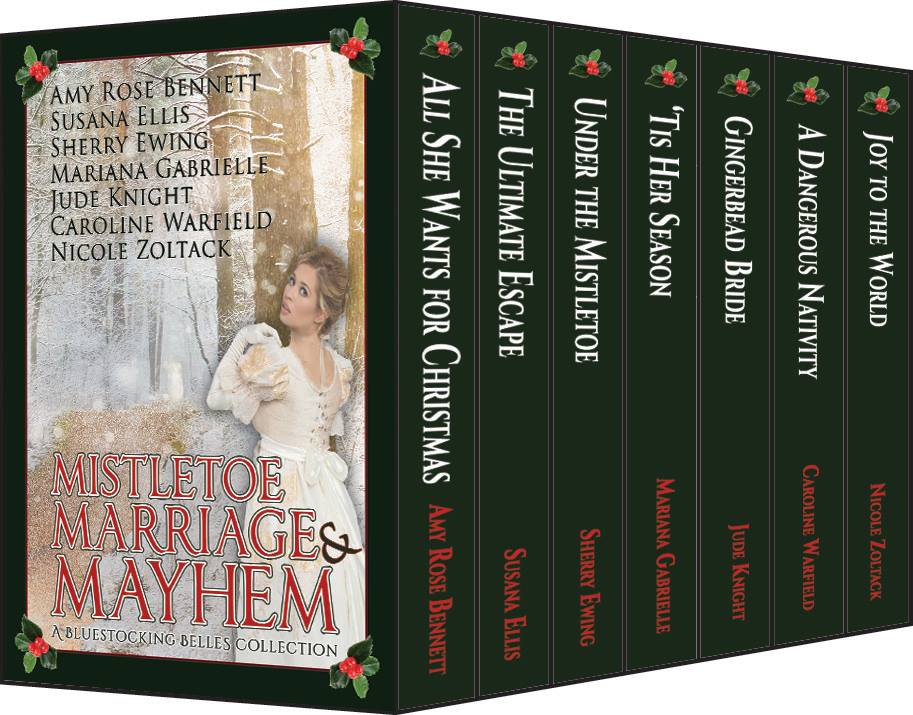
Box setAt the cover reveal party for the Bluestocking Belle box set yesterday, we talked about heroines, and whether people preferred heroines to be rescued or to rescue themselves. Opinions varied, but it set me thinking about moments of danger. My novella for the box set is Gingerbread Bride, and my heroine is a strong-minded and determined young woman. Which doesn’t mean that she is always able to rescue herself!

So, for this week’s work-in-progress Wednesday, please post around seven lines that show your hero or heroine in a tight spot. The danger could be physical or emotional. You could show the rescue or just the crisis. You pick.

To kick us off, here’s mine. Mary is in a post chaise, the horses are bolting, and she has climbed out to see if she can stop them:

As she edged her way cautiously back to the door, a flash of movement behind the hedge to her left caught her eye. A rider? The hedge thickened again, and she couldn’t be sure. Another bounding lurch prompted her to move again, and she swung herself back inside to rejoin Polly—though not without a few extra bruises.

“The post boy is gone, and the horses are bolting,” Mary told Polly. “Stay in your corner and hold on tight. And pray that they run themselves out before we reach a bend in the road.”

Following her own advice meant she couldn’t see whether the glimpse she’d caught was a rider. Someone riding to their aid would be wonderful, but unlikely. Might as well wish for Rick to save her once again!

Gabrielle d’Estrées on Wanton Weekends

gabrielledestresAnother highly successful mistress today, though she tragically died just before she was made a wife. Gabrielle d’Estrées was the mistress and beloved of Henry IV of France. She accompanied him during his campaigns, making sure he was well fed, doing his laundry, and acting as his secretary.

When their son was born, he legitimised the child and the text validated his mistress as ‘worthy of our friendship’. He also recognised and legitimised the other two children they had together, a daughter and a son.

And he made her a Duchess, duchesse de Beaufort.

Five years after the birth of their first child, Henry applied for an annulment and authority to remarry, and gave his mistress his coronation ring as a sign of his intentions. But before they could wed, Gabrielle died.

Henry gave her a funeral fit for a queen, and wrote: “the roots of love are dead within me and will never spring to life again”.

WIP Wednesday

timthumbThis last week, I submitted my novella for the Bluestocking Belles’ Christmas anthology. It’s called Gingerbread Bride, and the anthology is Mistletoe, Marriage, and Mayhem.

To celebrate, I’m making Work-in-Progress Wednesday about food. Post seven to eight lines from your work-in-progress with some connection to food (or drink, if your characters don’t eat on stage).

Don’t forget to share on Twitter, Facebook, and your other social media. If you tag me, I’ll like!

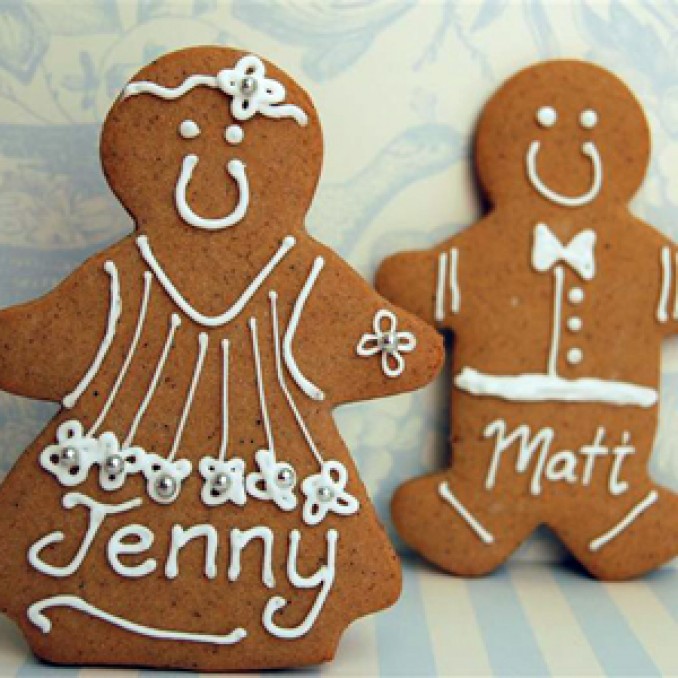
Mary smiled with satisfaction as she placed the last of the little gingerbread ladies into the box.  In the four weeks she had been at Aunt Dorothy’s, she had learned a number of recipes, and helped with all kinds of baking, but the gingerbread biscuits, which she had learned from the cook on the Olympus, became her specialty…

Aunt Dorothy had round and star cutters, and cutters in the shape of various animals. When the alderman’s daughter asked for gingerbread ladies and gentlemen for her wedding breakfast, Mary had been delighted with the notion, and the cutters the tinker made to her pencil drawings worked very well.

The icing gave them clothes and features; a whole box of little gingerbread grooms, and a box of little gingerbread brides.

And please, do consider joining us for our cover reveal party next week. The @BellesInBlue have great parties!

All the ladies (and some of the gents) love a soldier on Wanton Weekends

4a41c6f55a5934eb28ff8750912e8cd1When I was researching wanton women (and men) for my release party, I set out to write a post on London rent boys and the molly brothels of Georgian England. I will do that at some point, but I was distracted by a reference. Shiny fact, shiny fact… and there went I, chasing off at a tangent.

The research articles I found talked about the coffee houses and private rooms that provided a safe haven for those with same sex attraction to meet and socialise. A heavy on the door checked that only members and their guests could enter, keeping patrons safe from spies. And when acting on same sex attraction could attract the death penalty, such security was essential.

And here’s my shiny fact. One of the uses to which such safe havens were put, said several of my sources, was as a place to bring lovers hired for the night: rent boys, they said, and soldiers.

Well. Who could resist such a clue? Not I, certainly. A bit more investigation, and I found that quite a number of soldiers supplemented their income by hiring themselves out – a fact well known at the time. And yesterday I discovered a reference to a Victorian gentleman from Venice, and his soldier friend. The quote that follows is from Prostitution, an article by Judith Flanders.

A diary tells on one such meeting, its author an Englishman living in Venice, but visiting London in the late 1840s. He cruised regularly: ‘Fine. Tried my luck once more. I sat in the Park; but so shy that I cd make [illegible] nothing.’ ‘Fun & Folly…Saw J.B. We went up to Albany St.’ Later he filled in the scanty details of his meeting with ‘J.B.’, a trooper named Jack Brand: ‘I saw you in all your beauty, smiling as your gallant charger reared & pranced…And then in the [sentry] Box I spoke to you, & after Parade we met for five minutes, & you told me your name’ That evening, ‘at the Arch at Hyde Park Corner met my poor Boy,’ where they rented a room.[4] The story continued, a casual commercial pick-up transforming into a relationship. But after only a few months Brand died of cholera, leaving his grieving lover behind.

wirtembergian_troops_napoleonic_warsI became diverted into a discussion about uniforms. Were they so ornate, some researchers speculate, to appeal to women? Or to potential male patrons?

To my mind, the either/or nature of the question is not appealing. Maybe uniforms were flashy because armies are conservative institutions and uniforms harked back to a time when being a peacock in dress was a sign of wealth and power, not a subtle hint about sexual preferences.

However, by the Regency era, dress uniforms and court dress were the last bastion of extreme fashion for those who liked a surplus of flash and glitter.

So today’s post is dedicated to uniforms and those within them for whom a visit with a friend to a friendly coffee house may have been a useful way to earn an extra coin or two.

WIP Wednesdays

I love how several authors offer an opportunity on their blogs for other authors to strut their stuff. Imitation being the sincerest form of flattery, I figured I’d give it a go, so look for me to post a Work-In-Progress Wednesday every week. I’ll set a theme and show you one of mine, and you give me five to seven sentences in the comments.

This week, since it’s the first, how about first meetings? Don’t forget to share once you’re done!

Here’s mine, from the made-to-order story I’m writing for Mary Anne Landers.

As she turned the corner into Frederick Street, a particularly sharp gust skittered a broken branch across her path, tangling it into her skirts.

She stumbled, and would have landed in the mud if firm hands had not suddenly caught her. As it was, in putting out her hands to break the expected fall, she had dropped her burdens. The shopping basket fell sideways, tumbling fruit, vegetables, and the wrapped parcel of meat into a waiting puddle. The parcel from the haberdashers that she carried on her other arm thankfully stayed intact and landed on a relatively dry spot.

She took all this in at a glance, most of her attention on her rescuer. A craggy face bronzed by the sun, amused brown eyes under thick level brows, a mouth that looked made for laughter. He was bundled against the cold wind in a greatcoat, muffler, and cloth cap.

The image is of Dunedin in the mid 1860s, the setting for my story.

Dunedin Farley's Arcade

Phyrne of Athens on Wanton Weekends

For today’s courtesan, we’re stepping back 2,500 years, to the hetaera Phryne of classical Athens. The hetaerae were independent, educated and shrewd at a time that wives were kept confined and ignorant.

Phryne apparently tailored her fees to her client, charging very high prices to some, and giving herself to the philosopher Diogenes free of charge, because she admired his intellect.

She became so wealthy at her profession that she offered to rebuild the walls of Thebes after Alexander the Great destroyed them. Her only condition was that they be inscribed ‘Destroyed by Alexander, restored by Phryne the courtesan’. This was a step too far for the city government, however.

Öèôðîâàÿ ðåïðîäóêöèÿ íàõîäèòñÿ â èíòåðíåò-ìóçåå gallerix.ru

Öèôðîâàÿ ðåïðîäóêöèÿ íàõîäèòñÿ â èíòåðíåò-ìóçåå gallerix.ru

She ran afoul of her own city government — they did not like wealthy independent women. And they had their chance to put this one in her place when she stripped naked as an offering to the god Poseidon during a festival. She was put on trial for blasphemy, the punishment for which was death. Things were looking grim when her lawyer stripped off her gown. “How could a festival in honour of the gods be desecrated by beauty they themselves bestowed,” he said.

It worked. Rather than offend the goddess Aphrodite, the judges acquitted the courtesan, prompting this letter to her lawyer from one of her friends:

We courtesans are grateful to you, and each one of us is just as grateful as Phryne. The suit, to be sure…involved Phryne alone, but it meant danger for us all, for…if we…face prosecution for impiety, it’s better for us to have done with this way of living…you have not merely saved a good mistress for yourself, but have put the rest of us in a mood to reward you on her account.

Tuesday Talk – throwing a great Facebook party

This post is part of the series on marketing in the bazillion-book marketplace that Mari Christie and I are co-posting (her Marketing Mondays and my Tuesday Talks, thanks to the spinning earth).

partyHave you been to any Facebook parties? In the past six weeks, I’ve hosted two, and guested at another two—and I have more coming up.

The other day, someone asked me if Facebook parties sold books. Which, of course, isn’t the point of them. As Mari and I have said time and again in these posts, marketing is about making friends, and then about turning at least some of them into fans. And Facebook parties are a great opportunity to do that.

This post is not about the philosophy though. Instead, here are some of the techniques we’ve picked up for hosting at Facebook parties. We’d love to know yours!

Before the party

To create interest in the party, I post for weeks beforehand. Post stuff people want to know, not just relentless self-promotion. In the run-up to the party, you want them to know that you’ll be offering entertainment, so demonstrate that. (Show, don’t tell, right?)

My theme for the launch party for Farewell to Kindness was a country fair. I posted the songs that village singers might have sung during such a fair. I posted food people might have eaten at a fair, and games and activities that might have been on offer. I asked questions and invited comment. I also posted information about each of the guest hosts and their books. And, yes, I posted excerpts.

For A Baron for Becky, I posted a series of vignettes on courtesans through history, as well as guest hosts and excerpts. And I invited people to post pictures of what they would wear to a Courtesan’s Ball.

To prepare for the actual day, whether I’m hosting or simply doing a takeover for another author, I write myself a run-time, with the time and the text for each post and the names of the images I’m going to use. I put the posting time above each post. It might slip a minute or two on the day, but the times guide me. If interaction is high, I might skip a post, but I’d rather have too much than too little!

I put everything I need into a folder—or a series of folders if the event is longer than an hour.

Mari swears by putting the images into an album on her Facebook profile, and then linking to them. This saves loading time on the day.

If I’m host, I send a guest author checklist to those who have agreed to party with me. It has some of the tips in this post, tells them their timeslot, and asks them for their bio, the name and blurb of the book they intend to promote, and what (if anything) they plan to give away.

What kind of posts?

Remember that your goal is to make friends, so post links to your social media. I always post information about the Bluestocking Belles and any events we have coming up as a group, such as Book Club.

Post games—if you attend a few parties, you’ll find out which ones get the most comments and interaction.

Post questions. If you can relate them to your excerpts, all the better. For example, here’s a scene of a botched proposal; tell us your proposal story.

Ask people to post photos. Hot guys are usually a favourite, or suggested actors to play your hero and heroine, or anything else you might like.

At the event

My big tip is to keep the posts coming. When we did the Name Release party for the Bluestocking Belles anthology, we had three minute slots and a 30 minute event. And around 15 posts in total. Fast and furious! I’ve just done a one hour takeover, and I prepared and used 12 posts. Party hard and have a great time.

With busy parties, your posts can soon sink down the event. To make sure I can easily get back to my posts so I can comment (and later find winners), I copy the url as soon as I’ve created the post and paste it into my runtime. If you want to try this, just click on the date/time below your name on the post and it’ll bring up that post so you can copy the url. Then the back arrow will take you back to the party.

And get into those comment streams! If you’re the host, you’ll be commenting on your guest author’s posts, keeping the conversation going. I usually do a hit and run when I’m a guest host, because of the spinning earth. Parties are almost always during my working day. But I love it when guest authors arrive early and stick around to play.

After the party

Select and contact your winners as soon as you can, and don’t forget to thank the team who helped you put on the party (your host if you’re a guest author; your guest authors if you’re a host).



Veronica Franco on Wanton Weekends

In the weeks before the launch of A Baron for Becky, I wrote a number of vignettes about courtesans, concubines, mistresses, prostitutes, sex slaves, and others who were kept for their bodies or who used their bodies to win a place in the world. It was interesting material, and I’ve saved it all, so today I’m beginning a series called Wanton Weekends. Each week, I’ll post another vignette, and when I’ve run out, I’ll research and write some more. So if I don’t cover a period or a wanton you’d like to hear more about, just comment and I’ll add to my list.

brothel


The life of a courtesan may seem glamorous, but my character Becky hopes to save enough money to leave it. How about you? Courtesan or Bride? Before you answer, consider the following quote from a letter written by Renaissance courtesan, Veronica Franco:

I’ll add that even if fate should be completely favourable and kind to her, this is a life that always turns out to be a misery. It’s a most wretched thing, contrary to human reason, to subject one’s body and labour to a slavery terrifying even to think of.

To make oneself prey to so many men, at the risk of being stripped, robbed, even killed, so that one man, one day, may snatch away from you everything you have acquired from many over such a long time, along with so many other dangers of injury and dreadful contagious diseases; to eat with another’s mouth, sleep with another’s eyes, move according to another’s will, obviously rushing toward the shipwreck of your mind and your body- what greater misery?

What wealth, what luxuries, what delights can outweigh all this? Believe me, among all the world’s calamities, this is the worst. And if to worldly concerns you add those of the soul, what greater doom and certainty of damnation could there be?

(Letter 22,’ A Warning to a mother considering turning her daughter into a courtesan’ Veronica Franco, Poems and Selected Letters, edited and translated by Ann Rosalind Jones and Margaret F. Rosenthal, Chicago University Press, 1998, pp.37-40)

Veronica was a courtesan and the daughter of a courtesan. Given a fine education, she was trained for marriage, but her union with a wealthy physician ended badly. Needing to support herself, she turned to the sex trade, and quickly became highly regarded. She was listed (in a guide to courtesans of Venice) as one of the leading courtesans of the day.

She was a celebrated member of literary circles, and a poet in her own right, publishing often erotic, sometimes sexually explicit, poetry as well as a collection of 50 letters.

The movie, Dangerous Beauty, based on Margaret Rosenthal’s book The Honest Courtesan, opens with this one of her poems.

to-5-most-famous-seductresses-and-courtesans-of-italian-history-VERONICA-FRANCOWe danced our youth in a dreamed-of city,
Venice, paradise, proud and pretty.
We lived for love and lust and beauty,
Pleasure then our only duty;
Floating then twixt heaven and Earth
And drunk on plenty’s blessed mirth.
We thought ourselves eternal then,
Our glory sealed by God’s own pen.
But heav’n, we found is always frail,
Against man’s fear will always fail.