Farewell to Kindness deleted scene – Anne’s trip to Bristol

I’m travelling today, and so I thought I’d post the deleted travelling scene from Farewell to Kindness. I enjoyed writing it, remembering all the times I’ve travelled with my own children or entertained someone else’s children on a train or a bus. But it didn’t help the pace of the story, it introduced a whole heap of characters who never appeared again, and the single plot point could be carried in the one or two paragraphs that replaced it.

The photos of luggage are from my Pinterest board Farewell to Kindness trip to Bristol.

Behind time

A few minutes later, they were away. This was the shortest part of the trip. Some of the passengers had left Gloucester at 7.00 in the morning, but now there was just 15 miles to go. They would break the trip only once more, at Winterbourne.

Anne was squeezed between a large woman who had not woken during the Chipping Niddwick stop, and a small balding man who offered her a tentative smile over the top of his glasses. On the opposite seat, a young man was trying to keep a small boy occupied with cats’ cradle patterns in wool, while his wife rocked a sleeping little girl.

18th century luggageBefore long, the boy lost interest in what his father was doing, and became restless.

“You look like a boy who enjoys stories,” Anne said to him. The boy looked to be of an age with Daisy, who had a robust taste in adventure, preferring Anne to spice her tales of fairies and princess with wicked pirates and hungry dragons. Playing down the fairies and playing up the dragons should work for a boy.

He looked at her with hope and suspicion. “He does love stories,” his father said, his own expression all hope. Then hastened to introduce himself and his family. “This here is Georgie, and that’s Millicent with my wife, Mrs Norris. George Norris, that’s me. And that there lady by thee, that be my mother.”

So Anne introduced herself before launching into a tale that she made up as she went along, in which a coach travelling through the Gloucestershire countryside was magically transformed into a ship that – beset though it was by storms, pirates, dragons, and a rather large giant who wanted to take it home for his bath – nonetheless managed to come safely to port not quite an hour and a half later as the coach pulled into Winterbourne.

By this time, young Georgie was leaning on Anne’s knee, anxious not to miss a single word of what she said, and Anne’s voice was growing hoarse. “The End,” she finished, with a sense of relief.

At the inn in Winterbourne, the older Mrs Norris woke, and levered herself out of the couch asking for the necessary. The guard poked his head around the door into the couch. “Does anyone else need to get down? We’ll be here 10 minutes. And we don’t wait for no-one.”

Georgie whispered something to his father, and they left the coach, followed by the small balding man.

“Can George get you a drink, Ma’am?” Mrs Norris said softly over the head of the sleeping girl. “Thy throat must be that sore from all that story. Why it was as good as the players that come to Christmas fair, and so it was!”

wallpaper boxAnne turned down the drink, wanting to avoid her own trip to the necessary, but thanked Mrs Norris for the thought and the compliment.

Mrs Norris senior clambered back into the coach. “Move over, Lilly, do. How’s my Milly?”

Mrs Lilly Norris, who had relaxed into the middle of the seat, shifted sideways again to accommodate her mother-in-law’s bulk, and dropped the little girl’s head so that Mrs Norris could see her.

“You should wake her, you should.” Mrs Norris turned to her son as he put his son up into the coach and followed. “I’ve been telling Lilly she should wake Milly, else she’ll not sleep tonight.”

The guard poked his head in the door again. “Are we all aboard, then?”

“There is still one gentleman to come, I think,” Anne told him.

The guard said something scathing about passengers, adding, “Not present company, ma’am. Best take your seats. We’ll be off in just a tick, whether the gent comes back or no.”

Mrs Norris was still organising her children and grandchildren, and took no notice, but it didn’t take her long to set Norris next to Anne, and settle herself beside her grandson, with her yawning granddaughter on her knee.

“There, now we shall be comfie,” she announced, with satisfaction. “Feel under the seat, young Georgie, and tha shall find summat tha’ll like, I warrant.”

Georgie obeyed, pulling out a rectangular basket just as the thin balding man attempted to climb into the coach.

“Here, be careful, fellow,” the man said.

Norris apologised, and helped Georgie hoist the basket onto the seat between his wife and his mother.

He sat back just as the coach started with a jerk, and Georgie fell backwards against the thin man, prompting more apologies.

“Tha’ll have one of my apple turnovers, and all will be well,” offered Mrs Norris, digging into the basket with one capacious hand, while steadying the child on her knee with the other. And she and her daughter-in-law proceeded to hand out food from a seemingly bottomless basket – pork pies, apple turnovers, gloucester tarts.

Anne accepted a tart, offered shyly by Lilly Norris. “Tha should have a pork pie, ma’am,” Mrs Norris told her, frankly. “Tha has no meat on thee.”

The thin man shared his name after the first apple turnover, and the reason for his journey after the second. He was Frank Durney, and he was on his way to Bristol to take up a job as a clerk in a counting house. This coach, which he had joined at Chipping Niddwick, was his second of the day.

After his third tart, Durney complimented Anne on her story, and after the basked had been packed away, he launched into a song that, he said, had always amused his own little one.

It involved dancing for all kinds of rewards, and the others knew it. Norris and his wife joined in the singing, and Mrs Norris danced little Milly on her knee to the music, until both children were weak with giggling.

painted basketNorris produced another basket from under the seat, and pulled out a jug of cider and some wooden beakers, which he passed out to everyone in the coach, even the two children.

“And what about yourselves?” Durney asked. “It’s a long trip for the children. Cheltenham, was it, you came from?”

“Gloucester,” Norris told him, leaning out to see Durney around Anne. “But Mother has always had a yen to see Bristol, and Mrs Norris here,” he raised his cup in a salute to his wife, “she wants to stay at the seaside. So we’re off on holiday, we are, just like the nobs.” He said the last with great satisfaction, then looked at Anne with alarm. “Saving your presence, Ma’am.”

“All that way for a holiday!” Durney sounded shocked.

“What I say,” said Mrs Norris cheerfully, “is you’re a long time dead. That’s what I say. Let’s go and have a good time, I said to George here.

“But such a long way. And so much money!” Durney was clearly having trouble grasping the concept.

“Business is doing well, lad, and George deserves the time off, I told him. You’re a long time dead, I said.”

Durney looked inclined to continue arguing, so Anne hastily changed the subject. “The ride seems much smoother.”

This worked, as Durney had information he wanted to share. “We’re on the Bath road, Ma’am,” he told her. “Up till now we’ve been on lesser roads, but the Bath to Bristol road is a major post road. The toll charges are higher, but they put the money into keeping the road up.”

The following dissertation on road maintenance soon lost Anne, but clearly fascinated Norris and his son, and Anne ended up crossing the coach to sit between Lilly Norris and Mrs Norris, so that the two men could talk about various methods of road surfacing and maintenance while the boy listened.

“We will be in Bristol soon, I think,” Anne told Milly, who was shifting restlessly on her grandmother’s knee.

“I going to the sea,” Milly told her, before putting her thumb firmly back in her mouth.

“How exciting. Have you seen the sea before?”

Milly had never been to the sea, it appeared, and neither had any of her family. Anne talked to them for a little while about walking on the sand and wading in the surf, and about the shells, and strangely shaped wood, and other things that washed up on the beach.

She was surprised when she realised they were coming into Bristol. This last part of the trip had gone very quickly. Both children abandoned the adult conversations to press their noses up against the coach windows.

Before long, they turned into the yard of the coaching inn.

The-Cambridge-Telegraph-a-mail-coach-about-to-depart-English

What’s in a word? Authentic language in historical fiction

One of the challenges facing a writer of historical fiction is that our language keeps changing. In 2015, our vocabulary, our speech patterns, and our tolerance for formal grammar conventions are all very different to what they were 200 years ago, or even 100. We need:

  • to use words that were in use at the time, but that modern readers will understand
  • write dialogue that sounds authentic, but that is also easy to read for modern readers.

Ian Reid, in his blog Reid on Writing, talks about:

…the challenge of creating a language that achieves verisimilitude – the semblance of reality. It’s no easy matter to persuade your readers that your narrative medium is rendering accurately how people spoke and wrote in your chosen period and place. The writing must seem to embody their characteristic turns of phrase, their conversational habits, the structure of their sentences – not only to avoid anachronism but also to gain an insight into the way they thought and felt, which would sometimes have been different from what we’re used to today. So meticulous attention to language isn’t pedantic in novels of this kind – it’s vital for credibility. But it needs to be done in a manner that avoids weighing down the story and slowing down the reader.

And John Yeoman points out that such language must not sound too modern to modern ears.

If the reader detects a linguistic howler in our work (although the reader may be wrong), the illusion is shattered. When I had a character in my last Elizabethan novel abandon his ‘go cart’ to ‘jet’ about Europe, arrive in England by ‘bus’, take his ‘train’ to Slough, then leave his ‘car’ at Ivinghoe, some critics chided me for my anachronisms.
 
Nonsense! I was simply being faithful to the everyday language of the 1590s. Those terms, surprisingly, were associated with transport in the period. The truly erudite reader, I felt, would have understood (and chortled). But s/he didn’t. In the reader’s view, I had committed five howlers.
When I was researching for this post, the word I kept coming across was ‘authenticity’. We simply cannot accurately reproduce the language of the past.  What we can do is give the readers a flavour of the past; a sense of authenticity. This becomes more and more acute (as Lynn Shepherd points out in a blog post on authenticity) as we go further back in time:

People in the past didn’t just dress differently from us, they talked differently too, and that difference gets wider the further back you go. And at some point – probably around the year 1500 – authenticity of language becomes literally impossible: if you’re writing about the Trojan war you simply can’t do your dialogue in Ancient Greek, any more than a character like Cadfael can speak in Middle English (or, indeed, medieval Welsh).  So some sort of compromise has to be found.

Do you opt for a style that conveys some notion of the period, or take the view that your characters would have spoken the ‘ordinary English’ of their time, so allow them to use ‘ordinary English’ as spoken now? I’ve seen both approaches – and many variants in between – and each has both pros and pitfalls. The danger with the former is what I call Forsooth Syndrome, in which you end up with characters spouting a queasy mixture of contemporary English liberally sprinkled with cod words and phrases designed to give a period feel. It can sound very phoney – a bit like a newly-built pub decked out with reproduction horse brasses. But going for the full-on modern-English-and-be-damned approach does make the task of creating that elusive ‘atmosphere’ all the harder.

I’ve tried to keep my vocabulary authentic. I’ve used contractions in my general descriptions, but not in the conversation of my upper-class ladies (except in moments of great stress). Otherwise, I think my writing is modern in style. I hope I’ve done enough to give an authentic early 19th century flavour to my writing.

To keep the vocabulary authentic has meant researching all sorts of unusual topics, such as what words were used for intimacy in my time period. And where I’ve failed, I’ve been ably supported by my excellent proofreader, who has highlighted and questioned words that felt modern to her.

Yesterday, she sent me a link to a resource Mary Robinette Kowal created when writing her Regency Magic series. It is a list of all the words Jane Austen used: 14,793 of them. She has generously posted it on her website, as a text file and as a plugin for Open Office. If you’re writing in the late Georgian or Regency era, go take a look. (And if you haven’t read Kowal’s Glamourist histories, do yourself a favour and check them out.)

What to do with a bad review

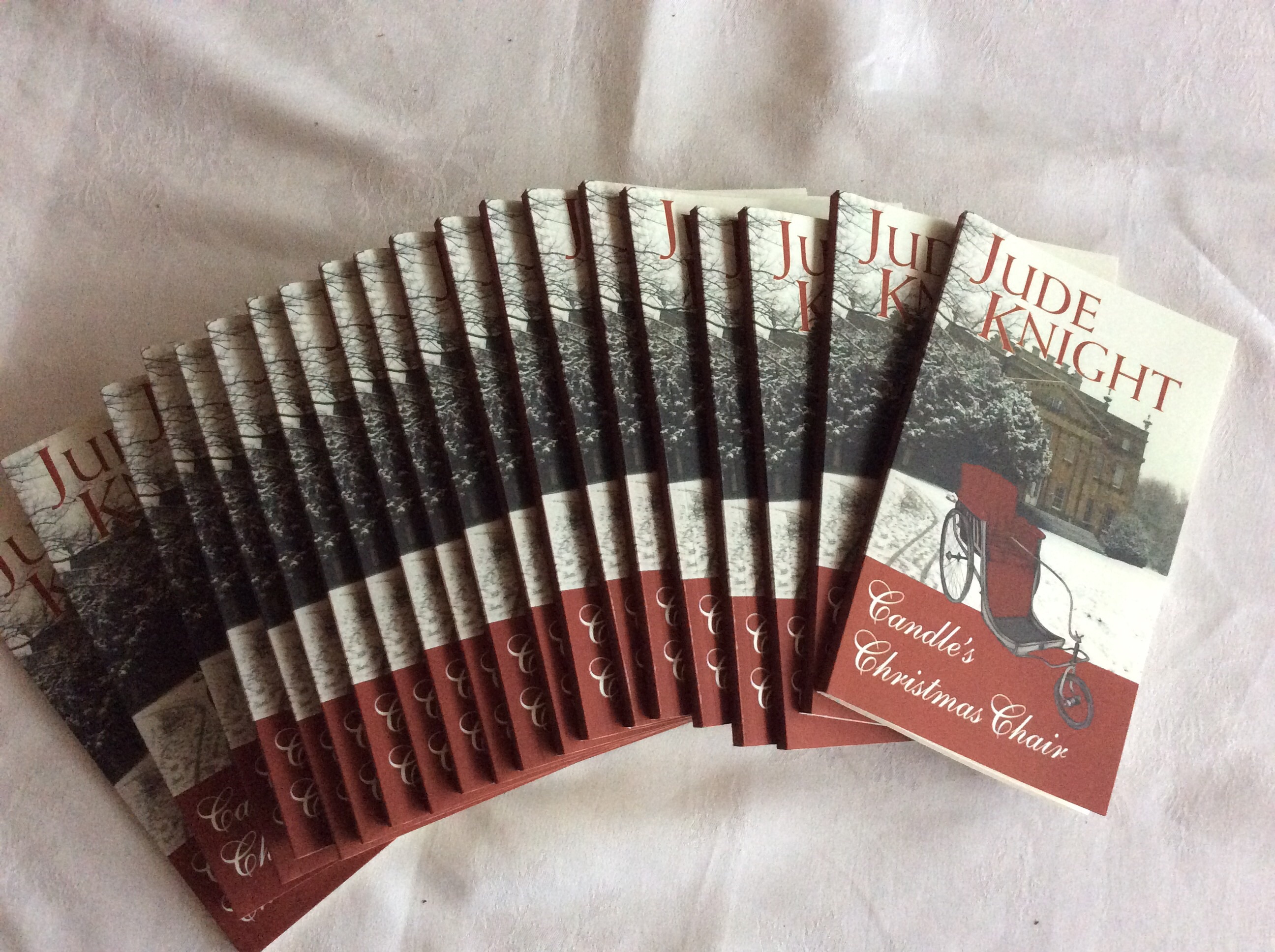
Kilburne_The-love-letterI’m thinking about bad reviews this week, because — after a dream run for Candle’s Christmas Chair and over 80 reviews — I have my first two really negative ones. I’ve had some people make critical remarks, and some give low ratings, but the novella has not been truly panned till this week.

What do you do with a bad review? Some people have tantrums. Some weep. Some sigh philosophically and move on. I research and turn it into a blog post. I know! Right?

Steve Aedy, in a guest post on Book Baby, gives three reasons why a bad review is good.

Reason one is that you might be able to learn from it:

Sift through all the “I hate this book,” sentiments.  Find the real substance of the review – characters are flat, grammar and punctuation wasn’t perfect.  Take these tips to heart the next time you pick up your pen.  Look for ways to improve your writing.

Reason two is that bad reviews can get your book noticed. And a debate between people who like the book and those who don’t can attract even more attention. Even bad reviews, then,boost book awareness. Aedy points to the example of 50 shades of grey; 30% of the reviews on Amazon are negative.

Reason three is that bad reviews enhance Search engine optimisation.(SEO)

Every time someone posts a link to your website on their website, it makes Google happy.  This happiness results in SEO.  Google doesn’t care about the reviewer’s scathing remarks.  All Google cares about is the link that reviewer posted.

I found a fourth reason. A bad review gives your good reviews credibility, making it clear to readers that your reviewers aren’t just your Mum in multiple identities.

And a fifth. A bad review that specifies exactly what the reader doesn’t like may attract a reader that loves books just like yours. Your reviewer hates time travel books by means of a magic-wielding cat, and can’t stand wise-cracking heroes and super smart heroines? And they say so? They’ve just marketed your book to those who were searching for all those elements.

Carol Pinchevsky has some advice for new authors.gleaned from interviews with some of sf’s great, all of whom have had bad reviews.

– Think about what the critic is saying.

Carey says, “Obviously, my intention [to deconstruct Tolkienesque epic fantasy] wasn’t clear to that reviewer, so the comment is constructive in terms of forcing me to think about how I could have better executed my idea.”

Brin says, “No matter how good you are, there is always some way to become ‘even better.’ Hence you need to be open to the bad news, as well as the good.” Brin believes in this enough to create his own acronym: CITOKATE (“Criticism Is the Only Known Antidote to Error”).

– Don’t read reviews:

Cherryh reads no reviews, neither negative nor positive. “If they’re good, I might divert my writing to try to please. If they’re bad, I’d feel bad, and maybe be tempted to change my writing to please. In either case, not a good thing.”

– Stay cool.

Carey says, “Readers’ expectations are something authors can’t control…. Taste is personal and reviewers are only human.”

– Remember, it’s nothing personal.

“We review books, not writers,” says Hartwell.

Finally, Pocket full of Books has a regular feature in which they link to authors who have reacted badly to a bad review. Go take a look if you want an example not to follow:

So what did I do about my own two bad reviews?

The first hated the snippets of history, was bored by the use of the language of flowers, and just wanted my hero and heroine to get on with the love story. This reviewer called the novella ‘a total snooze fest’. Best strategy? Ignore. (That said, I’m grateful to the person who posted a five star review on the same site, giving readers two very different opinions to consider.)

The second was on a site that already had a number of positive reviews, and was quite long. Here are some quotes:

‘far too frequent mentions of anatomy and implied love making at the end (married couple).’

‘Min gives in to the hero’s pestering and her baser feelings’.

‘sure [Candle] is kind and caring’

‘some might think his attentions sweet but I found them annoying and over the top’.

On the whole, I think that, if anyone reads the review, such comments are more likely to work for me than against me. Thanks, reviewer.

The reviewer’s most scathing remarks were reserved for a perceived historical error. The review sent me hurrying to check my facts when it claimed that the Roman Baths in Bath were unknown in 1805. I was sure that this claim was wrong, but looked anyway. The discovery was in the 18th Century. I can only speculate that the reviewer confused the 18th Century with the 1800s.

Phew! I expect I will (and probably have) made mistakes, but I try hard not to, and that one would have hurt.

Enough said, and enough attention paid. Time to get back to writing the next book.

Lydia is bored – an excerpt from Farewell to Kindness

regency-fashion-plateOn this visit to Swinbeck Castle, Lydia was finding the country less boring than usual. Quite apart from the young and lusty lover who kept her amused and the servants scandalised, she was gaining unexpected entertainment from joining the committee that was organising an assembly in the nearby town.

She sniggered inwardly. The most recent committee meeting had been particularly funny. The other ranking lady was a nobody from a trade family who had married into a title. Lydia made a point of opposing her at every turn, just for the pleasure of seeing how the other three women, toadies all, coped with trying to please both her and the upstart. The upstart had a higher title, but Lydia had the higher pedigree.

She didn’t attend every meeting, of course. She was on the committee to lend it her name and influence, but the commoners could do the actual work, and she included Lady Upstart Avery, who was as common as muck.

This afternoon, though, there was no meeting and Chirbury’s nephew was asleep in her bed. The game they’d played until dawn had involved a number of challenges for young Nat, sending him running and climbing all over the castle, with the challenges becoming more demanding and the rewards more intimate as the night wore on.

Lydia’s exertions had been confined to the interludes between challenges, and she’d drunk water while he tossed down brandy. She was wide awake and looking for something to do.

After a long soothing bath, she submitted herself to her maid’s hands. This girl was one of Carrington’s cast-offs, and credited Lydia with her change in status. No need to tell the girl that she’d developed too many curves to retain Lord Carrington’s interest. Gratitude made her loyal. And she’d become quite skilled at dressing hair, mending dresses, and creating lotions that softened her mistress’s skin.

Dressed at last, she checked Nat, but he was still asleep. She toyed with the idea of waking him. Still, he’d be of more use well rested.

She frittered away half an hour trying on jewellery. Most of these were family pieces. Her stepson, Tony, had asked for some when he married his little mouse. She told him he could pry them out of her dead, cold hands.

Still, she’d sent him a few pieces when she sent him her daughters. Not the best pieces, of course. But she was grateful that he’d taken his four half-sisters: Carrington’s daughter by his second wife, and her own three girls.

Carrington had not been amused at her decision to send them away five years ago. “Do you think I am a danger to my own daughters?” he challenged her, impaling her with his pale blue eyes. She denied it, of course, but still she knew, deep in her mind, that her intervention had been too late for the step-daughter.

She didn’t dwell on such thoughts. She’d learned as a trembling teenager, offered to Carrington by a debt-ridden brother, not to think about past or future, but to enjoy the moment as well as she could, and to please her husband.

Sending her daughters away was the one time she defied him, and even then, she did it without his knowledge and faced him only when—weeks later—he noticed his daughters were gone.

Though he punished her for her presumption, Carrington didn’t confine her as he promised, or send to bring his daughters back, which was confirmation of a sort, if Lydia cared to think about it.

She did not.

The report of ebooks’ death was an exaggeration

Several times a year we’re told that ebooks are dead, that they were a passing craze and the craze is over.

Just before Christmas, a large UK book chain trumpeted the news of a slump in the sales of e-readers. ‘People are going back to print,’ enthused the commenters. On the Mad Genius blog, Cedar Anderson had a terse response.

I’ve got two words for that. One I won’t say, I’m a lady. But as a kid on a farm, I stepped in it a few times.

The other word? Tablets. Well, and phones, but really it’s the same thing.

And we simply do not have the data on how many apps have been downloaded so that people can read on tablets or phones. We have four people at my house this weekend. Three of us have Kindles. Three of us have iPads. Three of us have laptops. Two of us have desktops. Three of us have smartphones. Different combinations of technology, but every device that isn’t an ereader has an ereader app.

Similarly, we do not have accurate data on how many print books are sold.

Kristin Kathryn Rusch, in a thoughtful blog about her own experience in trying to establish hard data about the sale of her own books says:

In other words, all of traditional publishing from the introduction of the returns system in the 1930s to the early part of this century was based on educated guesses by the sales department in consultation with editorial. Not based on actual numbers. Not based on real sales figures. Not based on any kind of fact-based system at all.

The traditional publishing industry is in transition because it’s gotten gobbled up by international conglomerates who need real numbers for their own internal reports. Digital book and online sales actually allow for real numbers. Since the American Booksellers Association has taught independent booksellers how to manage their inventory (at the ABA’s Winter Institute), those booksellers have lowered their returns to a maximum of 25%.

So the traditional publishing data is becoming solid, but it’s not there yet. And because so many people in traditional publishing—particularly those in its upper echelons—have been in the business as long as I have, they’re a lot more accepting of wishy-washy numbers and fake statistics. Reports that have lovely graphics and percentages that seem real are still the norm in this industry, rather than studies based on real methodology. That’s in the process of changing, but it hasn’t yet changed.

A 2009 report from UNESCO says:

The lack of reliable – or even broadly realistic – data and analysis on the world’s book culture and publishing markets has been deplored time and again. Yet, the gap has not been bridged.

Nor are the ebook sales reports from traditional sources without their flaws, as the Author Earnings report for January 2015 says:

Why do [the industry news sites] continue to insist that indie self-published ebooks only make up a tiny share of the market, and cannot possibly account for a significant volume of sales?

The answer is simple. Bad data.

All of these industry pundits rely on three officially-recognized sources of ebook market size estimates and projections: AAP/BISG BookStats, AAP StatShot, and now Nielsen PubTrack.

Each of these sources arrives at their ebook market-size estimates by collecting self-reported data from a small subset of participating publishers (1,919 for BookStats, 1,200 for StatShot, 30 for PubTrack) and then using average per-title sales numbers from those participating publishers to project the size of the entire ebook market. They do this by multiplying those average per-title sales numbers by the number of active ebook ISBNs (International Standard Book Numbers) purchased from Bowker by the many tens of thousands of non-participating publishers and indie self-published authors.

But these figures don’t count ebooks with an ISBNs  from other sources (I get mine from the New Zealand National Library) or with no ISBN. Author Earnings reports that 30% of ebooks on Amazon do not have an ISBN, so Amazon ebook sales are at least 30% larger than counted in industry statistics. And Amazon is by far the biggest seller of ebooks.

Here’s the Author Earnings analysis of Amazon sales:

shadow-bar-unit-sales

The shonkiness of the data, and the counter evidence freely available, does not prevent print advocates from producing superbly crafted infographics to support their case that ereading has plateaued and that print book sales are up. (It is a nice infographic though, isn’t it? Even if the data is seriously flawed?)

I have loved books my whole life, and I adore the smell of print. But nowadays, I only purchase reference books in print. For fiction, I go ebook all the way. I have a Kindle, and I have both iBooks and Kindle Reader on my iPad. When I travel, I can take a fully recharged Kindle with 600 or more books on it, and read it for five days without recharging. The iPad needs recharging more often, but lets me also keep up with emails and Facebook, take notes in meetings, and write blog posts. What’s not to like?

How historically accurate should historical romance be?

histgirl anac2The question in the title is a perennial favourite for readers and writers alike.

Should our characters, our backgrounds, and our plot details be scrupulously accurate to the period in which they are set?

Why write historicals if they’re not set in history?

I’m the first to put my hand up and admit I’m pedantic. I obsess over things like when and how the news of Trafalgar and Nelson’s death arrived in Bath (a plot point in Candle’s Christmas Chair). I’ve written blog posts about:

anachronism-6957-guy-whiteleyI care. If someone in a regency novel calls an earl Your Grace, or zips up his trousers, or has been christened Beyonce, I’m going to notice.

And other readers care, too. I was called out by one reader when a minor character in Candle’s Christmas Chair said he was okay. Quite right, too. Thanks to the magic of ebooks, I was able to remove a word that belonged decades in the future and on the other side of the Atlantic.

History Hoydens makes the following point:

To me, it seems ridiculous to even bother writing “historical fiction” (be it romance, mystery, whathaveyou) if the “historical” part is optional. I know, I know . . . in Romancelandia a lot of the history has become optional: our characters are abnormally clean, have perfect teeth, and somehow our heroes never have the ridiculous haircuts that were in vogue for their age (has anyone ever written or read a medieval hero with a bowl cut?). Is a man with Fabio-locks in the Middle Ages any less offensive than a red silk nighty in Regency England? I think they’re both problematic, both a betrayal of the entire point of the genre…

Perhaps I’m being ridiculous, but the willfully chosen error just gets under my skin and itches like mad! There’s something demeaning about it, something dismissive. Something about it says: It was too much trouble to find a way to make my vision/story work within the framework of history, and rather than alter my vision/story, I chose to alter history instead.

But we’re not writing history books

anachronismOn the other hand, we’re writing fiction, not history. And we’re writing fiction for today’s readers, for whom real historical accuracy might be a step too far, as this Heroes and Heartbreaker’s post comments:

…in some cases a too-strict reliance on historical detail can be just as off-putting. A classic example of this phenomenon is Diana Gabaldon’s Outlander, in which hero Jamie gets fed up with heroine Claire’s bad habit of putting his men into mortal danger through her dangerously unpredictable behavior, so he beats her. He beats her! Gabaldon’s response to the clamor around this scene (paraphrased) was “I scrupulously researched every aspect of this book and Jamie’s actions and attitudes are fully consistent with those of a man in that time and place so obviously it’s all good because REALISM!!!” To which I can only reply…yes, from a historic standpoint, Jamie’s actions are unexceptional, but on the other hand this is a book whose plot kicks into gear when the heroine travels backward through time, so…well, I wouldn’t have missed that scene if it weren’t there, is all I’m saying.

Penetrating Analysis makes a compelling case for anachronism that makes the story better for readers.

…historical romance is more beholden to the constraints of the romance genre than it is to the reality of history. While historical fiction may generally aim to simulate the past for readers through painstaking attention to detail, historical romance’s overriding preoccupation is different. Emotional authenticity in the development of the relationship is far more important to the genre than strict fidelity to a historical or geographic setting.

ipad boyHistorical settings open up a range of concerns and possibilities to authors, some because they are similar to the present day and others because they are different. To cite just one example in the latter category, the consequences for unintended pregnancy were much different for an upper-class unmarried woman of Regency England than they are for most twenty-first-century readers. The elevated risks associated with extramarital sex can be used to raise the stakes for heroes and heroines in a way that would be out of place in a contemporary novel.

At the same time, historical settings provide a way to explore themes and issues that are vital to contemporary concerns. The remote past can serve as a safe space in which authors can tackle more sensitive topics without hitting too close to home for readers.

Heroes and heroines with postmodern sensibilities are a natural consequence of being written by authors of the twenty-first century. Expecting writers to purge their work of any trace of modern perspective is unrealistic in a genre predicated upon the reader’s connection to the novel’s protagonists.

And some anachronisms are not anachronisms at all

cookI’ve also been jarred by something in a novel, gone to check the facts, and found that my idea of historical fact was out of tune with what really happened. Perhaps a book has a hero using dental floss in pre-World War I Great Britain. Anachronism?

in James Joyce’s Ulysses, a minor character, Professor MacHugh, “took a reel of dental floss from his waistcoat pocket and, breaking off a piece, twanged it smartly between two and two of his resonant unwashed teeth”. This feels all wrong, and you’d be hard pushed to find any other reference to dental floss – pretty much, in any literature ever – but there it is, in a book produced in 1918-20 and set in 1904. [Guardian article on anachronisms that aren’t]

I’ve recently had this experience with Candle’s Christmas Chair. Many reviewers have commented on Min’s profession. (She designs and makes invalid’s chairs.) To some, she is reflecting the start of feminism. To others, my choice of career for her is ridiculous, and a total anachronism. Working class women, of course, always held down an income-earning job or range of jobs. But women of the tradesman and merchant classes, according to my reviewers, stayed at home and managed the servants.

Both types of review see history through a lens of Victorian middle-class sensibilities. I’m not going to write here about the invisible women who thronged the trades, crafts, and professions from medieval times until the Victorian era. That’s a topic for another blog post. Suffice it to say that we should be cautious about labelling something as an error, either intended or unintended.

Do you care?

Different people are annoyed by different things. I got this neat chart of allergens from a thoughtful digest of posts on Likes Books.

Allergens: Which of the following items are you sensitive or allergic to?
  • Americanisms in UK dialogue
  • Anachronistic inventions or discoveries
  • Anachronistic language
  • Anachronistic modern psychology
  • Anachronistic names
  • Anachronistic technology
  • Astronomical errors
  • Asteroids with breathable atmospheres
  • Big lumps of information
  • Combat errors
  • Confusingly similar character names
  • Contrived character actions
  • Costume errors
  • Culturally inappropriate names
  • Dance errors
  • Ecological errors
  • Etiquette errors
  • Excessive repetition
  • Excessive use of long sentences
  • Excessive use of short sentences
  • Excessive use of slang
  • Facial hair style anachronisms
  • Form of address errors
  • Generation-inappropriate language
  • Genetics errors
  • Geographical errors
  • Geological errors
  • Grammatical errors
  • Hairstyle errors or anachronisms
  • Head-hopping
  • Historical errors
  • Inappropriate regional dialect
  • Inappropriate use of cant
  • Inheritance or entail errors
  • Internal inconsistencies
  • Legal errors
  • Malapropisms
  • Martial Arts errors
  • Medical errors
  • Military errors
  • Misuse of foreign languages
  • Morals and mores errors
  • Punctuation errors
  • Religious doctrine errors
  • Science errors
  • Story elapsed time problems
  • Succession errors
  • Time zone/timekeeping errors
  • Title of nobility errors
  • Translation errors
  • Transportation errors
  • Typos
  • Vehicle description errors
  • Weaponry errors

So what do you think? Do you hate historical inaccuracy in books? Does a book blurb that refers to Richard III as the King of York remove any desire to read the book? Or do you not care as long as the story is good?