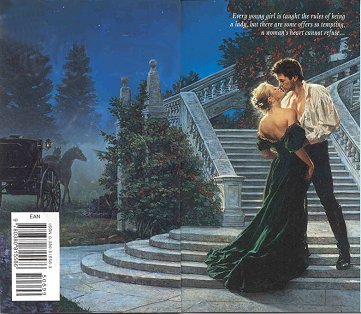
He was drunk. But not nearly drunk enough.

the_abandoned_rakeI’ve rewritten the first chapter, changed the POV, lost 500 words, and turned it into a prologue.

He was drunk. But not nearly drunk enough. He still saw the boy’s dying eyes everywhere. In half-caught glimpses of strangers reflected in windows along Bond Street, under the hats of coachmen that passed him along the silent streets to Bedford Square, in the flickering lamps that shone pallidly against the cold London dawn as he stumbled up the steps to his front door.

They followed his every waking hour: hot, angry, hate-filled eyes that had once been warm with admiration.

He drank to forget, but all he could do was remember.

I’ve posted the whole prologue on my excerpts page. Take a look and see what you think.


Pulling all the threads together

I’ve been through all 506 pages of the first draft, and I have a head (and a notebook) full of ideas.

image Now I’ve opened my plotline spreadsheet, and created two new tabs.

Here’s what I’m planning to do.

I’ll update the plotline spreadsheet (plots for the columns, scenes for the rows) from my notebook, and note when a plot starts, progresses, or is concluded.  Then I can see what gets resolved and what gets forgotten about. I’ve added a column to note things I need to do.

I’ve added a tab for characters. I’ll put all the names and titles in scene by scene, and check that they don’t change.

I’ve added a tab for a calendar, so I can plot the scenes against dates, sunrise and sunset times, and the phases of the moon.

I’ll let you know how it works out, but in theory, by the end of the day (6 or 7 hours from now), I should have a marked up draft that I can split to work on on the train.

UPDATE, Monday evening: The answer is that it is taking longer than I thought. I’m up to page 200, but I have the plot threads mapped for the first two-fifths of the draft (and have found some holes, which I’ve now noted on the draft, the character names recorded for two-fifths of the draft, and all of the scenes laid into the calendar – and I’ve found a whole extra day, which I’m going to have to account for, somehow.

By taking this analytical approach, I’m avoiding the temptation to drop back into creative mode. When I finish the analysis, I’ll have all the thinking done that I need to do, and I’ll be able to deal with the draft one page at a time, content that the logistics have been dealt with.

So it’s working.

Random thoughts about writing from Christina Dodd

Today, I’m editing. I want to be through this first continuity edit before tomorrow morning, when I have the day off from work and plan to do the think and plan part of the rewrite, restructure phase.

So for today’s post, I’m taking the easy route and also offering you a treat. Here, if you haven’t come across them by another route, are Christina Dodd’s thoughts about writing.

And here are some covers of Christina’s books, chosen at random and made into an image quilt for your viewing pleasure.

ImageQuilt 2014-02-11 at 12.45.15 PM


The real work is all in the edit

vonnegutI’m on page 92 of 506 of my first hard-copy edit, and I’m loving the experience. This bit is all about continuity, pace, and plot. I’ve marked where the hero’s housekeeper changes her name, and his land agent goes from weedy to buff in a matter of days. I’ve noted the change in the heroine’s eye-colour (green flecks turned into gold flecks). I’ve found two scenes I can cut dramatically and another that I think I can get rid of altogether, thus removing several peripheral characters entirely.

And, for inspiration, I’ve been reading some quotes from an article entitled 20 Great Writers on the Art of Revision.

Here’s one of the 20 quotes:

“Your eloquence should be the servant of the ideas in your head. Your rule might be this: If a sentence, no matter how excellent, does not illuminate your subject in some new and useful way, scratch it out.” — Kurt Vonnegut, How to Use the Power of the Printed Word

Beauty and the Beast, Hoyt style

darling-beast-stepback1What a wonderful story Darling Beast is.

Apollo is working as a garden designer, restoring the burnt out ruin that was the pleasure garden Harte’s Folly. Four years ago, Apollo was wrongly accused of a brutal and senseless murder, and sent to Bedlam. Having escaped, he is at risk of being recaptured by the King’s men and reimprisoned or killed A savage beating in Bedlam has taken his voice.

Lily is an out of work actress, banned from the London stage by a vindictive theatre manager after she left him to work at Harte’s Folly. Harte, the eccentric part owner of the gardens, has allowed her, her child, and her maid to move into the two rooms that remain of the theatre.

When Lily’s son Indio meets Apollo and makes friends, Lily is first compassionate and then attracted.

As they begin to act on their attraction, Apollo becomes more and more determined to clear his name. But his own past and a secret from Lily’s past come back to put them both in terrible danger.

Both Apollo and Lilly were beautifully drawn. Apollo’s dreadful experiences in Bedlam make him fear that he is more monster than man, and Lilly has learnt never to trust an aristocrat, so is horrified to find that Apollo is a Viscount, heir to an Earl, and brother to a Duchess.

Each has to learn to trust and depend on the other.

Thank you, Elizabeth Hoyt, for another several hours in your world.

Several of the secondary characters are crying out to have their stories told.

I understand that Captain Trevillion and the blind sister of Apollo’s brother-in-law, Lady Phoebe, come next. The Captain is the lame ex-soldier who arrested Apollo but who also worked to clear him once he was convinced of his innocence. In Darling Beast, Lady Phoebe greatly resents the restrictions her brother forces on her in his overprotective love, restrictions that include the Captain as bodyguard.

I sense that the enigmatic and capricious Duke of Montgomery may already have met his match in Miss Royce.

Asa Makepeace, also known as Harte, must one day have his story. He’s a marvellous character, who has popped in and out of the books from the beginning of the series. Such a contrast to his sternly religious family, but with his own high moral code when pressed.

And what about Lily’s brother Edwin? Is there a story there?

I look forward to many more Maiden Lane stories.

Editing the book

editing novelSo here’s my to-do list for the next three weeks. All going according to plan, I’ll have a draft ready for beta readers by mid-November. Of course, it’s a bit heavy to lug on the train with me. 🙂

Prepare

Update the outline as it is

Update the plot spreadsheet as it is

Hand edit

Need: single subject spiral bound notebook, 3 to 4 colours of pen, printed draft, Outline Notebook, maps.

Read.

Write down:

  • Chapter numbers
  • POVs
  • Name of each character as that character is introduced
  • Plot lines as they begin
  • Events in each chapter

Mark:

  • Writing that needs work
  • Writing that works

Questions:

  • Does this character have a place in this book?
  • Has a character changed appearance?
  • Has a character changed in other ways? If so, do I explain why?
  • Are all plotlines carried through?
  • Are all plotlines resolved?
  • Have all conflicts been resolved
  • Does this scene matter?
  • Have I followed the rule of 3? (If it appears twice, it should appear three times)

Talk things out

Discuss my proposed solutions with my PRH and my lovely sister

Plan and plot

  • Rewrite the outline
  • Rewrite the plot spreadsheet

Rewrite, reorganise

Now fix all the things I thought were wrong, rewriting and reorganising as needed.

ADDED: Check that every chapter ends in a way that keeps people reading, and that every chapter begins with a hook.

Edit for spelling, grammar, punctuation, word choice

  • Check capitalisation
  • Eliminate qualifiers
  • Evaluate adverbs
  • Remove superfluous movement
  • Tune dialogue attribution
  • Check whether ‘that’ is needed
  • Remove filter words

To See (See, Sees, Saw, Seeing, Seen)
To Hear (Hear, Hears, Heard, Hearing)
To Feel (Feel, Feels, Felt, Feeling)
To Look (Look, Looks, Looked, Looking)
To Know (Know, Knows, Knew, Knowing)
To Think (Think, Thinks, Thought, Thinking)
To Wonder (Wonder, Wonders, Wondered, Wondering)
To Realize (Realize, Realizes, Realized, Realizing)
To Watch (Watch, Watches, Watched, Watching)
To Notice (Notice, Notices, Noticed, Noticing)
To Seem (Seem, Seems, Seemed, Seeming)
To Decide (Decide, Decides, Decided, Deciding)
To Sound (Sound, Sounds, Sounded, Sounding)

Read out loud, marking anything that doesn’t work

Fix, and let it go to beta readers

Romance novels are feminist novels

drake-romanceSince I emerged as a writer of historical romances (did I happen to mention I’ve finished my first draft? Brief pause for bouncing.), I’ve had the sideways looks, the claims about trash reading and porn for women, and the ‘but you’re too intelligent for that’ comment.

And so I’ve been alert to articles that put the other side of the story. Maria Bustillos’ Romance Novels, The Last Great Bastion of Underground Writing was written in early 2012, but I only found it today, so I thought I’d share. She starts by repeating the regularly expressed view:

Romance fiction: probably the worst! An addictive, absurd, unintellectual literature, literature for nonreaders, literature for stupid people—literature for women! Books Just For Her!

Then she spits it out. Not so, she says. Romance novels are feminist novels. Romance novels, unlike most other fiction (and particularly literary fiction), reverse the usual formula, making Woman the subject, and Man the other.

She goes on to talk about the function of romance fiction, and then challenges us to think about the difference between literary and romance fiction:

So what is it, exactly, that makes literature trivial? Is the point of literature to depict something more like “real life”? If the formulaic qualities and perfervid fantasy of romance novels bring them closer to superhero comics than to Dostoevsky, what does this mean, exactly? What is the difference between genre and “serious” fiction, now that Maus and The Left Hand of Darkness and The Man in the High Castle have conclusively demonstrated that deeply serious, insightful ideas may indeed come in a deceptively lightweight envelope?

The key difference between Fyodor Dostoevsky and Violet Winspear is—the beard, obviously, but in terms of literary production, the difference is that the latter is thinking more about you, the reader, whereas the former is thinking more about himself, the author. Each approach has an enormous value, potentially. To put this another way, Dostoevsky writes from deep inside himself, about his whole life, every single thing he ever saw or learned; Winspear plies her craft according to what she imagines it would please you to read, imagine or dream about, though it’s nearly impossible for a novelist to avoid revealing some of his own ideas and beliefs about the world, however tangentially.

It doesn’t matter whether you call this “serious” literature or not, really, though it seems to me that when millions and millions of people are involved in the same reading, it is very serious indeed.

Bustillos claims that the romance writer’s ghetto saves her from having to conform to the literary conventions, and frees her to tell stories that literary novels wouldn’t attempt. And she talks about the small number of readers who are men, suggesting:

When we really become equal, maybe “just for women” won’t be seen as less, or weird, or lame, as it appears mascarasnake’s grandfather already understood. Women visit the country of “just for men” all the time, unimpeded; we can read Tom Clancy or Patrick O’Brian and nobody bats an eyelash, because we are allowed to be curious about men’s fantasies of things. We have a visa for their country, and yet they are not permitted into ours, in some sense. The world of letters being the paradise of liberty that it is, it is perfectly fine for anyone to stick to just one kind of book, or just one authorial gender, or one genre, or one color of binding, just as he likes. But if men are curious about our side of things, as I imagine many of them must be, I should think it would be interesting to them to visit, and maybe we should invite them, as I am doing now.

Those are just a few quotes from a long article.

So what do you reckon, my friends? Are romance novels feminist?


First draft of Farewell to Kindness is finished

editingI’m dancing around the room going, Yay, and Woohoo. I’ve finally written myself to Rede’s and Anne’s happily ever after.

Today is a holiday Monday in New Zealand. When I woke up and started to write, the good guys and the bad guys were all converging on the one spot. It took me 8,000 words and nine hours, but the villains are defeated, the proposal has been tendered (properly this time) and accepted, and all the loose ends I remembered have been tied off.

Now I’m going to help my granddaughter design a built-in for her wardrobe and read Elizabeth Hoyt’s Darling Beast, which I’ve been saving as a reward.

Next job is the first edit. I’ve been an editor for most of my adult life, and I’ve long thought that I’m a better editor than I am a writer. But I’ve never before edited a novel, let alone my very own novel.

I’ve some resources to guide me through that, and I thought I’d share them for anyone else who is at the same stage.

Here’s Autumn Birt on five ways to edit (yes, folks, five actual different edits for different purposes and different things).

And here’s the process Holly Lisle follows (lots of similarities, you’ll note.)

Chuck Wendig offers 25 steps, which he says he sometimes follows and sometimes not.

Jessica Bell gives a few simple tips for tightening opening sentences and dialogue.

Finally, Mike Nappa says you write your book 4 times. And goes on to tell you want you do each time.

Tomorrow, I’ll decide which of those, or what selection of those, I’ll try.

Fear of vulnerability

48123-until-loves-vulnerableBrene Brown, a research professor and bestselling author, says that the romance genre is both loved and hated because a key theme is vulnerability. Why is this loved? Why is this hated? Rhyll of the Naughty Ninjas has written an article about Brown’s research, which in part says:

It’s that theme (constant in much of romance writing) that vulnerability is courage. When do the hero and heroine triumph by achieving true connection? When they’re able to put aside their masks and armor and allow others to see their true selves, flaws and all. When they expose their feelings. When they take a risk on love. In other words, when they allow themselves to be vulnerable. While my logical mind can’t accept this, the emotional reader part of my brain craves more.

However, it’s pretty clear that western mainstream culture disdains vulnerability and views it as weakness. Strength, control, perfection and certainty are valued and there’s very little tolerance for uncertainty, failure or risk. Being emotional or imperfect is equated with failure and weaknesses. Instead, people are encouraged (or shamed into) seeking perfection in all areas of life, from flawless looks, to perfect grades and parenting, and ever-upwardly-mobile career paths.

Very good article, and well worth reading. Thanks, Rhyll.

H/T to Amy Rose Bennett, who posted a link to the article on Facebook. Amy is the author of Lady Beauchamp’s Proposal, which I had the pleasure of reading recently.