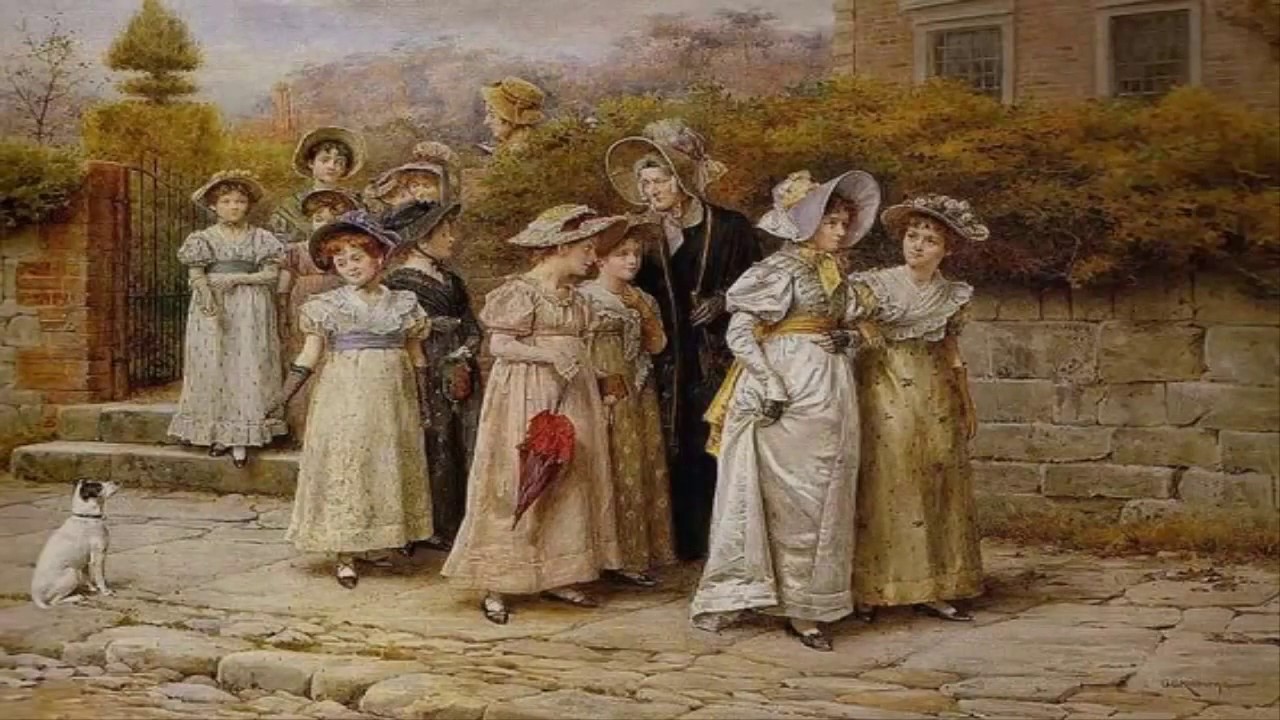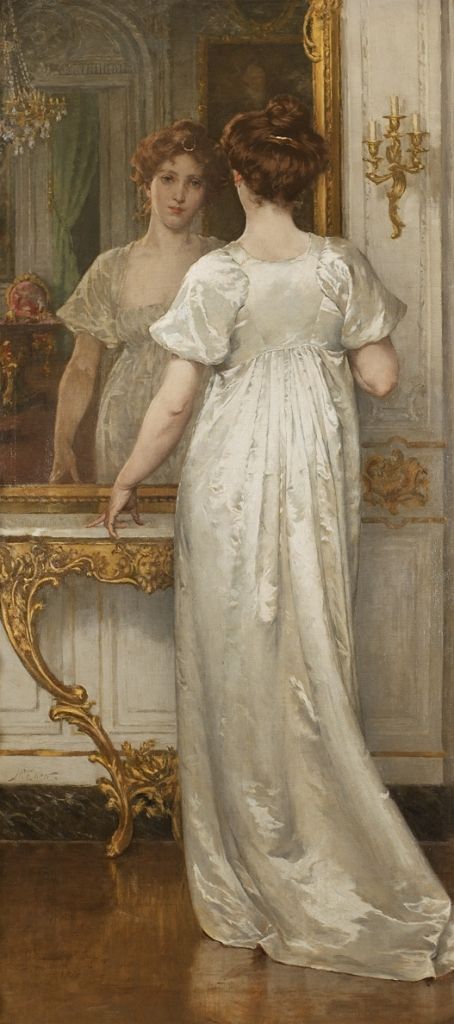
Tea with Susan


Unrelieved black suits few women, but Susan Cunningham is one of those whose beauty it enhances, her guinea-gold hair glowing under the black lace that covered it, her porcelain skin looking whiter by contrast.

“I sent my condolences when I heard, Susan, but may I say in person how sorry I was to hear that your husband’s ship was lost?” the Duchess of Haverford says, as she takes the younger woman’s hand and kisses her cheek.

“I still do not believe it,” Susan answers, taking her seat once the duchess does. “I keep expecting to get another letter from him, or have some false friend commiserate about his misbehaviour in some foreign port or see him walk in the door, upset the children, and waltz back out to find someone to get drunk with.”

She flushes. “Oh dear. I have no idea why I just said that, Aunt Eleanor.”

“Because you know that I knew the Captain,” the duchess says dryly, “and because you are tired of pretending to agree with all those false comforters that want only to sing his virtues.”

“His mother has him fitted for a halo,” Susan agrees, “but then, she never could see a fault in him.”

“Which is undoubtedly why he had so many.” Her Grace’s tone is drier still.

“He had virtues too, Aunt Eleanor. And I find I miss him far more than I expected. It is odd. He was seldom home, and that was just how I like it after we grew so far apart. But now that he will never come home again, I miss him.”


Today’s visitor appears in Farewell to Kindness and A Raging Madness as a support character. She is Rede’s cousin and Alex’s sister. She will be the heroine of The Realm of Silence, which is the next book in the Golden Redepennings series. She was not looking for a second husband. But I have my eye on her.

Surprises on WIP Wednesday

I’m on the home straight with A Raging Madness. Ten more scenes, I think, and the mystery will unravel, but not before Alex and Ella have to decide what matters to them most.

They have several more surprises in store;  the book has been a series of them, mostly nasty. They’re almost due a nice one. Almost. Meanwhile, one of the latest incidents has provided today’s excerpt.

As always, I invite you to post an excerpt on the day’s theme in the comments. Surprises. Of any kind: exciting, unpleasant, spoken or in action. Mine is snakes.

“No thank you, Miller. I have had sufficient to drink. Indeed, you can put the rest of this into the slop bucket.” Ella handed her cup to Miller.
“But you must have your chocolate, my lady. I made it especially for you.”
Ella looked at the cup, and almost picked it up. Whether it was her irritation with the maid’s insistence or her revulsion at the thought of any more liquid, she decided against it.
“No, Miller. I thank you for making it, but I will not drink it this afternoon. In fact, please do not make it unless I ask for it.”
For a moment, she thought the maid would argue some more, but Miller pressed her lips together and turned away to take the remains of the tea into the bedroom.
“Amy, I will have my wash now, darling. And you should find your room and freshen up from your journey.”
Ella was about to follow Miller when the maid screamed.
*****
“Your Hounslow has won my admiration, Susan,” Alex told his sister over dinner after the fuss was all over. Hounslow had joined Jonno and Alex in recapturing the snakes Miller had released when she knocked the slop bucket over in her shock at its contents.
He was now directing an inch by inch search of the room to make sure they’d not missed any of the creatures, and proposed to spread the search to the whole house to prevent further nasty surprises. After he finished supervising the dinner service to his new employers and their guests.
Adders! They were shy creatures, on the whole, slithering away from an encounter with human beings. But, as Miller discovered, they would bite if they saw no alternative, such as if they were woken from hibernation as these were, disturbed with no way out except through a person.
The maid had been put to bed, her bite washed and Miller herself dosed with elderberry wine. Apart from some pain and swelling, she had not yet evinced symptoms of severe poisoning, but adder venom was not to be trivialised. Ella had set another maid to watch Miller, with a list of symptoms of which to beware.
The whole household was on alert to regard all receptacles with caution. Hounslow, however, had taken firm charge of incipient hysteria amongst the maids, and had fostered a competition in bravery amongst the footmen, grooms, and carpenters by suggesting the maids could depend on their protection.
“But how could the snakes have got there, Uncle Alex?” Amy asked.
Alex had just finished a frustrating and unproductive hour questioning servants and carpenters about who had been into the room, or seen carry the bucket or a bag that could have contained snakes. “I don’t yet know, Amy, but I intend to find out. Meanwhile, Jonno has gone into the village to see if he can find anyone who has recently uncovered a nest of the pests, and to borrow a couple of dogs to help search the house.”

Tea with Prue Virtue

Today’s post is an excerpt from my latest novel, Revealed in Mist. (Click on the link to read the blurb and find buy links.)

Prue hesitated in the street outside her next destination. Callers needed to present their card at the gate, be escorted to the front door and delivered to the butler, then wait to be announced. On most days of the week, uninvited guests below a certain rank in society would have difficulty making it past the first obstacle, but on Thursday afternoons, the Duchess of Haverford was ‘at home’ to petitioners.

Past encounters had always been initiated by Her Grace. A scented note would arrive by footman, and Prue would obey the summons and receive the duchess’s commission. Though she was always gracious, never, by word or deed, had Her Grace indicated that she and Prue had any closer relationship than employer and agent.

The entrance and public rooms of Haverford House were designed to impress lesser mortals with the greatness of the family—and their own lesser status. Prue was ushered to a room just off the lofty entrance hall. Small by Haverford standards, this waiting area nonetheless dwarfed the people waiting to see the duchess.

Two women, one middle-aged and the other a copy some twenty years younger, nervously perched on two of the ladder-backed chairs lining one wall. Next to them, but several chairs along, a lean young man with an anxious frown pretended to read some papers, shuffling them frequently, peering over the tops of his spectacles at the door to the next room. Two men strolled slowly along the wall, examining the large paintings and conversing in low whispers. A lone woman walked back and forth before the small window, hushing the baby fretting on her shoulder.

Prue took a seat and prepared for a wait. She would not tremble. She had nothing to fear. Both Tolliver and David said so, and Aldridge, too. But how she wished the waiting was over.

It seemed a long time but was only a few minutes, before a servant hurried in and approached her.

“Miss Virtue? Her Grace will see you now.”

Prue gave the other occupants an apologetic nod and followed the servant.

The duchess received her in a pretty parlour, somehow cosy despite its grand scale. Prue curtseyed to her and the woman with her. Were all petitioners waved to a seat on an elegant sofa facing Her Grace? Addressed as ‘my dear’? Asked if they should care for a cup of tea?

“Miss Virtue takes her tea black, with a slice of lemon,” the duchess told her companion. Or was the woman her secretary?

“Miss Virtue, my companion, Miss Grant. Miss Grant, Miss Virtue has been of great service to me and to those I love. I am always at home to her.”

Was Miss Grant one of the army of relatives for whom Her Grace had found employment, or perhaps one of the dozens of noble godchildren she sponsored? The young woman did not have the look of either Aldridge or his brother, nor of their parents. Prue murmured a greeting.

“I was not expecting you, Miss Virtue, was I? Is anything wrong?”

“Nothing is wrong, Your Grace. I just… I have some questions, Ma’am.”

“You should have sent a note, my dear. I will always take time to see you. I was happy to give a good report of you to my friend Lady Georgiana, of course.” As she spoke, the duchess took the tea cup from Miss Grant and passed it to her.

“Your Grace, I would like to speak with you alone, if I may. I beg your pardon, Miss Grant. I do not mean to be discourteous.”

The duchess stopped her own cup partway to her lips and put it carefully back into the saucer, examining Prue’s face carefully.

When she spoke, it was to Miss Grant. “Celia, my dear, will you let those waiting know that I will be delayed…” she consulted her lapel watch, “…thirty-five minutes, but I will see them all today? Perhaps you could arrange refreshments for them? Return on the half hour, please. That is all the time I can spare, Miss Virtue. If you need longer, I will ask you to wait or return another day.”

Prue shook her head. “The time will be ample, Ma’am. Thank you.”

As Miss Grant left the room, Prue was silent, collecting her thoughts. The duchess waited.

“You knew. You have known all along.” Prue shifted uneasily. She had not intended to sound accusing.

The duchess inclined her head in agreement, her face showing nothing but calm.

Weddings on WIP Wednesday

Weddings are a given in what I write. Sooner or later. Sometimes after the story ends, and sometimes before it begins, but weddings. So today I’m looking for you to post me an excerpt about a wedding. It doesn’t have to show the actual wedding of your hero and heroine, though it could. It could be weddings remembered, weddings planned for, weddings attended.

My two come from A Raging Madness. The first is Ella remembering her first wedding, what brought it about, and what her marriage was like.

“I don’t really remember the first time. Just disjointed bits. I was still fogged by the drug the second time, in the morning, when Dadda came. I remember him shouting, and Gervase laughing, and then lots of people. Faces. Eyes. Jeering.”

Like the other night. Alex would kill that bitch Patrice, and Farnham, and the Blaxtons. And then he would go to Cheshire and dig Melville up and bury him again in a pigpen. No. A midden. No, both. Every midden and pigpen in the county, till even Judgement Day couldn’t find all the pieces to put him back together again.

Ella snuggled into him again, putting a comforting hand on the side of his face. “It is alright, Alex. It was a long time ago. Dadda had a bad seizure right there in the tent, and I think the Colonel wanted to make sure I was protected, for he told Gervase he had a choice between wedding me or being shot. And he sent for the chaplain to perform the ceremony there and then.

It was not so bad. Dadda recovered, and he and the Colonel made Gervase look after me.”

Except for the constant sneering, the neglect, the disdain. Physical abuse, too, mostly where it did not show, but Alex had heard Ella explain away more than one bruise as a trip or a bump, darting a cautious glance at Melville all the while. And nightly rapes. And a camp full of men who should have been honoured to protect her and who instead abandoned her to her abuser.

The second is her wedding day to Alex. People have been told that the pair have been married for weeks, but those in the know have organised a celebration for when the couple return from the church.

When they entered the house, the nursery and schoolroom party were waiting to bombard them with ribbons and rice, and streamers cut from paper, and to escort them to the large parlour, where the adults waited under a big decorated sign with somewhat tipsy capitals that read, ‘Lord and Lady Renshaw’. Tea trolleys laden with sandwiches, pastries, cakes, and other tasty treats jaded it a party lunch, and they were the guests of honour.

“I told Anne you had not had a proper wedding celebration, dear Ella,” Susan said, “since you married under such hurried circumstances, so today is a party for you and Alex.”

“You must have wondered at it,” the countess commented, “that I sent you on such an errand when this is your first day in our home, but Susan and I plotted this last night, and it was her part to keep you out of the way till we were ready. We are so happy for you and Alex.”

The women carried Ella off to one side of the room, and the menfolk surrounded Alex and pressed a glass of wine into his hand.

“Your wife will be fine,” Alex’s brother Rick reassured him. “Our women just want to know her. They have heard fine praise from Susan.

“You’ve spoiled our fun a little,” Rede complained, “having the party eight weeks after the wedding. Now would be our chance to tell you everything that might go wrong on the wedding night.”

A problem to solve in WIP Wednesday

I like to give my hero and heroine something to do together, and in my novels, at least, the problem they have to solve tends to be as intractable as possible. In Farewell to Kindness, both hero and heroine have their own missions, and each has to choose between their goal and the feelings between them. In A Baron for Becky, the men need to put aside their own desires for Becky to succeed—and even then, she is so broken it may not work. In Revealed in Mist, the two protagonists are working for different clients to solve the same mystery. And in A Raging Madness, I’ve upped the stakes.

In the extract below, Alex and Ella have just met after three years. Ella has broken into Alex’s hotel room and is begging for his help.

As always, I’m inviting you to post your own extract in the comments.

That she had taken opium in some form was beyond a doubt. The contracted pupils, the loss of appetite, the shaky hand, the restless shifting in her seat, all spoke to that.

Thanks to his injury, Alex had far too close and personal an experience of the symptoms to mistake them. The bruises on her jaw made him wonder how voluntary her drug taking was, but perhaps her keepers needed to drug her to keep her calm.

Sane or not, Alex hoped he would not need to hand her back to Braxton. Her fear might be irrational, but when she had stood at bay, begging for his help, he had been thrown back ten years. Not that she begged him then. But he left camp on a short mission, and to find Ella married and much changed, her fire banked; her joy extinguished. That time, he had ignored her plight, hardened his heart and left her to the fate she had engineered. And had suffered with her as the consequences quenched her vitality and sucked away the last of her childhood. Suffered, and been powerless to help.

“I have been drugged,” Ella said baldly. “Twice a day. For weeks now. They won’t tell me why. If I refuse, they force me.”

“‘They’ being Braxton and his wife?” Alex prompted.

“And Constance’s dresser.”

“Go on.” He was careful to show no disbelief, no surprise.

“I have been kept in my room. They locked the door. They took all my clothes, my shoes. I saw you out the window and so I came. Will you help me, Alex?”

“I can take you to the rector.” Even as he said it he remembered the plump little man greasing at Braxton’s elbow. Ella would find no help there.

“No!” Her rejection was instant and panicked. “He will give me back and they will send me to that place. No, Alex. You do not know what they plan for me.” She was weeping. Alex had seen her calm under cannon fire, dry-eyed at her father’s funeral, efficient and unemotional in the midst of the carnage of a hospital tent after a battle. He had never seen her weep.

He captured her hands, and kept his voice low and soothing. “I do not, Ella. Tell me.”

“I heard them last night. Edwin has found an asylum that will—Constance says I must be driven insane in truth. They rape the women there, Edwin says, and Constance says I am horribly resilient but even my sanity will not withstand multiple rapes.” The last word was whispered around a sob.

Alex kept his hands still with an effort. They wanted to punch and rend. No wonder she was panicked, but it could not be true, could it? Braxton was not a man Alex could like, but such wickedness? To his own sister-in-law?

“And you do not know why, Ella?” he asked.

She shook her head.

“The rector and the squire… They both believed Edwin and Constance. They came to see me, and I begged for their help, and they would not, Alex. They believed me insane. You do not believe me insane, do you, Alex?”

He did not know. That was the truth of it. His gut told him to destroy her persecutors and carry her off somewhere safe. His gut had never been reliable where Ella was concerned.

“Please, Alex.”

Alex made up his mind. “Ella, you will be safe here. Jonno and I will go and see what we can find out. Jonno, tell the innkeeper we are taking the room for another day. Then have my chaise brought round.”

He had not taken his eyes from Ella’s. She was calmer now, the tears drying on her cheeks. “You will not betray me? No, of course not. I trust you, Alex. I know we have not always agreed, but you will not betray me.”

“I will not betray you.” Though how he would keep his word if she was, in truth, insane, he did not know. Certainly, her story sounded crazy. But she had bruises on her jaw, and the rector had been lied to. And Alex did not like Braxton or his wife.

Lawlessness and bounty hunting in the late-Georgian

The Bow Street Magistrates Court

(This is a repeat of an article I wrote for Caroline Warfield’s blog in June.)

Crime was a personal affair

Before 1829, our modern idea of a police force, and of one law for all, simply didn’t exist. In the pre 19th Century world, crime was a private matter, an offence against the victim. Doing something about it was up to the victim, though if the crime was a felony, the victim could expect help from constables and magistrates.

The offence might be settled between the disputants, or it might go to court to be judged by a magistrate or a jury. If the offence was against the Crown, the King was the offended party, and therefore one of the disputants, a convention we remember in the way we talk about a case as being Jones v Rex (King) or Brown v Regina (Queen). It was still a private affair, a personal interaction.

In our modern world, crime is seen as something that disturbs the public peace and disrupts the smooth running of society. Our police and the courts are charged with restoring social harmony. It is a very different model.

No one wanted a standing police force

The system worked very well in rural England in times of peace, provided you had a fair and reasonable local magistrate. People didn’t move around much. The local magistrate probably knew everyone, and could tell who needed a swift kick to the rear, who should be shipped off to the army and the navy, and who was unregenerate and nothing but trouble. And if he was in doubt, he had plenty of local people to talk to.

The idea of a central police force did not appeal to very many people. The middle and working classes saw such a force as a potential instrument of oppression. Royalty strongly disliked the idea of a standing army. And the gentry felt central control of policing would threaten their individual liberties and their place in local government.

Enter the bounty hunter

Eventually, as we know, the collapse of the traditional village social structure and the increasing mobility of the population made a police force inevitable, and three influential people made it palatable. Henry Fielding founded the Bow Street Runners. Patrick Colquhoun created a philosophy of policing that quieted people’s fears, and Sir Robert Peel established the first modern police force.

But before all of that, thief takers hunted across county lines to capture villains and bring them back to face justice.

Thief takers worked for a reward. Later, and on the other side of the Atlantic, they would be known as bounty hunters. The government, or perhaps a private individual, would post a reward, and off they’d go.

And they had an extremely disreputable reputation:

…the more corrupt thief-takers went further: they blackmailed criminals with threats of prosecution if they failed to pay protection money. Some even became “thief-makers” by encouraging gullible men to commit crimes, and then apprehending and prosecuting them in order to collect the reward. Such practices illustrate the point that not all “crimes” prosecuted at the Old Bailey had actually taken place; some prosecutions were malicious. [Old Bailey Online]

In the early 18th Century, Jonathan Wild, who styled himself ‘Thief taker General of England and Ireland’ was tried and convicted for receiving stolen goods after a decade of dominating the London criminal underworld.

No wonder my hero of Revealed in Mist, David Wakefield, wanted to be called an enquiry agent!

Revealed in Mist

Prue’s job is to uncover secrets, but she hides a few of her own. When she is framed for murder and cast into Newgate, her one-time lover comes to her rescue. Will revealing what she knows help in their hunt for blackmailers, traitors, and murderers? Or threaten all she holds dear?

Enquiry agent David solves problems for the ton, but will never be one of them. When his latest case includes his legitimate half-brothers as well as the lover who left him months ago, he finds the past and the circumstances of his birth difficult to ignore. Danger to Prue makes it impossible.

See my book page for more about the book, buy links, and the first two chapters.

Meet David

From within the protective camouflage of the gaggle of companions, Prudence Virtue watched her sometime partner and one-night-only lover drift around the banquet hall. No-one else saw him. Like the shadow he named himself, he skirted the edges of the pools of candle light, but even when his self-appointed duties moved him close to a group of guests, they overlooked him. None of the privileged, not even the host and hostess, noticed one extra footman.

He was very good. He had the walk, the submissive bend of the head, the lowered eyes. Even Prue—herself hiding as just one more brown-clad, unimpressive companion among a dozen others, waiting patiently in an alcove for the commands of an employer—did not detect him for her first half hour in the room.

But Prue’s body was wiser than her mind, and left her restless in his presence until her eyes caught so many times on a single footman among dozens she began to take notice. And she saw Shadow, for the first time since that disastrous morning five months before.

On the slim chance Shadow was not here for the same meeting as her, Prue stayed out of sight in the back of the alcove as the time for her to make her move approached. He had left the room several times in the hour she had been watching. With luck… Yes. There he went again. Now, if several of the dowagers would call at once… Done. Moving to where any of three or four ladies might be giving her instructions, she hurried away as if running an errand.

The key, the man she knew as Tolliver had taught her, was to fit into people’s preconceived ideas of the universe; to appear to be someone doing something they had an explanation for. The key was to blend into the background of the story they were telling themselves. ‘Don’t notice me. I’m just a companion running an errand,’ her behaviour said. And five minutes after she left, not one of them would remember what she looked like or where she went.

Revealed in Mist was released on 13 December.


Backstory on WIP Wednesday

One of the tricky tasks an author has to manage is to tell those crucial bits of history a reader needs to sympathise with the hero or heroine, or despise the villain. But what to do? Hint and let the reader guess? Have the character explain themselves to another? Do a flashback in memory? Jump between present and past entirely?

All can work, or can be disastrous.

This week, on WIP Wednesday, I’m inviting you to post excerpts that carry your backstory. Mine is from A Raging Madness. Ella is telling Alex about her first marriage, which he had observed as a fellow officer.

He had seen the signs and ignored them, told himself that he had no right to interfere between husband and wife, told himself that she had made her bed and could lie in it. Arrogant, conceited pup. Twenty-one years old and full of his own pain. He hated that long-ago version of himself nearly as much as he hated Melville. Long ago? He had been believing lies against her as recently as two months ago.
“I often thought of sending him into the thick of battle, like David did to Uriah the Hittite. I should have done it.”
Ella, her eyes soft, reached up and kissed his chin. “Was I your Bathsheba then? I am flattered.”
“Always, Ella. My guilt made me cruel to you. I cannot tell you how sorry I am.”
Her eyes rounded and she shook her head. “No, Alex. You were always kind and polite. Distant. Disapproving sometimes. But I knew I could rely on you. I do not think I could have survived after Dadda died if not for you.” Her eyes filled with tears, and he bit back the self-recriminations. He did not deserve her praise, but nor was he selfish enough to deny the comfort her memories gave her in order to seek his own absolution.

Tea with Min

“The duchess is a charming, gracious lady, Min,” Viscount Avery assured his wife, when he dropped her to the front entrance of Haverford House. He immediately undercut his own assumption of confidence. “I can stay if you wish. Do you want me to stay?”

Minerva Avery looked around the grand entrance hall, the full height of the house, with majestic flights of stairs rising on either side and curving to meet at spacious landings, only to part again to swerve to the next level. The hall was designed to intimidate and impress, and it worked.

But she was Lady Avery, wife to Lord Randal Avery, and was here by invitation. “Her Grace asked to see me, Candle. I will be perfectly fine.”

She stood on tiptoe to kiss her tall husband, who bent to meet her part way, and turned his face so that her peck on the cheek became a loving salute to the lips. Had this august space seen other aristocrats show affection in public? Probably not, but in this she was proud to be true to her tradesman heritage. People of her class loved their spouses.

She shot a defiant glance sideways to the butler who waited to conduct her to the duchess, and surprised an indulgent smile before he wiped it from his face. “This way, my lady,” he said.

“I’ll just take the horses on a circuit around the park and will be waiting when you are finished,” Candle promised.

Min followed the butler up the first flight of stairs and along a sumptuously carpeted hall wide enough for three of her invalid chairs to race side by side, without bumping the elegant furniture and beautifully carved statues that lined both sides.

They passed room after room, until at last they came to a small sitting room, richly furnished but somehow warmly welcoming. Her Grace the Duchess of Haverford rose from a sofa by the fire.

“Lady Randal Avery,” the butler announced, and Min sank into the deep curtsey that her friend Anne, Lady Chirbury, had been schooling her in all week.

“Lady Avery, how very kind of you to call.” The duchess smiled, and took her seat again, patting the cushions beside her. “Come. Sit with me and tell me how you take your tea.”

They spoke commonplaces while Her Grace made and poured the tea, Min following the duchess’s conversational lead.

“Now,” Her Grace said, once they were both served. “you must be wondering why I asked you to visit, and I shall not keep you in suspense, Minerva. May I call you Minerva?”

Min nodded, her tongue suddenly frozen at the thought of such familiarity from so grand a lady.

“Minerva, I shall get straight to the point. I am the patroness of a hospital for servicemen, and I am in need of a large number of invalid chairs. My nephew Chirbury tells me that the one you provided for his cousin, Major Redepenning, was the best he has ever seen. Are you still in that business, my dear? For I should dearly appreciate your help.”

Min is the heroine of Candle’s Christmas Chair, a holiday novella that was my first published book. You can read all about it on my book page, at the link. I first met Min and her viscount in Farewell to Kindness (which is Rede’s, the Earl of Chirbury’s, story). Min provided the invalid chair that Rede’s cousin, Alex Redepenning, has collapse under him during a vigorous chair based rendition of a line dance. I wondered how a carriage-maker’s daughter with a business making invalid chairs came to marry a viscount, and next thing I knew, a tall skinny viscount with bright red hair turned up at her carriage-maker’s shop to order a chair as a Christmas present for his mother.

The first two chapters are linked to the book page, so please go and enjoy.

Unwilling attraction on WIP Wednesday

out of copyright; (c) Museum of London; Supplied by The Public Catalogue Foundation

They met, they fell in love, their families were delighted, and they married. It would be a lovely life, but not a particularly exciting story. We authors like to torture our characters with all kinds of barriers along the way, and a favourite trope is the push-pull of unwilling attraction.

You know the sort of thing. Intellectual women with sharp tongues are not my type, but I can’t resist her. He is an unreliable rake, but his kindness is hugely appealing. We readers look forward to finding out how they get past their own preconceptions.

So share an excerpt, if you will, where your characters are feeling this dilemma, and I’ll give you one from the very start of A Raging Madness.

The funeral of the dowager Lady Melville was poorly attended—just the rector, one or two local gentry, her stepson Edwin Braxton accompanied by a man who was surely a lawyer, and a handful of villagers.

Alex Redepenning was glad he had made the effort to come out of his way when he saw the death notice. He and Captain Sir Gervase Melville had not been close, but they had been comrades: had fought together in Egypt, Italy, and the Caribbean.

Melville’s widow was not at the funeral, but Alex was surprised not to see her when he went back to the house. Over the meagre offering set out in the drawing room, he asked Melville’s half brother where she was.

“Poor Eleanor.” Braxton had a way of gnashing his teeth at the end of each phrase, as if he needed to snip the words off before he could stop chewing them.

“She has never been strong, of course, and Mother Melville’s death has quite overset her.” Braxton tapped his head significantly.

Ella? Not strong? She had been her doctor father’s assistant in situations that would drive most men into a screaming decline, and had continued working with his successor after his death. She had followed the army all her life until Melville sent her home—ostensibly for her health, but really so he could chase whores in peace, without her taking loud and potentially uncomfortable exception. Alex smiled as he remembered the effects of stew laced with a potent purge.

Melville swore Ella had been trying to poison him. She assured the commander that if she wanted him poisoned he would be dead, and perhaps the watering of his bowels was the result of a guilty conscience. The commander, conscious that Ella was the closest to a physician the company, found Ella innocent.

Perhaps it had all caught up with her. Perhaps a flaw in the mind was the reason why she tried to trap Alex and succeeded in trapping Melville into marriage, why she had not attended Melville’s deathbed, though Alex had sent a carriage for her.

“I had hoped to see her,” Alex said. It was not entirely a lie. He had hoped and feared in equal measure: hoped to find her old before her time and feared the same fierce pull between them he had been resisting since she was a girl too young for him to decently desire.

“I cannot think it wise,” Braxton said, shaking his head. “No, Major Redepenning. I cannot think it wise. What do you say, Rector? Would it not disturb the balance of my poor sister’s mind if she met Major Redepenning? His association with things better forgotten, you know.”

What was better forgotten? War? Or her poor excuse for a husband? Not that it mattered,  any more than it mattered that Braxton used the rank Alex no longer held. It was not Braxton’s fault Alex’s injury had forced him to sell out.

The Rector agreed that Lady Melville should not be disturbed, and Alex was off the hook. “Perhaps you will convey my deepest sympathies and my best wishes to her ladyship,” he said. “I hope you will excuse me if I take my leave. I have a long journey yet to make, and would seek my bed.”

Revealed in Mist is available now


Prue’s job is to uncover secrets, but she hides a few of her own. When she is framed for murder and cast into Newgate, her one-time lover comes to her rescue. Will revealing what she knows help in their hunt for blackmailers, traitors, and murderers? Or threaten all she holds dear?

Enquiry agent David solves problems for the ton, but will never be one of them. When his latest case includes his legitimate half-brothers as well as the lover who left him months ago, he finds the past and the circumstances of his birth difficult to ignore. Danger to Prue makes it impossible.

Smashwords: http://bit.ly/2dBfNGq

iBooks: http://apple.co/2dVsHPq

Barnes and Noble: http://bit.ly/2dCsbCg

Kobo: http://bit.ly/2hrFztC

Amazon US: https://www.amazon.com/dp/B01N7HI8IA/