Authors in Bloom, and zucchini fritters

Dianne Venetta_AIB Logo_2015

PROMOTION IS OVER: CONGRATULATIONS TO THE WINNERS

My ebook special edition has been won by ELF. Thank you to all who entered.

***

Welcome to my blog. I’m delighted to be an author in bloom, though down here in New Zealand, we’re sliding into Winter while you Northern hemispherites are busy preparing your Spring gardens.

But it is never too early to plan what to do with the harvest, and prizes are don’t have to wait for any particular season. Am I right?

 Zucchinis, courgettes, or as we call them when I fail to pick every day, marrows

There cannot be an easier or more prolific crop on the face of the planet. Plant, feed (they love manure and compost), and — whatever you do — don’t forget. Once they start to produce, you’ll need to pick daily, or one day you’ll come out and find a marrow the size of Africa smothering everything else in the garden.

We usually plant several different types: green torpedoes, yellow torpedoes, and both green and yellow patty-pan shaped. Picked little, they slice into salads. I also liked them fried with a breakfast of eggs and bacon, or cut into small cubes in a salsa. You can grate them for fritters whatever the size, but bigger is faster.

This year’s marvelous discovery was that grated zucchini freezes really well. Most of the liquid drains out of the zucchini while it is defrosting, making even better fritters than the fresh stuff. Yum!

Zucchini fritters — Paleo and auto-immune system friendly

Tips: weigh your zucchini before grating. It’s easier. Get out as much water from the zucchinis as you can. This is really important. If you don’t freeze the grated zucchini, salt it to draw the moisture, then twist it in a cloth. If you have time, leave it overnight in paper towel. Really squeeze the last drop out of it.

1 pound of zucchini, grated and drained (about 2 of medium size)
2 green onions, thinly sliced
/4 cup almond flour (or arrowroot or coconut if nuts are a problem)
1/4 cup of freshly grated parmesan (if you can take dairy)
2 eggs (if you can’t take eggs, try this gelatin substitute)
salt and pepper to taste
1 tsp lemon juice

Put everything in a bowl and mix.

Heat two tablespoons of your choice of cooking oil in a pan and wait for the pan to get super hot. When the oil is shimmering, add spoonfuls of the mixture and fry until golden brown, about two to three minutes each side.

Serve with sour cream and extra green onions. Or with eggs, mushrooms, and homemade hollandaise sauce. Or with spinach and salmon. Or with applesauce. Or any way you like, really. We make up huge bowls of these and use them often.

GIVEAWAY

Comment on this blog post and note in the Rafflecopter that you’ve done so. That’s all you need to do to be in the draw to win your choice of my prizewinner special edition ebooks, and answer the extra questions to be in the draw for an advance reader copy of The Realm of Silence, to be sent early in May.

a Rafflecopter giveaway

GRAND PRIZE

We are giving away a Kindle Fire or Nook (winner’s choice) along with a 2nd prize of $25 gift card to those who participate in the whole hop by visiting each and every spot and leaving a comment or email through the blog post or the giveaway.

Where to find out if you have won.

Winners will be posted on the first and last websites in the hop (Dianne Venetta and BloominThyme). I’ll also post my own winners here.


Hop along for more great tips, recipes, and giveaways


Tea with the Countess of Chirbury and Selby

“My dear Anne,” the Duchess of Haverford said, crossing the room to greet her goddaughter with a kiss, “how lovely to see you. Come. Take a seat, and let us have a comfortable coze.”

While the maids bustled about setting up the tea table, Her Grace asked after each of the children in the burgeoning Chirbury nursery.

Daisy, at eleven, was taking lessons in painting from her Aunt Kitty, in music, writing, arithmetic, and manners from her Aunt Ruth, and in science, particularly the study of nature, from the local curate.

The twins, eldest children of Anne’s marriage to the Earl of Chirbury, had recently celebrated their fourth birthday, and Anne was happy to expound for several minutes on their virtues, escapades, and differing characters.

By the time the last maid left the room, she had moved on to the two youngest children. “Little Lord Joseph is happiest when he is high up, and — after rescuing him from the top of the nursery’s doll house, dresser, and wardrobe, Rede had the happy notion of building him a tower with ladders and stairs so he could climb safely and to his heart’s content. And Baby is a darling — such a sunny nature, and so good. I left the others at Longford Court, since we only came up to London to see Mia safely on her way to Cape Town. But Baby is with me, of course.”

“I long to see her, Anne,” the duchess said. “I was so sorry I was unable to come for her christening.”

Anne smiled. “I was sure you would say so. Rede said that taking a baby when visiting was hardly proper, but she is sleeping in the next room, Aunt Eleanor, and the nurse will bring her through when she wakes.”

If the countess had any lingering doubts about the propriety of visiting with an infant in tow, Her Grace’s delight in the coming treat dispelled them, and several more minutes were taken in discussing and dismissing the ton’s habit of ignoring the occupants of the nursery and schoolroom until they were of age to join in adult pursuits.

“But before Baby wakes,” Anne said at last, “I had a particular goal in visiting today, Aunt Eleanor. How well do you know Rede’s friend Lord Rutledge?”

“Gil Rutledge. He has been to various of my entertainments over the years, and of course he was one of lads who used to visit Haverford Castle in the summer, when Rede brought his friends. I have heard very good reports of his record as a soldier, too.”

Anne nodded. “From Uncle Henry.”

“Among others. What do you wish to know, Anne? And why?”

Anne turned her empty cup on its saucer, and then put it down and looked up at the duchess. “I have hidden his brother’s widow and children from his mother, and he wants to know where they are. I need to decide what to tell him.”

The duchess pursed her lips. “I see. You fear that Lord Rutledge may prove to be a bully and a tyrant like his brother.”

“Yes, or susceptible to his mother’s bullying, for she swears she will have those two dear little girls off poor Chloe.”

“The woman is a horror, and I would not give her a dog to raise, let alone Lady Rutledge’s little daughters. Does Lord Rutledge say why he wants to know the whereabouts of his sister-in-law and nieces?”

Anne nodded. “Yes, and his reason is fair. He is responsible for their welfare, he says, and needs to reassure himself that they have everything they need. Rede says he is to be trusted, and that he would never put them at risk, but will he allow himself to be persuaded by his mother?”

Her Grace was silent for a long moment, considering her answer. At last she said, “I believe not. He has a deep sense of duty and honour, and little affection for the dowager. Indeed, I suspect he considered Henry and Susana, your husband’s aunt and uncle, more his parents than his own. As to his susceptibility to bullying, you do know, do you not, that his nickname is Rock Ledge?”

“So my husband tells me,” Anne said. “Nothing shifts him once he has made up his mind.”

The duchess continued, “If I might advise you, Anne, tell him your concerns and ask him for his word that he will not allow his mother to discover the widow’s whereabouts.”

Gil Rutledge is the hero of The Realm of Silence. His sister-in-law and horrid mother also appear. Click on the title for blurb and preorder links. The Realm of Silence is the third novel in The Golden Redepenning series, and will be released on 22 May.

Back to the future

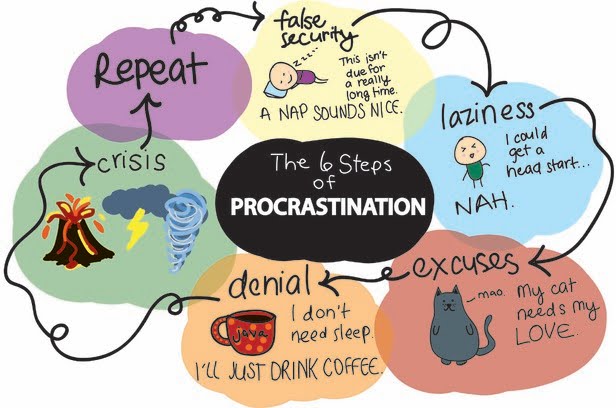
I’ve been in a slump since I sent The Realm of Silence off to the editor. I’ve written little, and what I have written, I haven’t liked.

In part, because life

I’ve been distracted by my health, a busy day job, tax accounts time, and preparation to sell our house.

I’ve a complicated mix of health issues most of which were responding nicely to treatment — but in the past month, not so much. We’re still trying to find the source of some of them, but each specialist my GP sends me to finds and fixes something in his speciality and passes over everything else. Clearly, I’m in possession of Douglas Adams’ ‘Somebody Else’s Problem’ field, at least when it comes to medical specialists.

I love my day job, which is solving problems for organisations who want to communicate, proposing and then implementing plain English solutions. But 72 hours a fortnight plus 15 hours a fortnight commute eats into my days, especially when I arrive home too tired to do anything but sleep.

In New Zealand, most people have a 31 March financial year end, inherited from the English system of settling the year’s accounts on Lady’s Day. (Link to blog). I have until end of May to report, but I’m getting my bits and pieces together. With multiple sources of author income, superannuation, and a salary, it gets complicated.

And we’re readying our house for the market. Nearly two acres with a five-bedroom, two-bathroom dwelling that includes two living areas and a double garage, plus a sleep-out. And in a popular commuter town. We have a number of little jobs to do, but we’re tackling them a bit at a time and expect to be ready to sell in the New Zealand spring.

Deadlines, deadlines, deadlines

I was a freelance journalist a long long time ago. I learnt why the word ‘dead’ is in deadline. If your article doesn’t cross the line by the time the editor says, it’s dead. The publication will go ahead without it. Do it too often, and that editor won’t buy from you again. Before you know where you are, your career is dead.

I cannot help but apply the discipline I learnt then to my current fiction career.

I currently have three looming deadlines for stories that are not yet written, including the contemporary I started — but more about that soon.

  • Short story of 3,000 words by 24 April.
  • Contemporary of 30,000 words by 15 May
  • Historical of 20,000 words by 4 June.

It is easy to counsel other people to slow down, renegotiate deadlines, withdraw from commitments, prioritise the people who are important to you and your own health. It’s much harder to apply that sage advice to myself. For one thing, keeping up a regular timetable of new releases is part of my strategy to achieve the longer-term goal of giving up the day job and writing fiction full time.

I can meet the goals on these three, and further goals over the year, if I write 1,500 to 2,000 words a day, six days a week. That’s not impossible. As long as a fair number of them are words I want to keep.

Let’s start at the very beginning

But I’m not writing, and I’ve finally figured out why. I started the contemporary in the wrong place, and I let the heroine know too much about the hero in the first pages of the story.

She’s a smart girl. She has him figured out straight up, and sympathises with his position.

No conflict, no tension, no drama, no story.

So to get them to their future through a story that will be fun to read, I need to go back to the beginning and start over.

Phew. I’m glad we’ve got that sorted!

Please, please, Mr Postmaster

I’ve written before about the Penny Post in the context of Christmas Cards, but I find the whole development of mail and postage in the United Kingdom interesting. For various reasons, I’ve been researching foreign mail – letters sent from the United Kingdom to overseas countries or vice versa.

In the beginning, such mail was very haphazard and unpredictable, sent by whatever ship happened to be available. We’re talking sailing ships, so too much wind and your letter could end up at the bottom of the sea; too little and it isn’t going anywhere. Other hazards included pirates and enemy ships.

Even under the best of conditions, transport was slow, relying on navigation techniques that only slowly improved over the years before the invention of the chronometer, as well as prevailing winds and ocean currents.

Sending letters overseas

A letter from England to Australia in the early years of British settlement might take eight months or a year to reach its destination, and if it required an answer, the original request is going to be at least 18 months in the past before the response arrived.

By the nineteenth century, when most of my stories are set, you had several options for sending letters from England to places overseas.

  1. You could deliver it to a post office, pay their fee, and leave it to them.
  2. You could ask a private business with overseas links to send your letter through their system.
  3. If you lived in a seaport, and if a ship in that port was heading in the right direction, you could ask the captain to take your letter for you.
  4. If you lived in London, you could go to coffee houses where ship captains met with merchants to bargain for cargoes, and — for a small fee — add your letter to a mail sack going to the right place. The coffee house would bargain with the appropriate captain.

Sending a letter from overseas

In many parts of England’s far flung empire, there was no postal system, but any ship’s captain would accept mail for ports along his route. With no regular service, the length of time before a letter arrived could not be known.

Say you were travelling to Cape Town, like the heroine of my next Redepenning novel. Mia might write a letter to her English relatives from the Canary Islands, and leave it to be sent back to England. But the next ship might be going to England via the Caribbean and then Canada, and her letter would therefore take the long way home.

From early in the 18th century, the Royal Mail had its own ships, called Packet Boats, to cover the route between England and Ireland, and England and Europe. The Royal Mail could also send mail on private ships, under the Ship Letter Act of 1799. The captains of such ships had a legal obligation to hand letters to the Postmaster at their first port of arrival in England, and were paid a small sum for doing so.

It’s a far cry from the instant gratification of email and direct messaging, but be patient, and it worked. Mostly. Eventually.

Reflection characters on WIP Wednesday

Every hero and heroine needs someone to talk to, even if it is only their pet. How else is an author to let the reader know what’s going on in the character’s head? A reflection character is a bit more than a sounding board. A reflection character gives our protagonist a timely push to be the person they can be.

This week, I’m looking for excerpts where your hero or heroine is talking to their friend. Mine is from House of Thorns. My hero Bear is about to be confronted by his manservant.

Bear was examining the tankard from which he had been drinking. He was nearly sober again, since he’d slept properly for the first time since leaving his poor wife crying in the garden. He could finish the tankard and demand another, or he could go home and pay for his sins. Neither option was appealing.

He looked up as a shadow fell across his table. “So, there you are, Mr. Gavenor.”

“Jeffreys?” What was his manservant doing here?

“Two days, I’ve been looking for you.” Jeffreys shook his head slowly. Even watching the motion sent Bear’s head and stomach into rebellion. “Ever since you run off from poor Mrs. Gavenor, leaving her in such trouble.”

“Rosa is in trouble?” That brought him to his feet, though he groaned as the full weight of his headache hit him.

Jeffreys leant a supporting hand to Bear’s elbow. “Need to get you cleaned up so you can go home and help her.”

“Redding can help her,” grumbled Bear.

Jeffreys cast his eyes upward and sighed. “That’s just nonsense, and you know it. He’s telling people he got his black eye when he rescued Mrs. Gavenor from that swine Pelman, but Pelman is saying you gave it to him. And if you did, then you should be ashamed, sir. And Pelman, too, assaulting the poor lady with her father sick and the poor London lady on her deathbed.”

“Mrs. Clifford is dying? Hell and damnation, Jeffreys. I have been an ass.”

Jeffreys kept his face bland. “Yes, sir. I wouldn’t presume to argue with you, sir.”

The Georgian population boom

Throughout early modern history, Britain’s population changed at about the same speed as the rest of Europe. A really bad epidemic of the plague would drop the total numbers for a while, but on the whole there was a gradual increase, averaging less than one percent a year up until 1625, then remaining stable for 125 years, then increasing at a slow rate again to take 150 years to double.

Britain followed the pattern until the 1700s. In 1714, George 1, the first of the Hanoverians, came to rule over a country of 5.25 million. In 1760, the population had grown to 6.15 million, a healthy 17 percent at a time population growth in most of Europe was static. But the next 50 years would see a massive change. In 1815, the population was 10.25; almost double the 1714 figure. France in the same period saw a 35 percent increase, and the Dutch figures remained much the same.

Why did the population grow so fast?

Scholars give two reasons why Britain’s growth was faster than that of other nearby countries.

The first was a drop in mortality. Britain had more people because fewer of them died. From early in the eighteenth century, Britain began imposing quarantines on imports and ships sailing from places known to have the plague or other highly feared diseases. Innoculation against smallpox helped, too. People still died of typhus, cholera, and other diseases, but the number of deaths in each epidemic dropped dramatically.

The second was the age at marriage. Before the eighteenth century, the mainly agriculture-based workforce would put off getting married until they could afford a cottage and a small piece of land. Average age at marriage for women was 26 in the 17th century, and for men it was 28.  Fertility drops (on average) after 30, so not marrying until after 26 means fewer children overall.

The enclosure acts changed all that. The biggest landowners scooped up all the land, and people who would have been small-holders had to work for wages or migrate to the new jobs in city manufactories. Our working couples no longer had a reason to wait, so they married earlier and faced the challenges of finding work together. By the 19th century, the average age of marriage was 23 for women and 25 for men. (Not in the aristocracy. They married for different reasons, sometimes as young as 13 or 14.)

Since women now had a longer fertile period in marriage, and less chance of dying of disease, the number of children per couple increased.

In the next 150 years, decreasing infant and maternal mortality meant the British population doubled every 40 years, providing factory workers for industrial revolution and upsetting theorists like Malthus, who thought the upwards curve was the way things had always been, and that it would continue.

Weddings on WIP Wednesday

My House of Thorns is for a series about Marriages of Inconvenience, which means the wedding falls about halfway through the book. Do you have a wedding scene in your book? Please share in the comments. Here’s mine.

Rosa glowed. It was the only word Bear could find to match the reality. From the moment Jeffreys had handed her down from the chaise and delivered her to Bear’s waiting arm, he had been awestruck. She had gained a little weight in the weeks since he first met her, and of course she was wearing a pretty new gown. But there was more to the change than added curves and fine feathers. She looked happy. Happy and confident. The glow suited his fairy but made Bear nervous. It would be over to him to keep her happy, and he was by no means certain he was up to the job.

The usual Sunday service first, where their banns were read for the third time, and then the wedding ceremony. Bear had Caleb as his witness, and Rosa had asked Sukie.

Neatham, neatly dressed and carefully attended by Jeffreys and Maggie, sat in the Thorne Hall box, watching the proceedings with interest. “I am glad he married her,” he said loudly, at one point. “Rosie will be pleased. She does worry about Belle.”

Bear had assumed that would be all the congregation, but many of those who’d been to Matins stayed on, and Bear and Rosa exited to the church to the acclaim of dozens of well-wishers.

Tea with Tolly

Haverford House, London, 1787

Fitz-Grenford balanced the delicate porcelain cup carefully on his knee, not taking his eyes off his hostess. Her Grace was remarkably contained, given she had just announced her intention to defy both Society and her husband. The Duke of Haverford was not a gentle man, and did not tolerate rebellion in his household. As his base-born brother, Fitz-Grenford knew this fact at first-hand.

The duchess seemed a nice enough young woman, though he’d had little to do with her until she had contacted him with her commission. “The duke will not be pleased,” he warned.

“His Grace will not wish to upset me.” The duchess smiled serenely, and placed a hand on her midriff. Fitz-Grenford nodded. The household knew that the lady had lost several babies since the son who secured the succession. Even His Grace would hesitate to counter his duchess’s express commands when she might carry the hope of the Haverfords.

“So what, precisely, do you wish me to do?” Fitz-Grenford asked.

Her Grace had her answer ready. “Talk to the boy, then trace back his steps and talk to the people he met on the way. I have made my own judgement based on my meeting with him and with his father. Your report will confirm or disprove that he is fit company for the Marquis of Aldridge. I believe him, Fitz-Grenford, but I do not trust myself in such an important matter.” She waved an impatient hand. “I should call you ‘Thomas’, should I not? No. Oliver. You use your second name, I believe. As my husband’s half-brother, you are family.”

Fitz-Grenford smiled, despite the caution he felt impelled to offer. “Unacknowledged half-brother, and the duke will bar the door to me if I presumed on the relationship in the least.”

“We cannot have that,” Her Grace agreed. “A nickname, then, and only when we are private.” She clapped her hands, looking in her enthusiasm closer to sixteen than the twenty-seven years he knew she had to her account. “I have it. T. Oliver. Tolliver. I shall call you ‘Tolly’, unless it displeases you?”

“Your Grace, enclosed please find reports of the interviews I conducted on your behalf into the journey of the boy David. He seems a nice lad. I will look forward to hearing how he goes on. Sincerely yours, Tolly.

Gerald Ficklestone-Smythe
Manager of Cowbridge Mine, Llanfair

The boy was gone when I got back from the funeral. Little bastard. I told him I’d kick him to next Tuesday if dinner wasn’t on the table, but nothing was prepared, and he was nowhere to be found. And he’d let the fire go out. He’ll come back when he’s hungry, and I’ll have the skin off his back, see if I don’t.

Where else is he going to go? London? To the duchess? He is stupid if he thinks she’s going to want her husband’s by-blow, and so I told him when I took the money for his trip. I had a right to it, didn’t I? I took his mother back after the duke had finished with her. I gave her a home. I even let her keep the boy.

The duke owed me that money. Yes, and more. Made a harlot out of my daughter, and turned her off with a measly few hundred pounds. Then wouldn’t pay more when that ran out. Then, when my daughter lay dying and couldn’t keep house for me anymore, that pernicious swine sent his wife to steal the boy I raised, promising him I don’t know what.

The boy said he’d stay till his mother died, and the duchess returned to London without him. And now my slut of a daughter is dead, and the boy can’t be found, but where could he have gone? He has no money for the coach fare, and it’s a long walk to London, especially with winter coming on, and the Black Mountains between here and England.

He’s no fool, the boy. He’ll be back.

Jeremiah Penchsnith
Captain of the Merry Molly, Bristol

We didn’t find the lad till we was near Avonmouth. ‘E was hid in the coal, but we saw ‘im when ‘e tried to escape over the side. ‘E fair wriggled when we caught ‘im, begged us to let ‘im go. But ‘e owed us ‘is passage, and so I told him.

If we let away every lad who wanted a free trip over the Bristol Channel, we might as well set up as a ferry, and that’s what I said.

Give the lad credit, ‘e worked ‘ard. Four trips ‘e did wiv us, not counting the first. And then he left us in Bristol. I’d’ve kept ‘im on, I would. Good worker, that lad. I ‘ope ‘e gets where ‘e’s going.”

Maggie Wakefield
Farmer’s wife, Ditchford Frary, East Cotswolds

He was a mystery, young David. Turned up in a snow storm, he did. Bessie the dog found him when Matthew went out after the sheep, huddled up in the midst of the flock where they’d taken shelter in the lee of the old stone wall.

Matthew brought them all home: boy and sheep, the boy limping along on a stick because his ankle was swollen to twice its size. “I’ve a lamb for you to warm by the fire, mother,” Matthew said, and then stood aside. Just a sprain, it turned out to be, but a bad one. I would not turn man or beast out in weather like that, let alone a boy, and no more would Matthew, so of course we let David stay.

Where did he come from in that awful weather? Wales, he said, but that couldn’t be, could it? Wales is a long way away, across the wolds and then the water. And mountains, too, they say.

David was a good boy, so perhaps he was telling the truth. He made himself useful until he could walk again. He was a good hand in the kitchen, and he read to me and Matthew at night, which was a great blessing, for our eyes are not what they were. Not that I’ve ever read more than enough to piece together a few verses from the Bible. Not like David. It was a treat to listen to him, and I was sorry when he left.

But he had people waiting for him, he said, so off he went, off to London. We got him a lift as far as Oxford with Jem Carter. I hope he made it to his people. A fine boy like that? They would have been missing him, I’m sure.

Sir Philip Westmacott
Gentleman, London

My tiger? He’s taken off. Ungrateful brat. Good boy with the horses, too. But there you go. That’s what I get for taking a boy off the streets. I found him in Oxford, you know. Oh yes, I told you before, didn’t I. He made sure I got back to my inn after a rather exciting evening. Didn’t rob me, either, though he could have. I was somewhat—er—elevated.

I told him to come back in the morning for his reward, and he was waiting outside in the stable yard when I woke. And all he wanted was to come to London with me. I bought him a suit of clothing, of course. Couldn’t be seen with him in the rags he had. Not livery. Not in Oxford. But I thought silver blue, to set off his dark hair. It would have looked stunning against my matched blacks.

We arrived late at night, and in the morning he was gone. Ungrateful brat.

Henry Bartlett
Gatekeeper, Haverford House, London

Of course I didn’t let him in. A boy like that? Tidily dressed enough, and nicely spoken, but what child of substance is allowed to walk around the streets? But he wasn’t a street urchin, either. He asked if he could send a note, and he wrote it right there on a piece of paper I found him. Never was a street urchin that could read and write.

Anyway, I sent it in to the duchess. Told him he’d have to wait, but it wasn’t but an hour before Her Grace’s own maid came down to fetch him, and the next thing I knew, he was part of the household.

He seems a pleasant enough lad; always polite. But it just doesn’t seem right, raising the duke’s bastard under the same roof as his legal sons. The duke agrees, or so goes the talk in the servant’s hall. But the duchess got her way, this time. And we’re all to treat the boy as if he were gentleman. Her Grace has hired him a tutor, and word is he’s off to Eton in the autumn. And the little Marquis follows him around like a puppy dog.

What will be the end of it, do you suppose?

David Wakefield, the illegitimate son of the Duke of Haverford, is hero of Revealed in Mist, and his estranged younger brother, the Marquis of Aldridge, is a secondary character. Aldridge is not quite the hero of A Baron for Becky. David and Aldridge also turn up in other stories of mine, as do Tolliver and the Duchess.

Acknowledgement: this series of interviews was written for and appeared for the first time in, The Teatime Tattler. It is published in The Collected 2016 Editions of The Teatime Tattler, which can be purchased from most eretailers.


Rough beginnings for my contemporary couple

My contemporary novella for the Authors of Main Street summer collection wants to be a romantic comedy, I think. I’ve interviewed the hero and heroine. I’ve charted their ‘hero’s journey’. I’ve run a heap of dialogue through my head.  And now I’ve written the first scene of what is tentatively called ‘Beached’. Actually, it might be the third or fourth scene, after Zachary Henderson and Nikki Watson meet again. The story will be mostly set at a beach resort in New Zealand, where my heroine has invented a summer residence that needs fixing up and my hero is working as a builder.

Eighteen months ago, New York

Nicola Watson scanned the crowd in the coffee shop. No sign of Mr Michael ‘I’m-Too-Sexy-For-A-New-York-Courtroom’ O’Neal. It was the last straw.

Yes, she was five minutes late. Okay. Eight minutes. Which was totally not her fault, and another reason why she was irritated.

But O’Neal had asked for this meeting, so he should have waited. If he turned up at all.

Ever since she’d received his note, she’d been second guessing what he might be up to. Third, fourth, and fifth guessing. That was the primary reason for her mood. She shouldn’t be here, and yet here she had not been able to resist.

She and Mr Designer-Suit-Fits-Like-A-Glove were not currently on the opposite side in litigation, and last time he had won. But she hadn’t given up. The O’Neals might have been innocent of the particular charges World Watch had brought against them, but somewhere their global chains of hotels were breaking environmental laws for short term profit. And one day she expect to face Bedroom-Eyes O’Neal again, and win.

His note said he had information she might find useful. Yeah, right. She wouldn’t trust an O’Neal as far as she could throw one of them, and every single one of them was six foot plus and built like a lazy bookworm’s wet dream.

Lots of money for gym equipment and personal trainers, her grumpy self pointed out. At that moment, something in the crowded room hooked her roving gaze and dragged it back. That man. The one with the beard. The one waving a greeting.

The scruffy denim jacket over a coloured t-shirt was a far cry from O’Neal’s usual crisply tailored suits and shirts, and the pirate beard was a further disguise, though something in her gut purred its approval. It was a fiery red, shades brighter than his auburn hair, currently tousled as if he’d been out in a strong wind. Or just risen from bed.

The eyes hadn’t changed. A bright blue, currently levelled at hers as she crossed the room and took the seat opposite him.

“Ms. Watson. Thank you for coming.” The voice was the same, too. North Eastern United States Preppie, with a touch of low gravel.

Nicola inclined her head in greeting. “Mr. O’Neal.”  He called the meeting. Let him start it.

“Coffee?” he asked, and performed the magic of attracting a waitress from the other side of the crowd so he could place her order.

The t-shirt featured a sailing ship, with a motto written across it. “A smooth sea never made a skilled sailor.”

“Expecting storms?” Nicola asked.

O’Neal smiled. “I’d be a fool if I didn’t.” The smile vanished and he leaned forward, dropping his voice as if the crowd was full of spies with recorders. “I’m leaving, Miss Watson. But before I go, I wanted to redress the balance a little.”

“Leaving?” What did that mean? “Leaving New York?”

“Confidentially? Just between you and me?” He must have caught her slight withdrawal, because he added, “Nothing unethical or illegal, but I’d rather it remained a private matter. At least for a few weeks.”

Nicola nodded, her curiosity overriding her caution.

“I’m leaving it all. New York. The practice of law. The hotel business. The O’Neal family.” He chewed at his upper lip in a moment of indecision, then held out his hand. “Miss Watson, allow me to introduce myself. Zachary Henderson, deck hand on… it doesn’t matter. You get the idea.”

She was floundering to keep up. “Zachary is your second name.”

“And Henderson was my mother’s, so not a big leap.”

The coffee arrived, and Nicola grabbed a handful of coins to give the girl a tip before O’Neal, no, Henderson. He waited while she added some low-Cal sweetener. “Redress the balance?” she asked. “What does that mean, exactly?”

Henderson let those gorgeous blue eyes roam around the room before answering. “Remember in court, when I pulled out the information that proved the hotels you named in your suit were all compliant with international treaties?”

Nicola nodded. She didn’t need reminding. She still wondered how World Watch had got it so wrong.

“I saw your reaction. You were taken by surprise. But your colleague wasn’t, and that got me thinking. And checking.” He looked around again, then pulled a plastic sleeve from inside his jacket. “Here. I’ve printed enough to get you started, but most of what I found is on the thumb drive. Conversations. Emails. Enough to show that the law suit you and I fought was a set up by the O’Neal hotel chain and World Watch.”

No way! But on the heels of denial came belief, as pieces that had never fitted fell into place. And her unsurprised colleague Tyler — her fiance — he was at the heart of it.

Henderson was silent, allowing her time to absorb his claims. “Thank you,” she managed to say. “If what you say is true, I am pleased to know.”

“I figured I owed you.” He stood, and held out his hand, gripping hers firmly. “It has been nice knowing you, Miss Watson. Good luck.”

“And to you, Mr. Henderson,” she replied. “I hope you find what you’re looking for.”

Another fleeting grin. “I have to figure out what that is, first.”

Nicola sat and finished her coffee after he had left. If Henderson was right, she’d been played for a country rube. She might be a country girl from little New Zealand, but she was not a complete fool. As they would find out. She slipped the thumb drive into an inner pocket of her jacket, and put the plastic sleeve into her hand bag. First, home to read the evidence. Then a conversation with Tyler.

The more things change, the more they remain the same

I came across a comparison between the risks of travelling by stage coach versus steam packets. With the recent automated car accident fresh in my mind, and having often been told how much safer air travel is than road travel, I thought I’d share it. Does any of it sound familiar?

If the number of persons who have been killed, maimed, and disfigured for life, in consequence of stage-coach mishaps, could be ascertained, since the first establishment of steam-packets in this country, and on the other hand, the number who have been similarly unfortunate by steam boilers bursting, we should find that the stage-coach proportion would be in the ration of ten to one!

A solitary “blow up” of a steam-packet is “noised and proclaimed” from the Land’s End to the other extremity of the island; while hundreds of coach-accidents, and many of them fatal, occur, which are never heard of beyond the village, near to which the casualty takes place, or the neighbouring ale-house.

These affairs it is to the interest of the proprietors to “hush up,” by means of a gratuity to the injured, rather than have their property ruined by an exposure in a court of justice. Should a poor man have a leg or an arm broken, through the carelessness of a drunken coachman, his poverty prevents his having recourse to law.

Justice, in these cases, nine times in ten, is entirely out of the question, and an arrangement, between him and the proprietors, is easily effected; the unfortunate fellow, rather receiving fifty or a hundred pounds “hush money” than bring his action, when, perhaps from some technical informality in the proceedings (should he find a lawyer willing to act for him, being poor), he would be nonsuited, with all the costs of both parties on his own shoulders, and be, moreover, ruined for ever, in both purse and person.