Secret codes during the Napoleonic wars

Armies used codes to keep messages secret if the messenger was captured

One of the plot devices in The Realm of Silence turns out to involve a secret code. It’s a bit of a McGuffin, but I had fun with it, and particularly enjoyed finding out about cryptography, and the part it played during the Napoleonic wars.

Short form. Napoleon and his armies weren’t very good at codes and the British were.

Secret codes for military information have been used for a long time; at least since Julius Caesar encoded messages to his generals. Over the centuries, they’ve become more and more elaborate, until today, when they’ve spread into everyday use on computer systems, with elaborate encryption methods to prevent eavesdropping and theft of private information.

Types of code

Today, with computers, codes have become much more complex. But there are some common types, most of which have been around a long time. They fit into two main categories: versus codes and ciphers.

The Babbington plot against Queen Elizabeth I unravelled when their code was broken

Versus codes are substitutions of a symbol for a meaning: a word or a phrase.

Ciphers work at a lower level. The symbol replaces an individual letter or small group of letters.

  • Substitution ciphers replace a unit (one or more letters or numbers) with another. So March North might become 2oeqv 3aefv.
  • With transposition ciphers, the order of the units are changed, but not the units themselves. So March North might become Tharn Morch.
  • Polyalphabetic ciphers use a mixed alphabet to encrypt a message, switching alphabets during the message. The World War II enigma machine produced a polyalphabetic cipher.

The man who broke Napoleon’s code

After coming unstuck with sending messages in plain text, Napoleon tasked his army with creating a code. It used 150 numbers, each of which represented a letter or word, and a man called Major General Scovell broke the code within two days.

The Great Paris Cipher

The Great Paris Cipher was the French answer. It was both a code and a cipher, with different numbers standing for either letters or words.  It comprised 1400 numbers in a table, some of which stood for nothing to further confuse those attempting to decipher the messages. And it had no noticeable underlying patterns.

But a year later, Scovell had done it again, helped along by the carelessness of the French army. So complex a cipher took ages to use, both for those sending message and those using them. The French took the easy route, and only encoded part of their messages, which allowed Scovell to make educated guesses about what the encrypted words might mean.

The book cipher

My characters discover a book cipher, where words or letters of the message are replaced by words or letters of the chosen book. Both the sender of the message and its receiver need the same edition of the same book, and the code can be hard to break without the book.

Throughout time, it has never been too late for love

Welcome, Time Travellers, to 1886.

CONTEST CLOSED: SEE THE COMMENTS FOR WINNERS

You have arrived in the year of my novella, Forged in Fire, which appears in the Bluestocking Belles’ box set Never Too Late. Have you come from the last stop on our blog tour, Jess’s 1645 page on the Bluestocking Belles’ site? If not, you can back up that way, or at the end of the post, I’ll link you to the next stop and to the Belles’ time travel page.

In 1886, Queen Victoria was the revered mother-queen of the British Empire, on which the sun never set, and New Zealand was her furthest possession.

This was the year in which Robert Louis Stevenson published The Strange Case of Dr Jekyll and Mr Hyde, and Karl Benz patented the world’s first successful gasoline powered car. The Apache chief Geronimo surrendered in this year, ending the last major US-Indian war, and Spain abolished slavery in Cuba.

A strange mix of long ago and very near.

I was startled when I realised that my grandfather — whom I remember from when I was four — would have been a young apprentice builder in 1886, working with his master builder fathers and uncles to build the home my mother grew up in, and after which I would one day name my publishing imprint, Titchfield Press.

Lovers of 1886

In 1886, Grover Cleveland became the first and only sitting President of the United States to marry while in office. He and his bride, Frances Folsom, remain the only president and first lady ever to marry in the White House.

The ceremony was a small affair performed at 7pm in the evening. The new first lady took over the hostess duties formerly performed by the president’s sister, and became very popular. She managed another first for a first lady, giving birth to the second of the couple’s two daughters during the president’s second term. In all, they had three daughters and two sons.

The lives of lovers in 1886

In the British Empire in 1886, your lifestyle would have very much depended on who you were and where you lived. My own ancestors were almost all in New Zealand by then — all hard working people, tradesmen and shopkeepers, determined to make a better life for their descendants. (One grandmother was yet to be born in London — she came out as a war bride in 1819.)

In 1886, New Zealand reached a milestone, when the census showed that, for the first time, more non-Maori residents had been born in New Zealand than had immigrated from overseas.

What they wore

The bustle returned in 1886. Fashionable ladies wore theirs straight out from the back waist, and decorated them with bows, frills, and swags of drapery. My own family photographs don’t show anything as extreme, but still Sunday best had a decided bustle.

Most men wore full-length trousers even for formal occasions, often with knee-length top coats in the colder weather.

Hats of all kinds covered heads then as they would for the next seventy years, right through into my childhood.

What they ate

The 1880s were hungry years for some in New Zealand, with an economic depression leading to poor working conditions and exploitation of the labour of women and children.

Those with money or a bit of land of their own ate food they were familiar with, mostly British-Isles cuisine. One innovation not found in the old country was meat. Meat was rare on the tables of Britain’s labourers. In New Zealand, all but the very poor ate meat at every meal.

And New Zealanders retained the sweet tooth of their countries of origin, with baked goods made to imported and newly invented recipes becoming a great staple of every social occasion. With no shortage of milk and butter from the family cow, and eggs from hens, the ‘ladies a plate’ entry fee was born. No need to pay for a ticket, just bring food for the supper.

Where they lived

According to the 1886 census, 95% of the population lived in one of New Zealand’s 108,000 houses made with good materials. By which, the statistician meant mostly wood, since fewer than 5% of the houses, he informed the government, were made of brick, stone, or concrete.

New Zealand had a lot of wood, though they were felling the forests at an enormous rate. Even our Parliament Buildings were made from wood, worked to look like stone.

Most houses had three or more rooms, which was just as well, since the average house had five people living in it. Titchfield was built with eight rooms (four upstairs and four down), for my great-grandfather and his family (a wife and eight children). Later alterations added a lean to kitchen at the back and other improvements.

Health and wellbeing

By 1886, the Maori population was reeling under the effects of the loss of their land and the diseases brought in by pakeha (the settlers). Lack of resources, overcrowding and poor diet let disease take hold. Just over 50% of Maori who died in 1886 were children. Significantly fewer Maori girls lived to child bearing age, which meant far fewer Maori were born.

For the settlers, better food and living conditions than they’d had in Britain meant better health, more children surviving the diseases of childhood, and a longer life expectancy.

New Zealand had its own risks, though. Not just the rare but devastating earthquake or the volcanic eruption that I write about in Forged in Fire, but the ever-present risk (in a land formed by water) of flooding. By 1886, the main roads had bridges, but many journeys still required fording a river. In the nineteenth century, drowning was known as ‘the New Zealand death’.

The rights of women

Reading the lives of colonial women, I am in awe. They set up house in the most primitive of conditions and built homes in the wilderness, working shoulder to shoulder with their men to clear the bush, at the same time raising and educating large tribes of children.

By 1886, most New Zealanders lived and worked in or around one of the towns rather than out in the country, but there were still cows to milk, pigs and hens to feed, vegetable gardens to tend, butter to churn, bread and other baking to make, and a myriad of other tasks to keep the family fed. Not to mention clothes and linen to boil and wash in kettles under an outside shelter or in a shed, and then to dry, with mending and the making of new items of clothing also high on the list. And childcare. Did I mention large tribes of children?

Male drunkenness was an abiding problem, and the Women’s temperance movement a response. That, in turn, led to a bid for women’s suffrage. The theory was that women who voted would be able to exert pressure on the liquor laws, to improve the lives of women and children who suffered from unbridled drinking.

Two suffrage bills narrowly failed to pass Parliament in the late 1870s. In 1885, a group of women led by Kate Sheppard founded the New Zealand version of the Women’s Christian Temperance Union. So as a time-traveller, you might see them rallying for the vote, or collecting signatures on one of the huge petitions presented to parliament.

Barriers to Love for my 1886 couple

Tad and Lottie are both running from scandal when they meet on the other side of the world. It’s a bad time. Lottie is resigned to her fate, and untrusting of charm. Tad is being summoned back to England to a life he doesn’t want. And Lottie’s cousin is determined to keep her unpaid lackey, even if it means lying.

Tad has had many more choices than Lottie. As a man, he has been able to travel and find work. Lottie has been living as a dependent, physically safe and well cared for but emotionally abused.

Facing the power of the volcano gives them pause. Do they want to die before they have lived? And if they survive, will they have the courage to step into a whole different life?

Comment to win

All comments on this blog will go into the draw to win a mug with an 1886 map of the British empire, drawn seven days from the date the blog was published.

Comment on all eight blogs in the tour, and be in to win a $25 gift voucher from Amazon and a print copy of Never Too Late.

Farewell from 1886

Thank you for dropping in. Your next stop should be on Elizabeth Ellen Carter’s blog on 28th November. Or return to the time machine page on our Bluestocking Belle’s website and pick a year as they are posted over the next few weeks.

I wish you safe travels. Good luck. Try not to land in the midst of the Black Plague or Paris during the Terror of the French Revolution.

Danger on WIP Wednesday

This week, I’m inviting your excerpts about moments when danger brings your couple closer or drives them apart. I tend to write romantic suspense, at least in my novels, so my heroes and heroines often face physical danger. But I’d be delighted to see excerpts about other types of risk: scandal, embarrassment, parental disapproval, misunderstanding.

Mine is from The Realm of Silence, and was written yesterday. I hope to have the first draft finished by mid-December, but am not yet predicting a release date in case my plans turn to custard.

Susan startled awake at the sound of a crash, followed by more crashes and bangs. The sound of a fight? She would swear it was within the house, and not far away. She lit a candle, steadying her hand so it didn’t shake in her hurry, and dragged a robe over her night dress. The sound of a shot had her racing to the door. Another crash, definitely just the other side of the wall she faced, the one between the rooms of the house and Hamish’s apartment.

Candles approached her from the servants’ stairs, McMurdo with the housekeeper, Mrs Anderson, behind him, and further up the stair two of the footmen.

“Mrs Anderson, fetch me the key to Mr Cunningham’s apartment. The shot came from there,” Susan commanded, and the housekeeper hurried back up the stairs to her room.

The locked door was a little further down the hall. Before Mrs Anderson could return, it opened, and Hamish put his head out into the hall, blinking a little at the sight of Susan and the three men hurrying towards him.

“Send someone to fetch a doctor, Cousin. Lord Rutledge has been shot.”

For a moment, Susan felt a rushing in her head and the world swam, but she took a deep breath. No time for nonsense. “He is not…?”

Hamish looked surprised at the half-question. “A glancing shot. He is not badly hurt, he says.” He disappeared back into the apartment, leaving the door open behind him.

He says. So he is not dead. She gave the order for the doctor and hurried after Hamish.

Gil was sitting on the edge of his bed, being helped into a pair of trousers. Susan hastily averted her eyes and turned her back, but not before seeing a pair of long muscular legs marred on the left by a ropy scar. The man had clearly been naked when he was shot. Did he sleep that way? The brief glimpse she’d had of his masculine equipment was etched into her brain.

“Susan, you should not be here,” Hamish fussed.

Susan ignored him. “Where are you hurt, Gil?”

“You can look if you wish, now that I have my trousers on.” She would also ignore the infernal man’s amusement at her embarrassment, especially when he went on to assure her, “It’s just a scrape. It knocked me backwards for a moment, or I would have had him.”

“Let me look.” The wound was clear, even in the candle light and from across the room. The bullet had struck the fleshy part of his upper arm, which seeped a trail of blood down towards Gil’s elbow.

Gil stood as she approached, and Hamish stepped in her way.

“We should wait for the doctor, cousin Susan,” he insisted. “And it is most inappropriate for you to be in a gentleman’s bed chamber.”

Susan had no time for such nonsense. “Gil, sit down before you fall down. This is no time to fuss about propriety, Hamish.”

She moved her cousin to one side, and examined the arm Gil presented for her inspection. “Hmm. Yes. It seems to have missed anything vital, but the bullet is still in the wound and will need to be removed. What happened?”

“I could do with a brandy. And some more clothes,” Gil prevaricated.

Hamish clearly sympathised, since he gave the order to the manservant. “Pass Lord Rutledge his robe, Mendles, and then fetch him some brandy.” The manservant obeyed, fetching a brightly coloured banyan from where it lay on a chair.

Susan capitulated, reflecting that Gil’s naked chest a few inches from her face was not conducive to focus.

“Oh very well.” She stopped Mendles before he could hurry out of the room. “I’ll need a clean cloth to cover the wound before that robe goes over his shoulder.” She turned back to Gil. “My sister-in-law Ella swears keeping wounds clean reduces the risk of infection. It is fortunate you were unclothed when he shot you, Rutledge. No dirty pieces of cloth in the wound.”

Gil managed a facsimile of a smile. “My manservant would be offended to hear you imply my clothing is unclean, Susan.”

Mendles passed her a pad made from clean handkerchiefs and then several strips of linen to bind it in place, and Susan bent to the work.

“There,” she said, after several moments. “That should be comfortable enough until the doctor arrives. Do you feel well enough to tell us what happened?”

Gill shrugged. “Not much to tell. I woke to find someone searching through my satchel. I called out, and he turned a gun on me. He wanted the note from the girls; the one they left at Newcastle. I told him I had thrown it away, but he didn’t believe me. He said he’d shoot me if I didn’t hand it over.”

Susan made her displeasure heard on a huff of air, which Gil correctly interpreted.

“I didn’t tell him you had it, Susan, and I’m glad he was the sort of idiot that thinks men can’t trust women, because if he’d tried your room first…”

Susan was having none of such typical wrong-headed male gallantry. “I would have given him the note and would be perfectly well. I suppose you tried to assail him, you foolish man. And him with a gun.”

“A weedy idiot with a big voice, so frightened that his hand shook.” Gil’s voice was laden with scorn. “Of course, I lunged for him. I was as like to get shot by mistake, the way he was trembling. But he pulled the trigger and had better aim than I’d calculated.”

Susan blinked back tears, and could not resist taking Gil’s hand. “Foolishness,” she told him, her voice soft.

Tea with Garrick and Coira

With wide eyes, Coira Easton held tightly onto Garrick of Clan MacLaren’s arm.

“Where are we…?” her whispered words trailed off whilst she gazed upon in the manor the likes of which she had never seen before. Polished wood panels with portraits hanging on the wall appeared as though the people depicted there were going to jump right out of the artwork. She had never seen anything like it in her entire life.

“…and how did we get here?” Garrick finished. “Were we not just upon the battlement walls of yer cousin’s keep ready to go and have speech with him or am I dreaming whilst I am fully awake?”

“If you are dreaming then we are at least together and I am thankful you are with me.”

A gentleman in clothing certainly different than their own came rushing to their side. “There you are. Please come with me. The Duchess is waiting for you.”

“Duchess?” They spoke in unison and broke out into a smile.

Garrick pulled her closer and leaned down to kiss her cheek. “I will keep ye safe, lass.”

“I know you will. Shall we follow him?”

“I am not certain we have another alternative since we know not where we are.”

Following what Coira assumed was a servant, they went down several passageways and she marveled at the treasures her eyes beheld at every turn. Completely lost in the maze of corridors, they at last came to a door that was promptly opened. “Tea is being served,” the man informed them. “Her Grace has been waiting for you.”

“Tea?” Garrick asked after leaning in to murmur in her ear.

She shrugged. “Do you suppose I should curtsy?”

“Mayhap but I cannot know for certain.”

They came to stand before a well-dressed woman. They glanced toward one another. Coira gave a short bob of a curtsy, whilst Garrick bowed.

“Lady Coira, is it not? And the Piper Garrick. You are most welcome. Please, be seated. May I offer you… now, how to describe it. A tisane that we enjoy here in my century.”

They both took a seat but continued to clasp each other’s hands. “Where are we, milady?” Garrick asked.

“Ah. Forgive me. I did not introduce myself. I am Eleanor Haverford, wife to the Duke of Haverford, and you are in my London townhouse. The more pertinent question is ‘When’ are you, for you have travelled far indeed to take tea with me, Master Garrick. How it occurs, I do not know, but every Monday my visitor book shows the names of those who will appear in my private sitting room, and I never know from when in time or where in space. My own place is here, in the nineteenth century after the birth of Our Lord. Your century, I would guess from your clothes, is the twelfth or thirteenth?”

Coira burst out laughing, ’til she noticed the Duchess continued to look upon them with a serious expression. “’Tis the year of Our Lord’s Grace 1182,” she answered.

“Seven hundred and seventy years!” The duchess’s eyes widened with awe. “How wonderful! I am so excited to have you visit me.”

“No offense, milady, but will we able to return to our own place in time?” Garrick asked tentatively reaching for the cup the duchess held out for him. He sniffed at the cup, uncertain if he should partake of what she offered him. Taking a sip, he sighed in pleasure, nodding to Coira to give the brew a try.

“Yes, indeed. I have had some visitors more than once, and they have returned to their own place as soon as they left me. But tell me, are you husband and wife?” She gave a pointed look at their joined hands.

“Nay, not as yet, Your Grace,” Coira replied, unclasping her fingers from Garrick’s. “We were just on our way to have speech with my cousin, Lord Dristan of Berwyck. Perchance you know of him?”

Her Grace’s brows furrowed as she considered. “Berwyck Castle, on the border with Scotland? I believe I know your cousin’s many-times great grandchildren, the current Duke of Hartford and his brother and sister.  Your cousin will be pleased with the match, I hope?” she added.

Garrick shuddered. “If he does not throw me in a pit first for my insolence, I may live to see another day.”

Coira gave Garrick a gentle slap. “Dristan will not dare put you in his pit. Besides, he is most agreeable to most things.”

Garrick choked on his tea. “Agreeable? He is known as the Devil’s Dragon and wants ye to wed a knight.”

The duchess met Coira’s eyes with a concerned glance. “Oh dear, Master Garrick. You are not confident, then?”

“He only wants what is best for me and thinks wedding a nobleman is what I need,” she replied. “Garrick will convince him otherwise, will you not?”

Garrick set down his cup and took her hand once more, raising it to his lips. “Ye know that I shall, Coira.”

“Good for you, Lady Coira. Marriage to a man who loves you is what you need, if the man is loyal and true.”

“Master Garrick, I wish you every success to you and your lady.”

“I am certain my cousin will agree, Your Grace,” Coira replied.

Garrick stood, assisting Coira to rise and tucked her hand in the crook of his arm. “My thanks for having us today, Yer Grace,” he replied with a bow.

The duchess rose, inclining her head. “It was truly my pleasure.”

The Piper’s Lady is Sherry Ewing’s story in Never Too Late, the 2017 collection from the Bluestocking Belles.

Never Too Late

Eight authors and eight different takes on four dramatic elements selected by our readers—an older heroine, a wise man, a Bible, and a compromising situation that isn’t.

Set in a variety of locations around the world over eight centuries, welcome to the romance of the Bluestocking Belles’ 2017 Holiday and More Anthology.

It’s Never Too Late to find love.

25% of proceeds benefit the Malala Fund.

Never Too Late has its own page on the Bluestocking Belles website, where you can learn more about each story and find buy links. (It’s 99c for one more week only, so buy now.)

If you’re an Amazon US purchaser, buy it here.


Spotlight on Lord Calne’s Christmas Ruby

EXCERPT AND BOOK RELEASE

My new Christmas novella, Lord Calne’s Christmas Ruby, is here, and already has reviews on Amazon and Goodreads.

But you wanted an excerpt, didn’t you?

Here you go, then. This is from their ‘meet cute’.

She met his smile with a quizzical tip of the head, and he ignored the five ladies standing over her. “Our dance is in a few minutes, Miss Finchurch, so I came to find you. Would you care to take a short stroll while we wait?”

Would she take the rescue, he wondered, glancing from her to the others? Three were strangers. One, he vaguely recognised. But the remaining woman… He nodded a polite but cold acknowledgement to Lady Markhurst, who had pretended to accept his courtship when he was last in Society four years ago, after recovering from the injuries that ended his army career and brought him home to England.

Lady Markhurst had soon made it clear his only attraction was his unwed cousins, one an earl and one the heir to an earl. Philip wasn’t close to either, and had not seen her since she discovered that fact. He assumed her pursuit was unsuccessful; certainly, she had wed before the end of that season, to a lowly and rather elderly baron who proved to be not as wealthy as rumour had painted.

Clearly, Philip’s attractiveness had increased with his accession to the title, since Lady Markhurst fluttered her fan and her eyelashes, and fingered the diamond drop dangling from her ornate necklace into the valley between her breasts.

“Why, Lord Calne. Surely you cannot intend to dance with a merchant’s daughter. Your inheritance cannot be in such a dire state as that. Let me save you from such a fate by offering myself as a partner instead.” The throaty note in her last sentence made it a naughty innuendo.

He ignored Lady Markhurst and her outstretched hand, offering Miss Finchurch his bad arm, which functioned well enough as a prop for a lady. Lady Markhurst’s face flushed and then whitened. She had not learned to control her temper, then.

Miss Finchurch made up her mind, set her book to one side, and stood to slip her hand into his elbow, and he turned to the door. Lady Markhurst launched another attack before they reached it.

“Do be warned, Miss Finchurch. The Calne title comes with a bankrupt estate and a crippled earl.”

Miss Finchurch gripped his arm, making him wince, and she sensed it, too, the fires she was about to turn on Lady Markhurst doused by her concern for him. He took another step towards the door.

“Ignore Lady Markhurst, Miss Finchurch. I would say her disappointment in her ambitions has made her bitter, but she was always a scold.”

His mother would have punished such rudeness, but he was well compensated by the gasps from behind him as he whisked Miss Finchurch into the hall and pulled the door closed. She was tiny; perhaps no more than five feet tall, the top of her head barely on a level with his shoulder, and he shortened his steps when he realised she was near running to keep up with him. She was, however, by no means quelled. “You and Lady Markhurst are old friends, it seems, Lord Calne.”

“Not since I discovered her heart was made of the same substance as the stones in her necklace.”

Miss Finchurch laughed, an amused gurgle. “Paste, you mean? Very appropriate! Cold, hard and false.”
“Paste? Really?”

“I am the daughter and niece of diamond merchants, Lord Calne. I would need to examine the smaller stones more closely, but the drop is decidedly not a diamond. Perhaps it is ill bred of me to disclose the lady’s secrets, so I shall compound the error by making it clear I am not looking for a husband, and if I were, I would not accept a fortune hunter under any circumstances.”

A game of truths, was it? “Nor am I looking for a wife, Miss Finchurch. Especially one prepared to take a destitute cripple for the sake of his useless title. But a dance might be safe enough? I have managed several tonight and am as yet unwed.”

That earned him the gurgle again, and they took the positions for a long dance, Philip apologising in advance for being unable to grasp with his withered left hand.

Miss Finchurch assured him she would grasp well enough for them both. “What happened, Lord Calne? Or were you born with it? Or should I not ask?”

How refreshing to meet someone who said outright what everyone else speculated about in whispers behind his back. Philip answered as simply. “I was in the wrong place at the wrong time. We were crossing a newly repaired bridge in Sicily. But the French had set dynamite, and it blew up, with half the baggage train. I lost the use of one hand.”

His writing hand, but he could manage well enough with his right, after years of tutors who had punished the use of the other. “Many lost more.” His brother-in-law for one, which directly led to the deaths of his sister and her baby. She had gone into labour shortly after the news reached her in Malta, and when the child was born dead, she had turned her face to the wall and died. Or so Philip had been told when he recovered from the fever, by which time he was in England, in his uncle’s care.

“You were in the army?”

“With the Engineers.” And in charge of the repair of the bridge. He should have detected the sabotage. The deaths—all the deaths, not just those of his family—were his fault.

Their turn came in the figures of the dance, giving him time to bludgeon his mind into accepting that the room was not caving in on him; that the glittering crowd were not about to turn on him to demand his immediate conviction for dereliction of duty.

Either something in his face caused Miss Finchurch to take pity on him, or she was bored with the subject, because when they stood out next, she reopened the conversation by asking whether he enjoyed this kind of entertainment in a voice so doubtful he laughed.

“No more than you, I suspect, Miss Finchurch, though more so since fate handed me a partner who does not send me to sleep with talk of fashion and gossip. Tell me, what is a diamond assessor doing in a Haverford House entertainment? You came with Lady Carngrove, those vixens said?”

“My aunt.” The mournful tone suggested this was not a circumstance for congratulation. “I live with her. At the moment.”

If you like Christmas novellas set in the Regency, with a wee bit of a mystery and a sweet old aunt, go check out my book page for blurb and buy links.

The forts of the English coast

I love George Clarke’s Restoration Man television show, and was fascinated by a recent episode that showed here in New Zealand following two separate projects to restore a Martello tower. I’d heard of them, but had no idea of their history, and once I looked it up, I knew I’d found the exact object to fill a plot hole in The Realm of Silence.

Martello towers are small round forts built along the southern and eastern of England, with a few in Ireland and Scotland. They were based on towers built in Corsica to repel the Barbary Pirates. The British navy was very impressed when they were unable to overcome one at a place called Mortello Point, though it fell to a land assault.

The war with France

So in the late 18th and early 19th century, when invasion from France was a real threat, the government embarked on a plan to build the towers, each around 40 feet tall. They were garrisoned by 15 to 24 soldiers and an officer, with food and water, sleeping quarters, and a gun on a swivel to repel sea or land invaders.

They could be accessed only through a door some 16 feet above the ground, accessed by a ladder, and were designed to withstand heavy attack.

140 were built, but the invasion plans receded with the destruction of the French fleet at Trafalgar and had faded by 1812 [edited after JSMF2’s comment, below], and they never had to be put to their intended use.


Plans gone awry on WIP Wednesday

Think ‘what could possibly go wrong’, someone suggested to me years back when I talked about developing a plot. And I’ve always been fond of the saying that when people lay plans, God laughs.

So this week’s work-in-progress Wednesday post is about plans that don’t work out or that get overrun by circumstances or that hit a brick wall. Please post your excerpt in the comments. In mine, my widow’s groom has fallen ill with a cold, just as predicted by the childhood friend who has insisted on travelling with her.

Lyons’ sneezing increased as the horses consumed the miles to Stamford. By the time they pulled into the stable yard at the Crown and Eagle, he was wheezing with each breath, and failing in his attempts to subdue paroxysms of coughing. His flushed face indicated a fever, which was probably lower than if they had not been driving into a chilly wind for the past hour.

Gil handed his horse into the care of a stable boy and came to help her down, stopping when he looked across her at Lyons. The groom leant forward and swayed, paling so alarmingly that Susan clutched at his arm and pulled him back into his seat. “Stay where you are until Lord Rutledge comes around to help you,” she commanded.

Gil was wearing his granite face again. If he hadn’t donned the expression to hide the urge to say ‘I told you so’, her instincts were completely at sea. She gave him credit for being gentleman enough not to crow. “Lyons is wretched, Rutledge. We must get him inside.”

The groom protested, but weakly, letting Gil help him to the ground, then leaning against the much taller man, his eyes shut. Gil wrapped a firm arm around him to keep him upright. “He’s burning with fever, Mrs Cunningham. Come, Lyons. Let’s get you into a bed.”

“I’ll deal with the horses,” Susan offered. “Will you ask the innkeeper to send for a doctor?” Lyons was so sunk in misery he didn’t respond. Gil supported him through another spasm of racking coughs then half carried him into the inn, and Susan turned to give her instructions to the stable hand.

She followed a servant upstairs fifteen minutes later, while another trailed behind carrying Gil’s saddle bags over his shoulder and a valise from the curricle in each hand. Lyons’ bags and her own overnight things. Susan was not fool enough to think they’d be moving on tonight. She was unsurprised when the innkeeper greeted her as Mrs Rockingham, and told her that her husband had reserved a suite upstairs and was even now with the doctor. Rockingham indeed. She could only hope Lyons recovered quickly.

She waited while the leading servant knocked at a door and then opened it to let her into a nicely appointed sitting room. A door on either side led, presumably, to bedrooms. Yes. As she crossed to the warm fire, she caught a glimpse through the open door; the corner of an iron bedstead, part of Gil’s back and one strong leg. She could hear the murmur of voices, but none of the words.

The servants put the bags in the other room. “Will there be anything else, ma’am?”

“Can your cook make a soothing tisane for my groom’s throat? And Mr Rockingham and I would appreciate a pot of tea, please. Perhaps some bread and cheese?” Gil had a prodigious appetite.

They hurried away and Susan sat to await the doctor’s verdict and to fret about her daughter, another day’s hard travel away in Doncaster.

Tea with Lillian and Ed

“Lord and Lady Somerton,” the butler announced. Lillian’s hand clenched on Ed’s arm and he covered it with his own. “As you are,” he murmured, reassuringly, but the look of surprise on the face of the woman—the grand lady—who awaited them had his dear wife shifting nervously.

But in the next moment the lady stood to greet them. “Lord and Lady Somerton. I am so glad you could accept my invitation. I am Eleanor Haverford, and if I might guess by your clothing, I would say you are a little over a century and a half out of your time.”

Ed frowned, looking around at the ornately but tastefully decorated room that showed no signs of the looting by Parliamentary forces and his own flesh and blood that had denuded his own house. “I do not understand. Your Grace.” The invitation had said she was the Duchess of Haverford, and they had come to Haverford House in London, but this mature woman was not the poor child that had recently been wed to the rigid moralist who currently held the title.

“Please, be seated,” the duchess said. “Allow me to pour you some tea.”

Ed escorted Lillian to a seat, keeping a cautious eye on her grace. She did not look insane, but a century and a half? On the other hand, she was dressed very oddly.

“I have no idea how it works,” she said, as she handed him a cup to pass to Lillian, “but every Monday afternoon I am available to visitors from anywhere in space and time. I have had some most interesting conversations. I am correct, am I not, in thinking that you are the Earl and Countess of Somerton from the time of the Interregnum?”

“I am my lord’s housekeeper,” Lillian insisted. “An earl cannot marry a maid.”

“A man can marry the woman he loves,” Ed reminded her. “The rest means nothing in our time, Your Grace.”

“I understand. It was a dreadful time in our history. I wonder if I should tell you… I was surprised when you came, my dears, because I had seen your name on the invitation and was expecting the Lord and Lady Somerton I know. They had their wedding at my estate last Christmastide, and I am pleased to say that Lady Somerton is in expectation of a happy event.”

Lillian’s hand dropped to her abdomen, protectively, and the duchess smiled.

“Descendants of my son Arthur, I suppose.” Ed shrugged. “It is good to know that the earldom survives. Interregnum, you said? So the monarchy returns?”

“In time. And your son will be a favourite of the next king, so the stories say.” She gave a significant look at Lillian’s midriff. “Your son, Lady Somerton.”

Ed and Lillian appear in The Year Without Christmas, a story from the Bluestocking Belles’ 2017 anthology, Never Too Late. They are the parents of Nick Virtue, hero of the book Tyburn, and Lillian is mother of Mark Virtue from Virtue’s Lady. Mark also appears in The Year Without Christmas, as a three-year-old. (Ed: I love Mark.)

Never Too Late has its own page on the Bluestocking Belles website, where you can learn more about each story and find buy links for most eretailers. It is still at the special price of 99c, but only until 15 November.

If you’re an Amazon US purchaser, buy it here.

The Jude Knight Manifesto

The classic bodice ripper cover shows the woman’s ambivalence about the situation she has landed in. Interestingly, some claim that these covers, whose artists were the same comic artists who had been creating superhero magazines, were actually designed to appeal to male booksellers.

At the day job this week, we had a workshop on personal branding, and did a number of exercises to find the authentic self we wanted to project when dealing with clients.

I had no trouble defining my essence: the core values and passions that define me. I’ve spent the past four years thinking about them as I created the brand for Jude Knight. They don’t change between Jude Knight the storyteller and Judy Knighton the plain English business consultant, because they are the real me.

I’m a storyteller with an abiding compassion for people and a deep desire to contribute to the wellbeing of individuals and communities.

This post results from mulling over the workshop and also several blogs and articles I’ve read this week.

Sherry Thomas, in an interview, talked about romance writing in the current political environment. She has received some flak for her views from people who seem to think she is planning to turn her novels into a political rant, but I didn’t take it that way.

To me, it seems inevitable that one’s values and attitudes will influence the themes we write about, the characters we glorify, and what we consider to be happy endings. Yes, and whether wealth and power are shown as corrupting or as virtuous, which is a very strong political statement indeed.

My values are informed by my life experiences and my Catholic faith, and I try to live by them in all I say and do. My books will always reward a passion for justice and community, and ultimately punish greed and selfishness. (Which life doesn’t always do, at least the bit of it we see, so I should, because in the world I create, I can.)

Laurie Penny, in the Unforgiving Minute, has produced one of the best #metoo articles I’ve read (and I’ve read lots). She challenges men to stop making the current post-Weinstein world about them and their desire to get laid.

In a world where men take their view of good sex from Hugh Hefner and women suffer the consequences, I firmly believe that writing bodice rippers is a degenerate act. I’m defining the term as a book set in the past, with a young, virginal heroine and a more powerful (because older, richer, or simply more brutal) hero who forces her to have non-consensual sex until they fall in love and live happily ever after. Rapist-turned-true-hero, and no-doesn’t-mean-no. For a man to write such a book is an act of violence. For a woman to do so is treachery.

My books will reward relationships founded on mutual respect. If that’s not where my couple start out, it is where they will end up. The most rakish of my heroes will need to face the emptiness in their souls where intimacy should be, and so will the heroine I have in mind for a series I’m involved with in 2019.

I strongly believe that the romance genre is feminist, in the sense that it is a genre in which women are subjects, not objects; in which women’s concerns and women’s actions are centre stage;  in which women’s sexual pleasure is based on female, not male experience.

Not all romances are feminist. I’ve dnfed* some shocking pieces of adolescent male fantasy masquerading as romance erotica, and I’ve read many stories with heroes who are controlling despots with heroines who like that in a man.

My stories won’t always have strong heroines. They won’t always have heroes who, at the beginning of the story, honour the identity of their love interest and partner with them. But that’s always going to be my goal: a true abiding love based on mutual understanding and respect.

If I am to be true to myself, I can do no other.

(More on the covers that gave a genre a bad name here and here.)

*dnf = do not finish

Edinburgh underground

This week’s Footnotes on Friday is a cry for help.

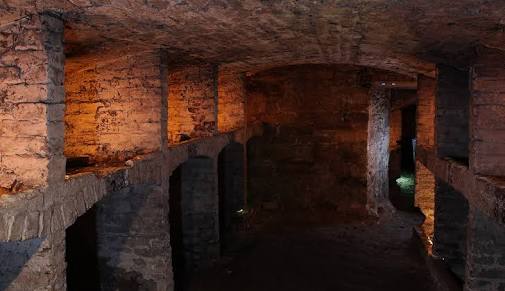
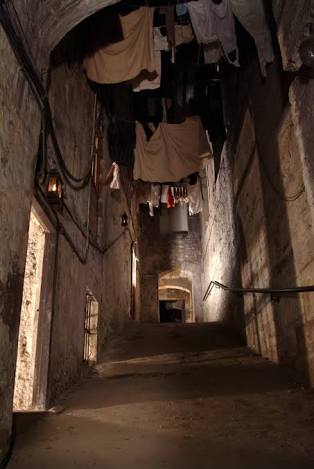
I’ve dropped one of my characters into trouble, and I need atmospheric detail and historic fact on the way to getting her out. Are any of you experts in Edinburgh’s underground?

Amy Cunningham, daughter of Susan Cunningham and granddaughter of Lord Henry Redepenning, has been kidnapped and is being held in the cellar of a house somewhere in Edinburgh. She finds that a pile of rubbish hides either a hole or a trapdoor that lets her into Edinburgh’s underground ways, where she has various adventures and experiences before being taken up by an amiable crowd of university students/apprentices/seamstresses or whatever I decide, and escorted to her family townhouse.

But which underground ways?

I’ve narrowed it down to the South Bridge Vaults or Mary King’s Close, both of which were available to me in 1812.

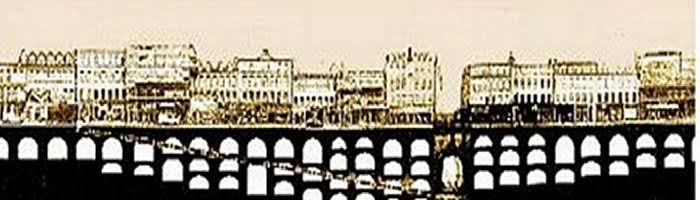
The Vaults are chambers formed in the arches of South Bridge, which was built in 1788. South Bridge was a shopping arcade that bridged a gully, and the 19 arches beneath it contained 120 rooms that quickly filled up with taverns, tradesmen’s workshops, and slum housing. All in the dark, and increasingly illicit and nasty.

Robert Louis Stevenson described the places in his 1878 book Edinburgh: Picturesque Notes:

“…under dark arches and down dark stairs and alleys…the way is so narrow that you can lay a hand on either wall. (There are) skulking jail-birds; unkempt, barefoot children; (an) old man, when I saw him last, wore the coat in which he had played the gentleman three years before; and that was just what gave him so preeminent an air of wretchedness.”

Mary King’s Close is a relict of a much earlier time. In a city enclosed by walls, it’s common for new buildings to be erected on top of old ones, the weight of centuries sinking the past with cellars containing what was once the street or even upper floors of a building. Legend has it that Mary King’s Close, which is under the City Chambers, was sealed up in the 1640’s to prevent still living plague victims from infecting the rest of the city. Another source I found says, more pragmatically, that the City Fathers of the time were worried about losing trade to the New Town so they:

decided to build a grand new Royal Exchange. And they found the perfect spot opposite St Giles Cathedral, with just one small problem – the streets of houses already there. But rather than knocking them down, they took the top floors off and used the lower floors as foundations. Mary King’s Close was covered over and swallowed up into the building’s basement. The sloping ground meant the houses fronting the Royal Mile were destroyed but further down the close whole houses were buried intact. [https://www.ontheluce.com/underground-edinburgh-mary-kings-close/]

People being people, many of the denizens refused to leave, and you could drop into the underground right up until the start of the twentieth century to have a wig made or to buy tobacco.

So which one? And what would it have seemed like to a gently-born if feisty 15-year-old Regency maiden? Can anyone help? Drop me a message on my contact page. I’d love to hear from you.