Antagonists on WIP Wednesday

Our heroes and heroines need antagonists: some outside force that unites them and allows them to work together. These characters may be outright villains, or they may merely be avaricious matchmaking mothers or interfering relatives. Antagonists, this week’s post is for you.

Authors, please share an excerpt (in the comments) showing your antagonist at his or her disagreeable worst. I have two in my excerpt; my nasty rector and his equally unpleasant sister.

From behind the curtain in the parlour, Lalamani saw Philip arrive at the gate just as the Wagley’s gig pulled up. The two who descended, as Lalamani had noticed at church, were male and female counterparts: tall, gaunt, and elderly; spry, but a little bent. They put Lalamani in mind of herons—sharp features and an alert forward-leaning stance.

Lalamani flicked the curtain back into place and hurried into the front hall in time to introduce Philip.

“Allow me to present Philip Daventry, who works for the Earl of Calne.”

Two pair of pale eyes fixed first on Lalamani and then on Philip. Brother and sister both, Lalamani noted, jutted their chins forward and lengthened their necks, increasing the resemblance to herons. Dr Wagley, dressed top to toe in black, relieved only by a white stock, clearly stinted nothing on the cut and quality of his cloth, and Miss Wagley’s grey silk gown was trimmed with, if Lalamani was not mistaken, real French lace. The contrast between their finery and Aunt Hannah’s worn and much-mended widow’s wear could scarcely be greater.

Dr Wagley surveyed Philip from top to toe, and asked, coldly, “And what do you do here, sirrah? The people of this village think highly of Mrs Thorpe, and will not see her put upon.”

“I’m glad to hear it, Dr Wagley,” Philip answered mildly. “I am here to survey the Hall, to decide what repairs are necessary.”

Miss Wagley furrowed her brow. “You are a Daventry? How closely related are you to the earl, Mr Daventry?”

“The late earl was a connection of my father’s,” Philip prevaricated.

“Did you hear that, Jeremiah?” Miss Wagley tugged on her brother’s arm, but Wagley’s harrumph suggested he was not impressed.

The conversation in the parlour limped from one pronouncement by Dr Wagley after another. He frowned upon the evangelical fervour gripping a nearby parish, was suspicious about the proposed Act of Union, despised the call by radicals to widen the vote, and was scathing about the Speenhamland system of poor relief.

Addy’s invitation to the dining room interrupted a homily on the place of women—silent and obedient.

Over dinner, Lalamani made an effort to turn the conversation. “Mr Daventry was formerly in the army. Before you arrived, he was telling us a little about the markets in Egypt.”

Dr Wagley looked dourer than before. “Nothing unsuitable for a lady, I trust.”

“Oh, Jeremiah,” his sister chirped, “Mr Daventry is a gentleman; a relative of Calne, you know.”

Philip, catching Lalamani’s desperate eye-roll, picked up the conversational ball with a story about a carpet he and his friends had bargained for and how language difficulties had almost left them with a camel instead. He made an amusing tale of it, but only Lalamani laughed.

Dr Wagley spoke into the pause. “Another excellent meal, Mrs Thorpe. Mrs Thorpe sets a fine table, Daventry.”

Lalamani did not try to resist the impulse. “My aunt is very grateful for the charity of the people of the parish, Dr Wagley, without which she would undoubtedly starve. Though…”

She felt a blow on her ankle. Philip, who had clearly guessed she was about to mention her uncle’s provision for his sister. She shot him an accusing glance, but pressed her lips tightly together.

“The care of widows,” Dr Wagley opined, “is, of course, enjoined on us in Scripture. ‘But if any provide not for his own, and especially for those of his own house, he hath denied the faith, and is worse than an infidel.’ Charity begins at home.” He nodded seriously and took another mouthful of the donated chicken.

“And,” his sister added, “it is the duty of every Christian to support the men of the cloth.” She poked suspiciously at the chicken. “I would not like to think our parishioners were stinting their duty.”

“Now, now, Euphrania,” Dr Wagley said. “We do not begrudge Mrs Thorpe a chicken or two, especially when she has visitors. Do you make a long stay, Miss Finchurch? It would not do for you to be a charge on your aunt.” He cast her an admonishing stare over the top of his glasses, which had slipped almost to the tip of his nose.

“My plans are not fixed, Dr Wagley.” Lalamani was going to ask how it was his affair, but Philip spoke first, once again preventing her from antagonising the sour old man.

“How nice that you are able to support your brother in his parish work, Miss Wagley.”

Tea with Harry

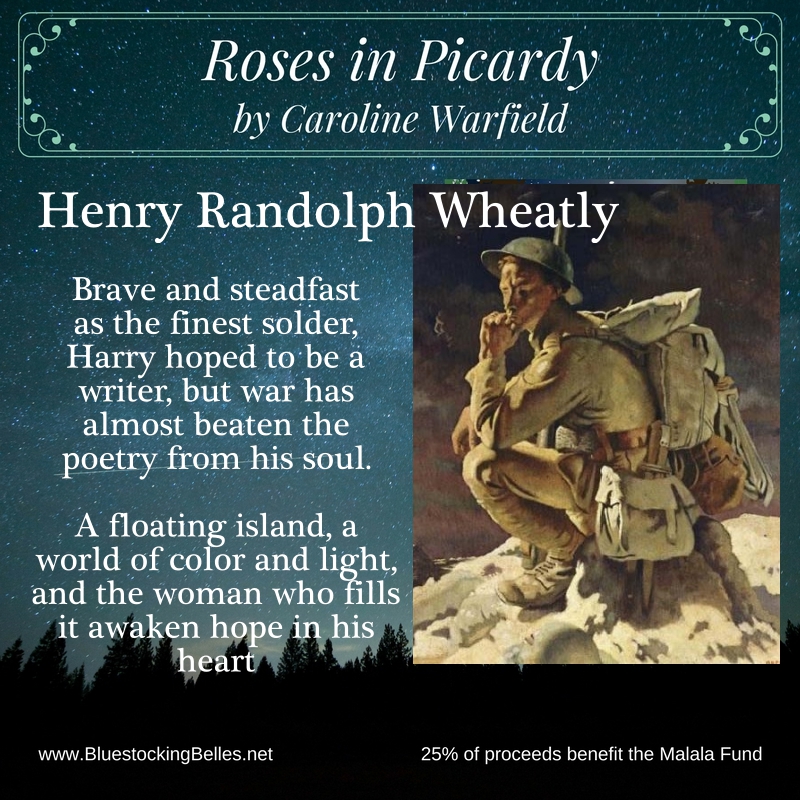
A nervous young man stands in the Duchess’s anteroom certain he has fallen asleep over his writing moments ago. His lanky form and khaki pants feel out of place among the finely carved furniture, porcelain artifacts, and gilded wallpaper of an earlier age.

He must be dreaming. He is sure of it.

A rather plain young woman in an antique, but rather business-like looking gown appears in the doorway. “Mr. Wheatly, the Duchess will see you now.”

Duchess? All doubts flee. He is most certainly dreaming. Why does it feel so real?

A dainty grey-haired woman beams at him from a settee when he enters. “Henry Wheatly! How delightful.”

“Harry,” he mumbles. “My name is Harry.”

“Of course! I had forgotten. You look very much like your great-grandfather, by the way.”

He runs a hand over his neck, puzzled. My great-grandfather? She must mean Rand Wheatly, the patriarch who first came to Canada. Can she be old enough to have known him?

“I’m sorry,” the duchess says. “You must be wondering why I summoned you here. Please sit and I will explain.”

“I’m wondering how,” he replies sinking into a small but surprisingly comfortable chair and stretching out his long legs.

A quiet moment passes while the duchess pours tea, fascinating Harry with the grace of her movements. He has seen nothing so graceful at university in Ottawa or even in his father’s house in Calgary, rough western town as it was when he grew up. She made a far lovelier sight than anything his army-training depot had to offer.

“I’m afraid I cannot tell you how I summoned you here,” she says at last. “Just know it is for your own good. I am Eleanor Haverford and I am a friend of your three times great aunt, Catherine, the Countess of Chadbourn.

Harry had been only vaguely aware that nobility lurked on his family tree. That startled him almost as much as the realization that this woman could not have possibly have known them, unless— “What year is it?” he demanded.

“1814,” she replied.

Harry choked.

“Don’t drop your tea dear, I know that shocks you.”

He had traveled back a hundred years. “How—that is, why—and who did you say you are?”

“I am Eleanor, the Duchess of Haverford, and I brought you here to warn you.”

He breathed in deeply and waited.

“I know that you have enlisted in the Expeditionary Force and expect to ship out to France any day. You signed up rather impulsively, I must say. That young woman who snagged the mayor’s nephew and dropped you cold was not worth your life, Harry. She would have made you more miserable if she married you than she did when she ran off. Your heart isn’t broken, it is merely bruised.”

Harry glared at her. “The state of my heart is not your concern, Your Grace,” he spat. “Or whoever you are,” he added under his breath.

The duchess chuckled. “Ah but it is your heart that concerns me. You have a good and tender heart, Harry, full of love and beauty. It shows in your poetry.”

Is there anything this woman does not know?

The woman leaned forward. “You are about to enter a great and terrible war. You are a courageous and valiant soul and will acquit yourself with integrity. But oh! Your heart! The darkness will overwhelm you if you let it. Despair kills, Harry. Never doubt it, particularly in a world where one must fight to stay alive every day. Worse, the darkness could kill that beautiful soul of yours and leave you dead inside even if you survive. Don’t let this happen.”

Harry sat back and studied the woman. “What precisely to you suggest I do about it?” he asked, genuinely curious.

“Stay open to beauty when you find it. Stay open to love. Love terrifies, but it is always worth the risk.”

He snorted. Duchess or no, she was a fool. “Was Lauren worth the risk?”

“Goodness no! I told you. She merely bruised you. When you find the real thing open your heart wide. You won’t be sorry.”

He sighed and put his cup down. “Thank you for your advice, Your Grace.” This old woman has no idea what she talks about. We’ll be home by summer—everyone says so—and I’ll go back to university.

“Please send me back where I belong.” Or let me wake up.

“One more thing, Harry. When the war is over, study law if you wish, but don’t let your father bully you. Do it only if you want it, but never forget you are a writer. Writing may make your heart bleed, but it is what you were born to do.”

A moment later Harry stood in a musty tent, standing in front of a camp desk with a pen in his hand. He looked down on the poem he had begun a moment ago. “What just happened?” he asked into the empty tent.

Never Too Late

Eight authors and eight different takes on four dramatic elements selected by our readers—an older heroine, a wise man, a Bible, and a compromising situation that isn’t.

Set in a variety of locations around the world over eight centuries, welcome to the romance of the Bluestocking Belles’ 2017 Holiday and More Anthology.

It’s Never Too Late to find love.

25% of proceeds benefit the Malala Fund.

Never Too Late has its own page on the Bluestocking Belles website, where you can learn more about each story and find buy links. (It’s 99c for one more week only, so buy now.)

If you’re an Amazon US purchaser, buy it here.

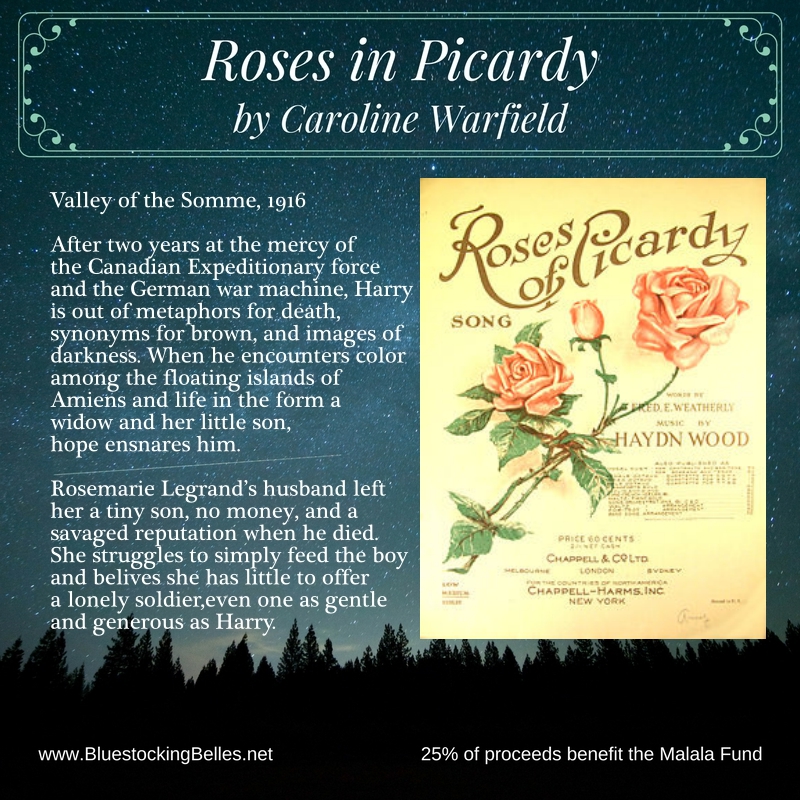
An excerpt from Roses in Picardy

Are men in Hell happier for a glimpse of Heaven?”

The piercing eyes gentled. “Perhaps not,” the old man said, “but a store of memories might be medicinal in coming months. Will you come back?”

Will I? He turned around to face forward, and the priest poled the boat out of the shallows, seemingly content to allow him his silence.

“How did you arrange my leave?” Harry asked at last, giving voice to a sudden insight.

“Prayer,” the priest said. Several moments later he, added, “And Col. Sutherland in the logistics office has become a friend. I suggested he had a pressing need for someone who could translate requests from villagers.”

“Don’t meddle, old man. Even if they use me, I’ll end up back in the trenches. Visits to Rosemarie Legrand would be futile in any case. The war is no closer to an end than it was two years ago.”

“Despair can be deadly in a soldier, corporal. You must hold on to hope. We all need hope, but to you, it can be life or death,” the priest said.

Life or death. He thought of the feel of the toddler on his shoulder and the colors of les hortillonnages. Life indeed.

The sound of the pole propelling them forward filled several minutes.

“So will you come back?” the old man asked softly. He didn’t appear discomforted by the long silence that followed.

“If I have a chance to come, I won’t be able to stay away,” Harry murmured, keeping his back to the priest.

“Then I will pray you have a chance,” the old man said softly.

About the Author

Caroline Warfield has been many things, from poet to librarian, from mother to nun. Now retired to the urban wilds of Eastern Pennsylvania, she divides her time between writing and seeking adventures with her grandbuddy and the prince among men she married. Her new series sends the children of the heroes of her earlier books to seek their own happiness in the far-flung corners of the British Empire. She wishes to inform readers of this post that Harry’s great-grandfather, Rand Wheatly is the hero of The Renegade Wife.

• Website: http://www.carolinewarfield.com/
• Facebook: https://www.facebook.com/carolinewarfield7
• Twitter: https://twitter.com/CaroWarfield
• Newsletter: http://www.carolinewarfield.com/newsletter/
• Pinterest: https://www.pinterest.com/warfieldcaro/boards/

Assumptions in WIP Wednesday

Many plots rely upon characters being wrong about the motives, feelings, and even activities of other characters. If they’re just too dumb or too self-centred to talk, the author is going to really pull out the stops to maintain my interest. But many good reasons might prevent such conversations, and so the circuses begin.

This week, I’m inviting excerpts where one character has completely misread another. My example is actually two: two short pieces from The Mouse Fights Back, my next short story for my newsletter subscribers. First Tiberius.

As always when travelling to Redfern and Mouse, his heart lightened with the miles, and he whiled away the time thinking of places he could take his sweet wife once he no longer feared for her safety, and things they could do together while they waited for that happy day.

Would she be pleased he planned to stay at Redfern until she could travel with him? He found it hard to tell how she felt about him. When they joined at night, he felt he knew her through to the bone, but in the daytime, she would slip away, speaking with shy reserve if their duties brought them together, but otherwise finding other places to be.

At least now that he had destroyed their enemies, he would be free to court his wife.

And now Mouse, whose real name is Claudia.

She feared he would not bother to visit even once a month when he knew he had attained his objective. She was, after all, a means to an end, and however considerate and courteous he was, however passionate at night, she would do well not to forget that he had married her to secure the earldom away from his uncle.

And still she loved him, tumbling a little further every time they were together, but she need not embarrass herself by letting him know.

This is immediately before Tiberius and his entourage are ambushed on the road.

Jude’s Favourite Things

Pronouns and adverbs and adjectives glowing
Phrases and clauses and paragraphs flowing
Words about cabbages; words about kings…
These are a few of my favourite things.

Titles, quotations, and epigrams witty
Narratives gripping and verse patterns pretty
Thoughts that soar upwards on poetic wings…
These are a few of my favourite things.

I’m a writer
I’m a fighter
– though my hip is sore
I simply dive into a manuscript then—
I don’t feel a thing — no more.

Research on poisons and research on horses
Legal procedures for wills and divorces
Ballrooms and phaetons and swordfights and all
These are the things that keep me on the ball.

Girls who are daring and men who adore them
Who’ll wade into danger and sacrifice for them
There isn’t much of me, I’m really quite small…
But when I am writing I’m twenty feet tall.

I’m a writer
I’m a fighter
– though my hip is sore
I simply dive into a manuscript then—
I don’t feel a thing — no more.

(Twenty-five years ago I was in business with a dear friend, doing commercial writing, and we wrote the first half of this one quiet afternoon. I came across it in a clean-out and rewrote the second half this morning.)

Tea with Alice

“Miss Crocker. What a pleasure to see you again. Please do come in. Her Grace is expecting you.”

Alice smiled and stepped over the threshold. “It’s good to see you again as well, Faversham.”

“May I take your wrap, Miss Crocker?”

“Thank you, yes.”

The grandeur of the reception room took her breath away, as it always did, with its marble fireplace, magnificent paintings, and exceedingly fine furnishings. She would have loved to remain and study the room down to the smallest detail, but it seemed unlikely she would ever have the chance. Indeed, she was most fortunate to be permitted to enter through the front door, given her lowly status as a gardener. But then, the Duchess of Haverford had some very unusual—perhaps even revolutionary—ideas about such things. What other high-ranking lady would invite her former gardener to her home for tea? Her grandfather’s long-time employer, Mrs. Manley, was another such one, but most of the ton ladies Alice had encountered tended to ignore the presence of the lower classes.

“Miss Crocker, it’s been too long!”

Alice gave a brief curtsey as she entered the lovely blue drawing room and took the seat across from her hostess, wishing she had something prettier to wear than the plain gray wool gown she saved for Sundays.

“It’s been several years at least, since you hired me to redesign your parterre garden. I hope your gardener is maintaining it properly?”

The duchess nodded. “Indeed he is, and you shall see for yourself before you leave. My garden is the envy of the ton, thanks to you.”

Alice flushed. “Thank you, your grace, but I assure you, the pleasure was mine. Designing gardens is one of my fondest amusements. I seldom have the opportunity to assist in their execution.”

The duchess leaned forward. “I am well aware of it, my dear. In fact, that is why I have invited you here this afternoon. I have a commission for you.” At that point, the housekeeper entered with the tea trolley, so Alice had to wait until Her Grace had poured the tea and invited her to partake of the lemon tarts.

A commission? A landscaping commission? But the duchess can afford to hire the best, even Sir Humphrey Repton. Why would she think of me?

“It’s kind of you to invite me to tea,” she said after taking a calming breath. “The tarts are delicious.”

“I have them sent in from M Fournier’s fine establishment. His wife is a distant relative of mine.” She smiled and indicated the plate of tarts. “Have another if you wish.”

Alice obeyed. The tarts were delicious. Grandfather would love them.

“My housekeeper will wrap some up for your excellent grandfather,” said the duchess, causing Alice to start. She knew Her Grace had a reputation for being able to read people, but could she really read people’s minds?

She took a sip of tea. “You are very kind, your grace.”

The duchess snorted. “I hope you think so after my proposition,” she said. “My reasons are really quite self-indulgent. You see, I would like to engage you to design a garden for my house in Spinney Hill.”

Alice nearly dropped her cup. “Me?”

“Your work with the garden here was exceptional, Miss Crocker. I believe you could be one of the best landscape designers in England, given the chance. And I mean to see you have the chance.”

Alice listened in disbelief as the duchess told her about a house she owned in Spinney Hill that she had established as a home for expectant mothers.

“Mitcham House is an easy carriage ride from London. You will use my carriage, of course.”

“I am truly honored, your grace, but what about my position at Vauxhall? I am engaged there six days a week in the spring and summer.”

The duchess waved her arm. “No worries. You shall have the winter to create and perfect the design, in consultation with me, of course. After the spring thaw, I shall expect you to come every day for a fortnight or so; perhaps we may be able to find you accommodation at Mitcham to avoid the tedious journey.”

A fortnight only?

“Of course, a fortnight is not nearly long enough to complete a project of this magnitude,” continued the duchess, “but you will have my gardeners to carry out much of the labor, as well as those occupants of the house who would like to learn about gardening.” She lifted her chin. “We require them to assist with household tasks while they are there, and if they should learn a few useful skills, so much the better.”

Tears welled up behind Alice’s eyelids. “You are so good!” she said shakily. “It would be my pleasure to be a part of your philanthropic venture, your grace.”

“Much will be required of you, Miss Crocker, but I sense that you are a young lady who enjoys a challenge. You will be expected to give up your free Sundays in order to supervise the work until its completion. In return, I am prepared to pay you two hundred and fifty pounds.”

Alice gasped. She had never held more than ten pounds at one time. “But-But—”

“By the time you are finished, you will have earned every penny of it, Miss Crocker. I can be a hard taskmaster. So… what do you say? Are you up to the challenge?”

Alice swallowed and sat up straight in her chair. “I am, your grace. You shall have no cause to regret giving me this remarkable opportunity.”

“I’m sure I shall not.” The duchess put down her tea cup. “Now that it’s all settled, I should like to show you how the garden you created has matured over the years. It is the envy of the neighborhood, I assure you.”

Alice nodded. She felt like shouting with joy, but somehow managed to contain herself in the presence of the duchess. Was this really happening to her?

Alice Crocker is a character in A Malicious Rumor, from the Bluestocking Belles’ 2017 anthology, Never Too Late. The events here take place in 1813, the year before she meets Peter de Luca and her life takes another unexpected turn.

Never Too Late has its own page on the Bluestocking Belles website, where you can learn more about each story and find preorder links while they are being added. (It’s 99c while in preorder, so buy now.)

If you’re an Amazon US purchaser, buy it here.

Comic characters on WIP Wednesday

Dickens was the master of using the secondary character to provide a bit of light relief, and this week I’m looking for excerpts about those people. The bratty little sister. The nervous secretary. The bossy maid. The matchmaking mama. The wild and silly brother.

Mine is from Lord Calne’s Christmas Ruby, which is in final editing. My heroine’s man of business has ventured into the country, and he is not happy.

The following morning, Philip escorted his uncle and the man of business on the two-mile walk to Aunt Hannah’s. Uncle Henry, country born and still a fit active man in his early sixties, thoroughly enjoyed the trek. The rain had cleared, and the mud had dried between the ruts so that, by stepping carefully, one could avoid the worst of the puddles.

Mr Wiggens regarded the hedgerows with suspicion, the sheep with distaste, and the cows with alarm.

“You are not accustomed to the country, Mr Wiggens,” Philip observed.

“I am a London man, sir. This place… the noises, the smells, the animals… How do people stand it?”

“Country people say the same when they come to London,” Uncle Henry said. “But you were here once before, Wiggens?”

“Yes, my lord, when I came down to—as I thought—put in place measures for Mrs Thorpe’s welfare. I blame myself, my lord. I blame myself very much. Had I not been so anxious to return to London… But a gentleman of the cloth, my lord, and so concerned for her, seemingly!”

“Yes, well, what’s done is done, Wiggens. Is this the place, Philip? But I have been here before! Visiting your great grandmother with your father, Philip. It is surely the estate’s dower house.”

In the thin winter sunshine, it looked better than it had on Philip’s first visit. The windows sparkled, cleaned inside and out, Kareema had holystoned the front door slab and Philip had painted the front door a fresh green.

Philip had sent the pot boy ahead of them to warn the ladies of the visit, and morning tea was laid out in the parlour, where Aunt Hannah waited to preside over the tea pot, still in her faded black, but with a clean white fischu Kareema had brought for her and a white lace cap decorated with pretty pink ribbons that Philip had watched Kareema making one afternoon while Mrs Thorpe slept.

“Lord Henry, this is such an honour. I do not know if you remember me, my lord, but I had the privilege of meeting you when you came here with the earl’s father. Back when you were at school, that would have been.”

“Indeed I remember,” Uncle Henry agreed, bowing over her hand. “You gave us a great slab of gingerbread each. I still remember how delicious it was.”

Aunt Hannah beamed. “Won’t you take a seat, my lord? And, Mr Wiggens, how very kind of you to come all this way. Please sit down, sir. How very delightful this is, to be sure. Why, I do not remember when I last had such visitors.”

Philip waited for her to get over her first fluster and to pour tea for Kareema to carry to each of the guests. Once everyone was settled, he turned to Mr Wiggens. “Mr Wiggens, will you explain to Mrs Thorpe why we are here today?”

“Oh dear,” Mr Wiggens said. He put down his cup, pulled some papers out of his omnipresent briefcase, and pushed his glasses back up his nose. “Mrs Thorpe, may I first say how very, very sorry I am.”

Aunt Hannah was bewildered. “Why, whatever can you mean, Mr Wiggens?”

Tea with Dorothea

Miss Dorothea Horatia Wythe stared at the elaborate invitation in stunned surprise. No matter how many times she read it, the sentiment was still the same:

An invitation to tea.

With the Duchess of Haverford.

The Duchess of Haverford.

Not a relation.

Not a friend of a distant cousin.

Not a person she’d bumped into in the park on accident whilst trying to hide from Lord St. Vincent.

Not a friend of a friend, unless one counted Aunt Harriett who knew simply everyone. Or they her.

No…a duchess. A stranger.

Royalty.

Royalty who wanted to take tea with plain ole Dorothea Wythe—a bluestocking too opinionated to take in society.

Dory didn’t know whether to jump up and down in her stockings or dive beneath the covers and hide for a few years. The entire idea of tea with the Duchess of Haverford was impossible with a view to the absurd.

Did Aunt Harriett have a hand in this? Or worse, Lord St. Vincent?

Dory glanced over at her desk which was littered with page after page of notes from the writing she was translating: coded messages written in the margins of a small bible—one she’d borrowed from Lord St. Vincent. She was nearly finished, which was fortunate for she needed to return the bible before its absence was noted.

The fact that she’d stolen into Lord St. Vincent’s room to borrow it in the first place was telling of her character was it not?

Dory raced to the desk, dipped her quill in ink, and penned her acceptance to tea.

She was far too curious for her own good.

The Umbrella Chronicles is a story in the Never Too Late collection. Every Monday for the next little while, one of my fellow Bluestocking Belles will bring their hero or their heroine along to meet the Duchess of Haverford. I hope you’ll join us to learn more about them and their stories.

Never Too Late has its own page on the Bluestocking Belles website, where you can learn more about each story and find preorder links while they are being added. (It’s 99c while in preorder, so buy now.)

If you’re an Amazon US purchaser, buy it here.

All You Need Is Love

Today, I want to talk about love, sex, and writing romances.

I’ve been trying, in my own romances, to lead my hero and heroine in the direction of consummate love, which I’ll talk more about soon, but I’ve also been reading a few romances recently in which the couple seem to have little between them except lust, or when the success of the relationship depends on one of the pair subsuming their will to the other. That bothers me. It bothers me a lot.

Then, during the week, I was in a Facebook writers workshop event where the topic was clean romance, which meant (of course) that we talked about sex. And someone astounded me by asking how you could stop the story from being boring if there wasn’t any. (Any sex, I mean.)

And the third factor triggering this post was the conversations I’ve been in since the #metoo campaign went viral across the Internet. I’m not going to repeat any of them here, but let the following four worrying threads of argument suffice.

  1. Men do this sort of thing. You shouldn’t take it seriously.
  2. What was she wearing? Doing? Why was she there?
  3. Yes it’s bad, but not as bad as (pick the victim group of your choice).
  4. Only monsters do such things.

In other words, excuse the abusers, blame the victims, set one group of victims against another, and reject responsibility for making a change. And if we want change, then everyone of us is responsible for changing ourselves first, and then for challenging those around us.

The need for intimacy

Which brings me back to writing romances.

We’re occasionally told that sex is a basic human need. It is certainly a basic biological need, or we wouldn’t be here. But we can choose what to do with our appetites in a way that has not been observed in animals. Animals in the grip of the mating urge cannot resist it but must be physically confined. We can go and have a cold shower and a cup of tea. We are capable of crimes of lust, but also of celibacy. Animals who pair bond, as humans tend to do, are unable to pair elsewhere. We are capable of betrayal (but also of faithfulness).

So sex is a physical urge for an individual and a biological imperative for the species. But our driving need as humans is not sex, but intimacy, of which physical intimacy is just one of five aspects, and sex just a small element of that aspect. The other aspects are emotional intimacy, mental intimacy, experiential intimacy, and spiritual intimacy.

Babies denied intimacy will die. Children denied intimacy grow up wounded. Adults denied intimacy spiral into despair.

Those who think sex with strangers will fill their emptiness are doomed to disappointment. They mistake sexual intimacy for physical intimacy, and leap from there to assuming emotional intimacy. They are climbing a ladder, but it is leaning against the wrong wall.

I will never write a romance that has the couple in bed at first meeting, and from then they know they have found The One, and all the obstacles are external. Certainly, love can grow in such an unlikely seed bed. But I strongly believe that having sex before true intimacy in other aspects is more likely to be a barrier to developing a real love than to promote it. If my lovers start off in that way, their biggest obstacles to true intimacy will be internal.

The five aspects of intimacy

And I will write romances that look at couples who, in their journey towards intimacy, are progressing in all five aspects.

So what do I mean by that?

In a real romance, the hero and heroine support one another.

They are, of course, because this is a romance, physically intimate. This doesn’t necessarily mean they have sex all the time, or on the page. They express their feelings for one another by touching, hugging, holding hands, or whatever other physical expressions are appropriate to their culture. They are each aware of the other’s body, and they understand how to give pleasure each to the other. They know the shape of one another’s hands and ears. They are at ease in one another’s arms. They each know how the other will react to particular touches, and they know the taste and smell of one another.

They are emotionally intimate. They have shared their darkest and dearest secrets, their most terrible and precious memories. They are honest about their feelings, their desires, the instincts and experiences that drive them. They have bared themselves, each to the other, and have found acceptance.

They are mentally intimate. They share their thoughts and ideas. They can discuss anything with one another, not always agreeing, but always respecting and listening, and working together to agree at least an armistice on issues that might otherwise divide them.

They have experiential intimacy, which means they spend time together doing things together. They build memories. They are friends who enjoy being with one another.

And they are spiritually intimate. What that means depends on the couple. If they share a religion, they might worship and pray together. Non-believers might make time as a couple to open themselves to the awe-inspiring, because spirituality is not just for the religious.

(Some people put financial initimacy in as an extra aspect. I think it is just one more issue, about which the couple need to be honest. Like many issues, it has mental and emotional implications, so comes into both of those aspects.)

So that’s my challenge as a writer. How do I write a realistic journey that allows my characters to challenge one another, trip and fall, and pick themselves up and learn?

Respect is key

I write men and women who respect one another, and who suffer consequences when they don’t. A character who seeks to get his intimacy needs met at the expense of another is doomed to fail in my stories, and will either learn from the experience before he gets his happy ending, or will become a villain and get his just desserts.

I love fiction. Real life villains are harder to dispose of, and impossible to reform. (They may reform themselves, but that’s a different kettle of fish entirely than being saved by the love of a good woman, which is a terrible and dangerous myth.)

Consummate love is the ultimate goal

Let’s get real. I’m talking a lifelong journey. By the end of my story, all I can promise is that the hero and heroine will have made sufficient progress on all five types of intimacy for you to feel confident of their destination. Happy Ever After means the reader’s sense that even if life goes to hell in a handcart, they’ll be okay as long as they’re together.

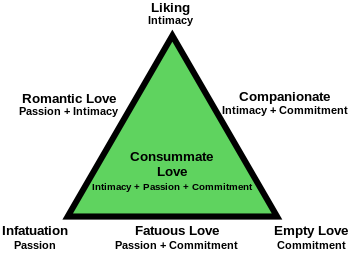
The real achievement is consummate love, that special kind of love described in Robert Sternberg’s Triangle.

So take no substitutes. As a writer, give me characters who build one another up and create a love to last a lifetime. As a reader, measure the books you read against Sternberg’s triangle and ask yourself if this book boyfriend is worthy of the special person that you are.

Thank you to the historians

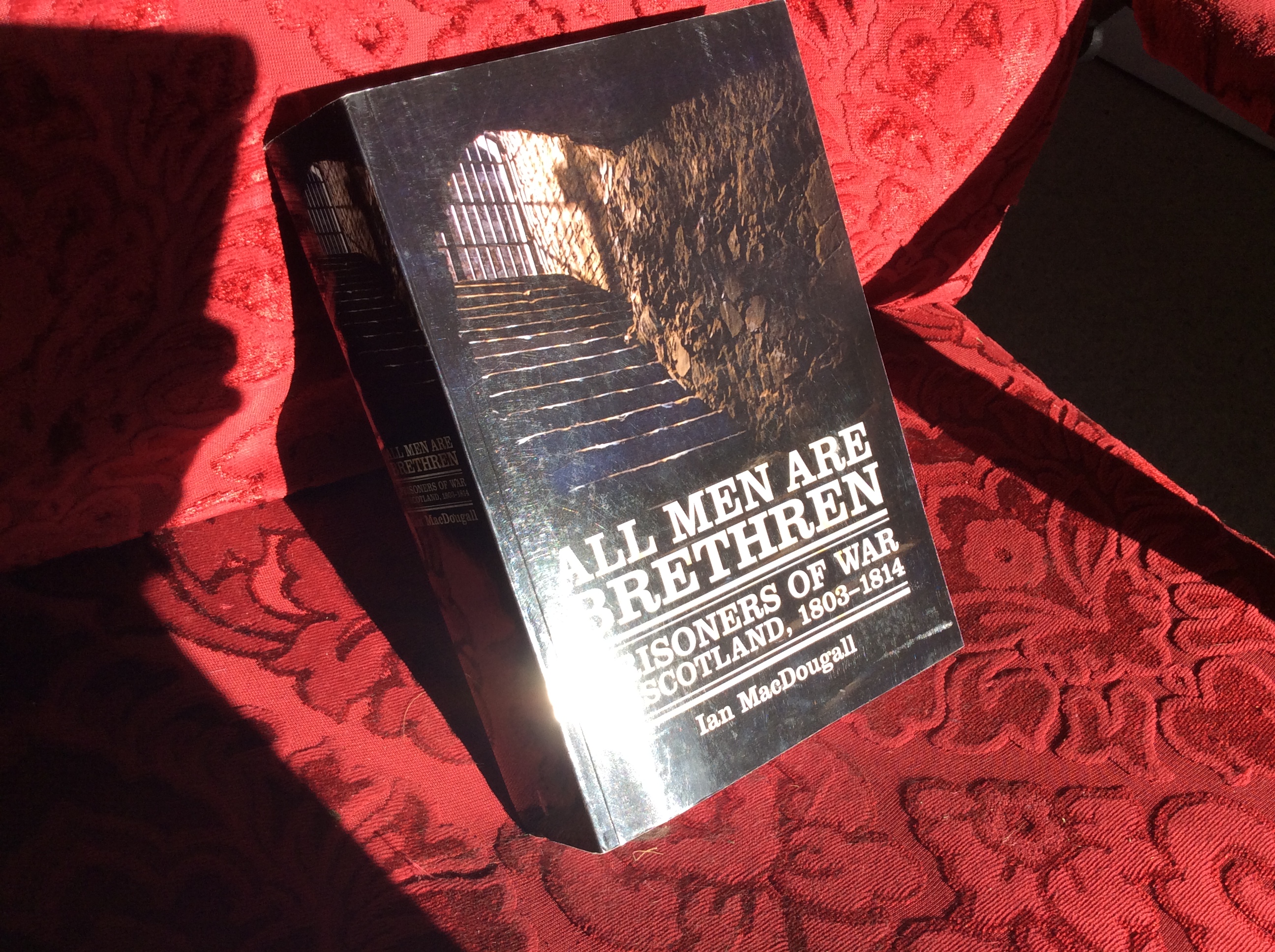
Look what arrived in my mail box yesterday! 905 pages of detailed research pertinent to my current work in progress, The Realm of Silence.

Pertinent in the tiniest of ways. I am, after all, writing an historical romance. I might use my blog to prose on about the interesting facts I discover in my reading, especially on Fridays, but I don’t stuff them all into the stories.

Still, I’m about to take some of my characters in to Penicuik, and they need to talk to a French sergeant who is imprisoned there. So how could that happen? Were the prisoners isolated from the local citizens? Did they get a chance to mix? What happened when they were sick? Or if they died?

Ian MacDougall can tell me, and from the first 50 pages, which is all I’ve read so far, he can do so in a clear and interesting manner. Not always the case, I can tell you!

So far, for this book, I’ve read two guides to the Great North Road in Regency England, several books about rebels, radicals, and agitators, and a number of journal articles about prisoners-of-war.

Undoubtedly, as the characters continue telling me their stories, I’ll be off to find out more.

So this post is to thank all the serious historians who have spent years reading everything they can find on a topic (including contemporary sources), talking to other experts, studying artefacts, and writing up their results. MacDougall has six pages of bibliography and three pages of thank-yous to people he has interviewed or who have sent him stuff.

He and all the other wonderful historians I’ve relied on over the years save me from making wrong turns in the story or artefacts or actions or language that is wrong for the period. It matters to me, and it matters to many of the readers, and I just wanted to stop for a moment to say I’m grateful.

Thank you.

And watch this Friday spot for more about Prisoners of War in Scotland from 1803 to 1814.

Backstory on WIP Wednesday

Backstory gives our books depth and texture. Backstory is the stuff we know about the characters and their lives that never finds its way onto the page. Some writers I know do very little backstory. Others have whole histories and landscapes that exist in their imaginations and notebooks, and that influence the story but don’t appear in it.

I lean in the second direction, not least because I find it impossible to understand a character’s motivation without understanding the influences that made her who she is.

This week, I’m inviting you to tell me a bit of the backstory of one of your characters or locations. Mine is from Lord Calne’s Christmas Story, my new Christmas novella, and is about the relationship between my hero, Philip Daventry, the new Earl of Calne, and his uncle Brigadier General Lord Henry Redepenning.

Lord Henry links the latest novella to my Golden Redepenning series.

Lord Henry Redepenning met Lord Hugo Daventry at school. Both were younger sons of earls. Both were destined for, and looking forward to, a future in the military, as officers in a cavalry regiment. They became fast friends.

In due course of time, in a London ballroom, they met Miss Susana Blanchard, older daughter of Admiral Blanchard, and both fell in love. To Society, either young man was a good match for the granddaughter of shopkeepers, though her father’s rank and their own lesser position in their families made it acceptable. They waited and watched to see if the two close friends would fall out over the maiden.

But they were to be disappointed. If Hugo’s heart was broken when Susana chose Henry, he hid it well. Indeed, the friends were closer than ever, with Susana included in their charmed circle, and Hugo assured Henry that his feelings had turned brotherly. If it had not been true at the start, it was certainly true the day he came to visit his friends and met Susana’s sister, Arabella.

Arabella was seven years Susana’s junior, and just out when she was introduced to her brother-in-law’s dearest friend, whom she had adored by report since her sister’s Season. He was everything she expected and more. Arabella’s worship-from-afar soon turned to something warmer and more personal.

Hugo found that Arabella was as lovely as her sister and three times as adventurous. Where Susana was happy to stay at home with her growing family, Arabella spoke of following the drum, her eyes sparkling with excitement. By the end of his visit, Hugo was deeply and irrevocably in love.

And so the two friends married two sisters. Henry and Susana created a haven for their five children and other family and friends, a place to be cherished and restored. Hugo and Arabella raised their son and daughter in army camps across the globe, enjoying the travel and adventure. Two very different couples, but firm friends, even to the next generation.

Nearly none of that is in the novella. But I needed it anyway.

Your turn.