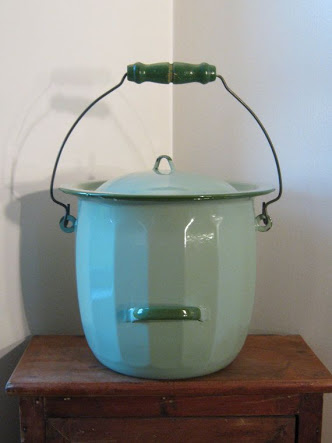
Folklore ways to find the man of your dreams

Folklore has so many different ways to divine a future spouse, or at least, most commonly, a future husband. It makes sense that girls were more the target for such foretelling methods than men. For much of history and in most cultures, marriage put a girl into the hands of her husband or her husband’s family. When husbands could do almost anything they liked, short of murder, a girl might be wise to be wary, and anxious to know what was ahead of her.

Divination on certain nights

In my current work-in-progress, it is Easter, and coming up to St Mark’s Eve (24 April, which in that year was a week after Easter), when good Lincolnshire maidens wait in the church porch to see who passes them at midnight. In other parts of England, they might expect to see the shades of those who will die during the year. A Lincolnshire girl could see those visions, too, but she might also see her future spouse, if she is going to marry during the year.

Another night for such divination is this Saturday, St Agnes Eve, 21 January. In Scotland, girls would go out to throw grain, saying:

“ Agnes sweet, and Agnes fair,
Hither, hither, now repair;
Bonny Agnes, let me see
The lad who is to marry me. ”

The shadow of their destined groom would be seen in their mirror later that night.

In other parts of the country, girls would fast. If they kept St Agnes Fast, their future husband would appear in a dream.

Midsummer Eve, 23 June, was the time to lay out a clean cloth with bread, cheese, and ale, and sit down with the street door open. The girl’s future husband would then, according to folklore, enter the room and drink the ale, bow, refill the glass,  bow again, and leave. That’s a pretty detailed vision.

Halloween came at the time of apple harvest, and in some parts of the country girls would bob for apples, then put their apple under their pillow to fetch a dream of the man they would marry. Others would walk upstairs looking in a mirror to see a vision of their future spouse walking behind them.

And on New Year’s Eve, some maidens would sweep the room backwards while looking into a mirror.

Finally, girls had an opportunity every new moon to try this rhyme:

New moon, true moon,
Dressed in blue,
If I should marry a man,
Or he should marry me,
What in the name of love,
Will his name be?

Or any other time of the year

But if you couldn’t wait for one of those special evenings, you could try one of these:

  • When you go to bed, place your shoes at right angles to one another, saying “Hoping this night my true love to see, I place my shoes in the form of a T”
  • Pass a piece of wedding cake three times through the bride’s wedding ring, then put it under your pillow (or, in some places, a piece of cheese)
  • Knit your left garter around your right stocking and keep knotting, at each line of the following rhyme tying another knot:

This knot I knit,
To know the thing I know not yet,
That I may see The man that shall my husband be;
How he goes, and what he wears,
And what he does all days and years.

  • If you’re a Shropshire lass, fetch a half-brick from the nearest churchyard, and put that under your pillow
  • Lay a four leaf clover under each corner of your sheet
  • Eat a salt herring before you go to sleep
  • Count thirteen stars for thirteen nights
  • Clip your fingernails and drop the clippings into the flame of your lamp. Then hang your shift (petticoat) over the lamp, and while the fingernails are burning, the shadow of your future husband will appear on the shift.
  • Peel an apple and throw the peel over your shoulder. The letter it falls into will be the initials of your future spouse.

Surprises on WIP Wednesday

I’m on the home straight with A Raging Madness. Ten more scenes, I think, and the mystery will unravel, but not before Alex and Ella have to decide what matters to them most.

They have several more surprises in store;  the book has been a series of them, mostly nasty. They’re almost due a nice one. Almost. Meanwhile, one of the latest incidents has provided today’s excerpt.

As always, I invite you to post an excerpt on the day’s theme in the comments. Surprises. Of any kind: exciting, unpleasant, spoken or in action. Mine is snakes.

“No thank you, Miller. I have had sufficient to drink. Indeed, you can put the rest of this into the slop bucket.” Ella handed her cup to Miller.
“But you must have your chocolate, my lady. I made it especially for you.”
Ella looked at the cup, and almost picked it up. Whether it was her irritation with the maid’s insistence or her revulsion at the thought of any more liquid, she decided against it.
“No, Miller. I thank you for making it, but I will not drink it this afternoon. In fact, please do not make it unless I ask for it.”
For a moment, she thought the maid would argue some more, but Miller pressed her lips together and turned away to take the remains of the tea into the bedroom.
“Amy, I will have my wash now, darling. And you should find your room and freshen up from your journey.”
Ella was about to follow Miller when the maid screamed.
*****
“Your Hounslow has won my admiration, Susan,” Alex told his sister over dinner after the fuss was all over. Hounslow had joined Jonno and Alex in recapturing the snakes Miller had released when she knocked the slop bucket over in her shock at its contents.
He was now directing an inch by inch search of the room to make sure they’d not missed any of the creatures, and proposed to spread the search to the whole house to prevent further nasty surprises. After he finished supervising the dinner service to his new employers and their guests.
Adders! They were shy creatures, on the whole, slithering away from an encounter with human beings. But, as Miller discovered, they would bite if they saw no alternative, such as if they were woken from hibernation as these were, disturbed with no way out except through a person.
The maid had been put to bed, her bite washed and Miller herself dosed with elderberry wine. Apart from some pain and swelling, she had not yet evinced symptoms of severe poisoning, but adder venom was not to be trivialised. Ella had set another maid to watch Miller, with a list of symptoms of which to beware.
The whole household was on alert to regard all receptacles with caution. Hounslow, however, had taken firm charge of incipient hysteria amongst the maids, and had fostered a competition in bravery amongst the footmen, grooms, and carpenters by suggesting the maids could depend on their protection.
“But how could the snakes have got there, Uncle Alex?” Amy asked.
Alex had just finished a frustrating and unproductive hour questioning servants and carpenters about who had been into the room, or seen carry the bucket or a bag that could have contained snakes. “I don’t yet know, Amy, but I intend to find out. Meanwhile, Jonno has gone into the village to see if he can find anyone who has recently uncovered a nest of the pests, and to borrow a couple of dogs to help search the house.”

Tea with Prue Virtue

Today’s post is an excerpt from my latest novel, Revealed in Mist. (Click on the link to read the blurb and find buy links.)

Prue hesitated in the street outside her next destination. Callers needed to present their card at the gate, be escorted to the front door and delivered to the butler, then wait to be announced. On most days of the week, uninvited guests below a certain rank in society would have difficulty making it past the first obstacle, but on Thursday afternoons, the Duchess of Haverford was ‘at home’ to petitioners.

Past encounters had always been initiated by Her Grace. A scented note would arrive by footman, and Prue would obey the summons and receive the duchess’s commission. Though she was always gracious, never, by word or deed, had Her Grace indicated that she and Prue had any closer relationship than employer and agent.

The entrance and public rooms of Haverford House were designed to impress lesser mortals with the greatness of the family—and their own lesser status. Prue was ushered to a room just off the lofty entrance hall. Small by Haverford standards, this waiting area nonetheless dwarfed the people waiting to see the duchess.

Two women, one middle-aged and the other a copy some twenty years younger, nervously perched on two of the ladder-backed chairs lining one wall. Next to them, but several chairs along, a lean young man with an anxious frown pretended to read some papers, shuffling them frequently, peering over the tops of his spectacles at the door to the next room. Two men strolled slowly along the wall, examining the large paintings and conversing in low whispers. A lone woman walked back and forth before the small window, hushing the baby fretting on her shoulder.

Prue took a seat and prepared for a wait. She would not tremble. She had nothing to fear. Both Tolliver and David said so, and Aldridge, too. But how she wished the waiting was over.

It seemed a long time but was only a few minutes, before a servant hurried in and approached her.

“Miss Virtue? Her Grace will see you now.”

Prue gave the other occupants an apologetic nod and followed the servant.

The duchess received her in a pretty parlour, somehow cosy despite its grand scale. Prue curtseyed to her and the woman with her. Were all petitioners waved to a seat on an elegant sofa facing Her Grace? Addressed as ‘my dear’? Asked if they should care for a cup of tea?

“Miss Virtue takes her tea black, with a slice of lemon,” the duchess told her companion. Or was the woman her secretary?

“Miss Virtue, my companion, Miss Grant. Miss Grant, Miss Virtue has been of great service to me and to those I love. I am always at home to her.”

Was Miss Grant one of the army of relatives for whom Her Grace had found employment, or perhaps one of the dozens of noble godchildren she sponsored? The young woman did not have the look of either Aldridge or his brother, nor of their parents. Prue murmured a greeting.

“I was not expecting you, Miss Virtue, was I? Is anything wrong?”

“Nothing is wrong, Your Grace. I just… I have some questions, Ma’am.”

“You should have sent a note, my dear. I will always take time to see you. I was happy to give a good report of you to my friend Lady Georgiana, of course.” As she spoke, the duchess took the tea cup from Miss Grant and passed it to her.

“Your Grace, I would like to speak with you alone, if I may. I beg your pardon, Miss Grant. I do not mean to be discourteous.”

The duchess stopped her own cup partway to her lips and put it carefully back into the saucer, examining Prue’s face carefully.

When she spoke, it was to Miss Grant. “Celia, my dear, will you let those waiting know that I will be delayed…” she consulted her lapel watch, “…thirty-five minutes, but I will see them all today? Perhaps you could arrange refreshments for them? Return on the half hour, please. That is all the time I can spare, Miss Virtue. If you need longer, I will ask you to wait or return another day.”

Prue shook her head. “The time will be ample, Ma’am. Thank you.”

As Miss Grant left the room, Prue was silent, collecting her thoughts. The duchess waited.

“You knew. You have known all along.” Prue shifted uneasily. She had not intended to sound accusing.

The duchess inclined her head in agreement, her face showing nothing but calm.

Messier than fiction

I’ve been reading — or more accurately dipping in and out of — the trial transcripts of the Annesley case.

It was the sensation of 1743. A sailor returned from many years in the American colonies with the claim that he had been kidnapped at the age of twelve and sold into indentured servitude by his uncle after the death of his father, the Earl of Anglesea.

Said uncle had inherited his brother’s title, and strenuously denied that the sailor was his nephew, that he had anything to do with the disappearance of his nephew, and that his nephew was the legitimate son (and therefore heir) to his brother.

We’re all familiar with the story of the wicked uncle who arranges for the rightful heir to be sold away overseas in order to embezzle his heritage. Robert Louis Stephenson made it part of our literary heritage in Kidnapped (possibly prompted by the Annesley case), but even before that we see it in folk tales. It pops up again and again in all kinds of genres. I’ve used a variant myself in Magnus’ Christmas Angel.

The Annesley case bears out the truism that truth is stranger, and certainly less neat, than fiction.

James Annesley claimed to be, and in fact was proved to be, the son of Arthur Annesley, Baron Altham, and his wife Mary Sheffield.

Altham was, even by the standards of the time, a loose living sort of a person. Did his wife take exception? Perhaps. He threw her out of the home, keeping her two-year old son. Four years later, one of his mistresses persuaded him to throw the boy out too, and James was apparently left to more or less raise himself from the age of six.

He must have had some support somewhere, because later several of his school-friends recognised him, and gave evidence about his identity to the courts.

Altham died when James was twelve, and shortly after that, Richard Annesley (Uncle Dick) found the boy and sent him to Delaware to work as an indentured servant.

Later claims that the boy was not legitimate foundered at least in part on the question of why Uncle Dick would have bothered to get rid of someone who could not threaten his claim to the Altham title, and later to the title of Earl of Anglesea, inherited from his cousin.

James returned in 1740, but his claims didn’t become public until 1742. The case notes mention a number of attempts on his life, which James blamed on Uncle Dick, whose comfy state was clearly threatened by his nuisance of a nephew, who had not had the good manners to die in Delaware.

After hearing many witnesses (and an incredible barrage of lies), the Irish court found in favour of James, but that wasn’t the end of it. His estates were returned to him, but Uncle Dick took an appeal and continued to hold the title while it was working its way slowly through the courts. (But note the comment below from a correspondent.)

As an interesting side note, the Annesley vs Anglesea case is the basis for the principle of lawyer-client privilege. The court ruled that a solicitor could not be called on to testify about whether or not his former client took a mistress, and laid out three of the reasons still used today to support the principle.

James died in 1760, and Uncle Dick in 1761. Uncle Dick’s son did not inherit the Anglesea title, which became extinct with the death of the wicked uncle.

Truth is considerably messier than fiction.

Weddings on WIP Wednesday

Weddings are a given in what I write. Sooner or later. Sometimes after the story ends, and sometimes before it begins, but weddings. So today I’m looking for you to post me an excerpt about a wedding. It doesn’t have to show the actual wedding of your hero and heroine, though it could. It could be weddings remembered, weddings planned for, weddings attended.

My two come from A Raging Madness. The first is Ella remembering her first wedding, what brought it about, and what her marriage was like.

“I don’t really remember the first time. Just disjointed bits. I was still fogged by the drug the second time, in the morning, when Dadda came. I remember him shouting, and Gervase laughing, and then lots of people. Faces. Eyes. Jeering.”

Like the other night. Alex would kill that bitch Patrice, and Farnham, and the Blaxtons. And then he would go to Cheshire and dig Melville up and bury him again in a pigpen. No. A midden. No, both. Every midden and pigpen in the county, till even Judgement Day couldn’t find all the pieces to put him back together again.

Ella snuggled into him again, putting a comforting hand on the side of his face. “It is alright, Alex. It was a long time ago. Dadda had a bad seizure right there in the tent, and I think the Colonel wanted to make sure I was protected, for he told Gervase he had a choice between wedding me or being shot. And he sent for the chaplain to perform the ceremony there and then.

It was not so bad. Dadda recovered, and he and the Colonel made Gervase look after me.”

Except for the constant sneering, the neglect, the disdain. Physical abuse, too, mostly where it did not show, but Alex had heard Ella explain away more than one bruise as a trip or a bump, darting a cautious glance at Melville all the while. And nightly rapes. And a camp full of men who should have been honoured to protect her and who instead abandoned her to her abuser.

The second is her wedding day to Alex. People have been told that the pair have been married for weeks, but those in the know have organised a celebration for when the couple return from the church.

When they entered the house, the nursery and schoolroom party were waiting to bombard them with ribbons and rice, and streamers cut from paper, and to escort them to the large parlour, where the adults waited under a big decorated sign with somewhat tipsy capitals that read, ‘Lord and Lady Renshaw’. Tea trolleys laden with sandwiches, pastries, cakes, and other tasty treats jaded it a party lunch, and they were the guests of honour.

“I told Anne you had not had a proper wedding celebration, dear Ella,” Susan said, “since you married under such hurried circumstances, so today is a party for you and Alex.”

“You must have wondered at it,” the countess commented, “that I sent you on such an errand when this is your first day in our home, but Susan and I plotted this last night, and it was her part to keep you out of the way till we were ready. We are so happy for you and Alex.”

The women carried Ella off to one side of the room, and the menfolk surrounded Alex and pressed a glass of wine into his hand.

“Your wife will be fine,” Alex’s brother Rick reassured him. “Our women just want to know her. They have heard fine praise from Susan.

“You’ve spoiled our fun a little,” Rede complained, “having the party eight weeks after the wedding. Now would be our chance to tell you everything that might go wrong on the wedding night.”

Tea with [Name of your heroine here]

To the Characters of Historical Romance

From the hand of Jude Knight
Amanuensis to Her Grace, the Duchess of Haverford

Subject: Promotional opportunity for you and your author

Dear heroine, hero, or supporting character

Her Grace has charged me with letting you know she is At Home to visitors on Mondays (USA time), and would be delighted to welcome you for conversation and a cup of tea, coffee, hot chocolate, or the beverage of your choice.

Characters from any historical fiction, any era or place, may apply. While Her Grace’s lifetime spans the late Georgian and early Victorian, and she is delighted to meet her own contemporaries from different fictional worlds, she particularly enjoys time travelers. Be warned that all metal and weapons must be left at the door. No exceptions. Not even armoured knights and Chicago gangsters.

A typical post would have a few paragraphs of conversation between you and the duchess, then your book’s blurb, buy links, and an excerpt.

I keep Her Grace’s calendar, and would love to hear from you or your author. If you wish to participate, please send the dates of three Mondays to jude [at] judeknightauthor.com (replace [at] with @). Include your name, your author’s name and pen name, and your book title.

Kindest regards


Judy Knight

(for Eleanor Haverford)

A chance in the spotlight

I’ve been doing my accounts over the holidays, which has been slightly depressing.

I first published just over two years ago, and here are my figures for the entire period to 31 December 2016.

Total downloads from eretailers, all books: 78,700

Approximate number of words published: 470,000 (around 200,000 a year)

Approximate number of hours spent researching, writing, editing, or proofreading: ten hours per week on average

Total income after all expenses: minus NZ$1,500.
(I’ve paid for developmental editing, professional proofreading, photos and cover design, advertising, and a whole heap of other things.)

So that’s it. I’m losing around $1 for every hour I spend writing stories.

I didn’t expect to make an instant success

Which is just as well, really. Like everyone, I hoped I’d be discovered the day I published my first book, but I knew it is an overcrowded market and I’m an unknown living on the edge of nowhere. I figured I needed to get four novels out there before I began to  make an impact, and the fourth is almost finished, and still several months from publication.

Big hugs to all the wonderful readers who have joined me this early in the journey. Your comments, emails, and reviews have given me the rewards and the confidence I needed to continue.

I have a publishing plan and a marketing plan, and the hope that sooner or later my writing will actually pay enough that I can do it full time, instead of fitting it into the gaps of a busy life.

Little known authors face some disturbing trends

  1. The book market is crowded, and becoming increasingly so.
    Books never go away. Ebooks and print on demand books cost nothing for the retailers to carry, and so they remain on the lists.
    The lists at Amazon abound in silliness like 50 page 99c books that finish with cliffhangers and are followed by four more of the same kind. And authors who apply keywords with every regard to finding a little populated list, and none to accurately representing the story.
    Anyone can publish, and — with the loss of traditional gatekeepers such as purchasing agents and editors — many people serve their writing apprenticeship right out in public, without any more editing than their Mum provides, and with a spellchecker their only proofreader.
  2. Amazon will dominate the market for the foreseeable future, and they serve their own interests, not those of readers or authors.
  3. Many readers expect books to be free or no more than 99c, and will complain at paying more. I say this with some trepidation I saw a comment just a few days ago from someone castigating an author for commenting about people signing up for a newsletter to get a free book then unsubscribing. “Authors should be grateful people are reading their books,” this reader said.
    Here’s why you should consider buying at least some of the books you read.
    On the other hand, I give away a lot of free stories, always have at least one free book, and post weekly on Wattpad so I can share at least some of my stories with those who can’t afford to pay. I agree with Shannon Thompson on this one.
    On the other hand, if you download pirated books, on your head be it.

What does this mean for readers?

You might not much care. Writers will continue to write, no matter whether, in the balance, they are losing money. So you’ll always have new books to read. The greats will keep writing, and you can always save for their books or get them from the library. And a few authors will persevere and have the good fortune to be picked up by libraries and prominent reviewers so you find out about them.

I’ll soldier on, too, doing my 200,000 words a year until I can retire and write full time. I’ve published three novels (and almost finished writing a fourth), five novellas, and a number of short stories, so if I could triple my output, I’d be doing that each year, once I write full time.

But remember that, in one sense, readers do pay for every book an author gives away, or every book sold at 99c (for a 35c royalty). They pay in the books the author doesn’t have time to write, because of the day job.

Can you help the authors you love?

You can help the authors whose work you most enjoy, and it doesn’t have to take much time or money. Read our books and tell us what you think of them
. Write reviews, even a couple of sentences. Tell your friends about our books. Ask for them at your local library. The world has many undiscovered authors worthy of a chance in the spotlight. And in the new world of independent publishing and ebooks, the power to direct the beam lies with you, the readers.

#MFRWAuthor blog challenge: A long hot Christmas holiday

My Summer holiday is officially over, and the working year begins again on Monday. What better time to begin a 52-week blog challenge? One post a week on one of the themes below.

This week’s challenge is ‘A few of my favourite things’. What are my favourite things about a New Zealand Christmas?

Time with my personal romantic hero. I’ve been on holiday and his workload is down. Our wedding anniversary is two days after Christmas, and after 45 years of marriage, I love the guy more than ever.

Fresh berry salad. That’s a family favourite. Strawberries, red currants, raspberries, boysenberries, cherries (okay, I know they’re not a berry, but they’re red), blackberries, blueberries… they’re all in season, and mixed together and served in the crystal bowl we were given as a wedding present, they’re delicious. And a traditional centrepiece to our dessert at Christmas dinner.

Hot dry days. Okay, this is New Zealand, and if you don’t like the weather, wait a minute. But we’ve had some hot dry days!

Time to catch up on things I don’t normally have time to do. We now have a drain across the front of the deck, I’ve made a start on tidying the sewing room and have sorted out a bag of clothes to donate, and I’ve updated my asset list for the will kit. I’ve also been to see two exhibitions at Te Papa, our national museum.

Time with friends and family.

Yes. Christmas holidays are the gift of time.

A problem to solve in WIP Wednesday

I like to give my hero and heroine something to do together, and in my novels, at least, the problem they have to solve tends to be as intractable as possible. In Farewell to Kindness, both hero and heroine have their own missions, and each has to choose between their goal and the feelings between them. In A Baron for Becky, the men need to put aside their own desires for Becky to succeed—and even then, she is so broken it may not work. In Revealed in Mist, the two protagonists are working for different clients to solve the same mystery. And in A Raging Madness, I’ve upped the stakes.

In the extract below, Alex and Ella have just met after three years. Ella has broken into Alex’s hotel room and is begging for his help.

As always, I’m inviting you to post your own extract in the comments.

That she had taken opium in some form was beyond a doubt. The contracted pupils, the loss of appetite, the shaky hand, the restless shifting in her seat, all spoke to that.

Thanks to his injury, Alex had far too close and personal an experience of the symptoms to mistake them. The bruises on her jaw made him wonder how voluntary her drug taking was, but perhaps her keepers needed to drug her to keep her calm.

Sane or not, Alex hoped he would not need to hand her back to Braxton. Her fear might be irrational, but when she had stood at bay, begging for his help, he had been thrown back ten years. Not that she begged him then. But he left camp on a short mission, and to find Ella married and much changed, her fire banked; her joy extinguished. That time, he had ignored her plight, hardened his heart and left her to the fate she had engineered. And had suffered with her as the consequences quenched her vitality and sucked away the last of her childhood. Suffered, and been powerless to help.

“I have been drugged,” Ella said baldly. “Twice a day. For weeks now. They won’t tell me why. If I refuse, they force me.”

“‘They’ being Braxton and his wife?” Alex prompted.

“And Constance’s dresser.”

“Go on.” He was careful to show no disbelief, no surprise.

“I have been kept in my room. They locked the door. They took all my clothes, my shoes. I saw you out the window and so I came. Will you help me, Alex?”

“I can take you to the rector.” Even as he said it he remembered the plump little man greasing at Braxton’s elbow. Ella would find no help there.

“No!” Her rejection was instant and panicked. “He will give me back and they will send me to that place. No, Alex. You do not know what they plan for me.” She was weeping. Alex had seen her calm under cannon fire, dry-eyed at her father’s funeral, efficient and unemotional in the midst of the carnage of a hospital tent after a battle. He had never seen her weep.

He captured her hands, and kept his voice low and soothing. “I do not, Ella. Tell me.”

“I heard them last night. Edwin has found an asylum that will—Constance says I must be driven insane in truth. They rape the women there, Edwin says, and Constance says I am horribly resilient but even my sanity will not withstand multiple rapes.” The last word was whispered around a sob.

Alex kept his hands still with an effort. They wanted to punch and rend. No wonder she was panicked, but it could not be true, could it? Braxton was not a man Alex could like, but such wickedness? To his own sister-in-law?

“And you do not know why, Ella?” he asked.

She shook her head.

“The rector and the squire… They both believed Edwin and Constance. They came to see me, and I begged for their help, and they would not, Alex. They believed me insane. You do not believe me insane, do you, Alex?”

He did not know. That was the truth of it. His gut told him to destroy her persecutors and carry her off somewhere safe. His gut had never been reliable where Ella was concerned.

“Please, Alex.”

Alex made up his mind. “Ella, you will be safe here. Jonno and I will go and see what we can find out. Jonno, tell the innkeeper we are taking the room for another day. Then have my chaise brought round.”

He had not taken his eyes from Ella’s. She was calmer now, the tears drying on her cheeks. “You will not betray me? No, of course not. I trust you, Alex. I know we have not always agreed, but you will not betray me.”

“I will not betray you.” Though how he would keep his word if she was, in truth, insane, he did not know. Certainly, her story sounded crazy. But she had bruises on her jaw, and the rector had been lied to. And Alex did not like Braxton or his wife.

Tea with Rose

Rose checked her appearance in the mirror over the kitchen fire, for perhaps the tenth time in the past half hour. “I do not even know how to address a duchess, Thomas.”

No one on the Dunstan fields moved in such elevated circles. She had checked at the little circulating library, but they had no books covering the eventuality that a merchant’s wife from New Zealand’s gold fields would be summoned to take tea with an English duchess.

An English duchess, furthermore, who had invited Rose to join her sixty years in the past and on the other side of the world, and how that was to work, Rose had no idea. But she held the scented letter in her hand, and it had been delivered by a footman, all in livery, who stepped out of her own pantry and frightened her cook almost into hysterics.

Thomas doubted the whole thing, suggesting that they had dreamt the incident, though he could not explain the note, nor the fact that they’d clearly both had the same dream. Still, he had dressed in his best church-going suit; the one he wore when he needed to impress bankers or investors.

Even after five years of marriage, Rose was still humbled and thrilled that Thomas would always support her.  After her father’s neglect and her uncle’s abuse, she had never thought to find a man she could trust as she trusted Thomas.

“If the footman comes, you can ask him,” he said patiently.

And it was at that moment, the pantry door opened, not onto their shelves, comfortably stocked with all the provisions the growing family of a successful merchant might need. No. There before them was a stone-flagged terrace, looking out over extensive formal gardens filled with summer flowers.

Directly before them, not ten feet away, a table and chairs waited, and a woman elegantly dressed in the fashions of the time of the Prince Regent.

“Good Heavens.” Thomas had gone slightly pale.

“It is astounding, is it not,” said the woman. “Do come in Mr and Mrs O’Bryan. Or is it out? I am so pleased you were able to accept my invitation.”

Rose curtseyed, and led the way through the door, leaving her winter coat and shawl behind in the kitchen. And Thomas, dear Thomas, followed, as she knew he would.

“I am Eleanor Haverford, my dears. You are welcome to address me as ‘duchess’, or ‘ma’am’ is appropriate if you prefer. Please. Take a seat. We have a wonderful opportunity, and I wish to hear all about you.

Thomas and Rose are the hero and heroine of All that Glisters, a novelette in Hand-Turned Tales. Hand-Turned Tales contains two short stories, this novelette, and a novella, and is free to download from most eretailers. Read more about it on my book page, which also has download links.