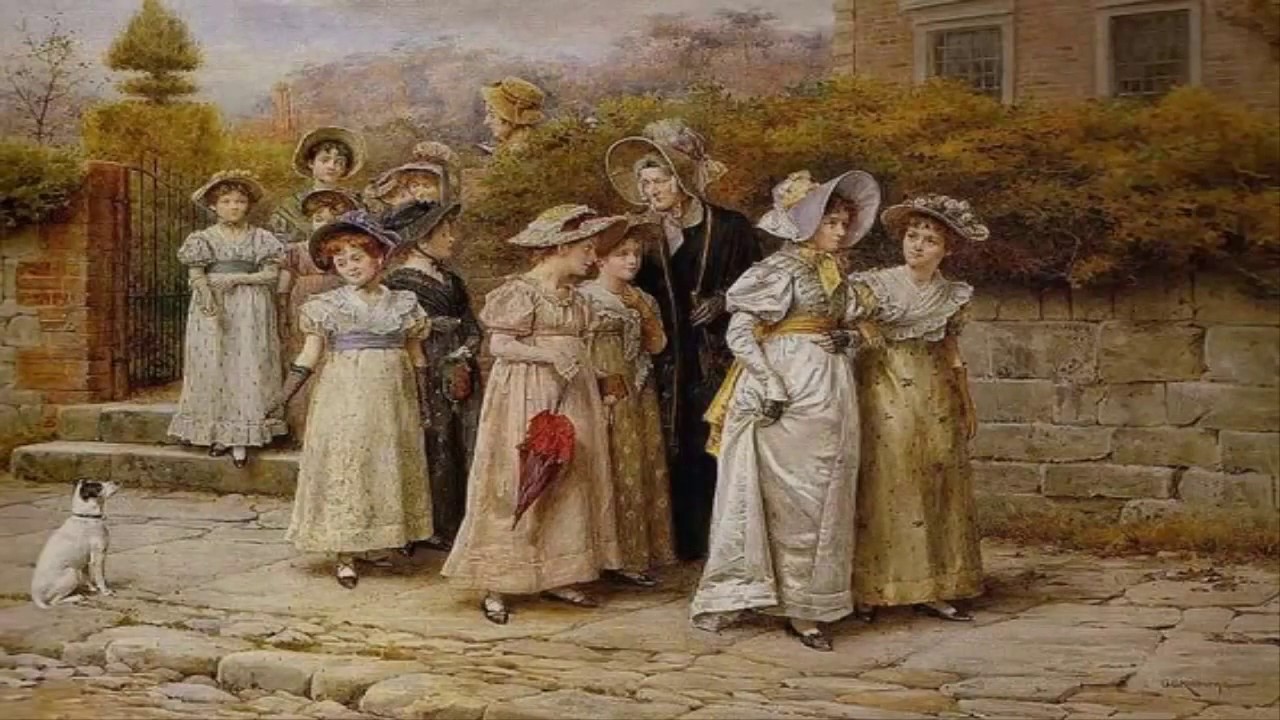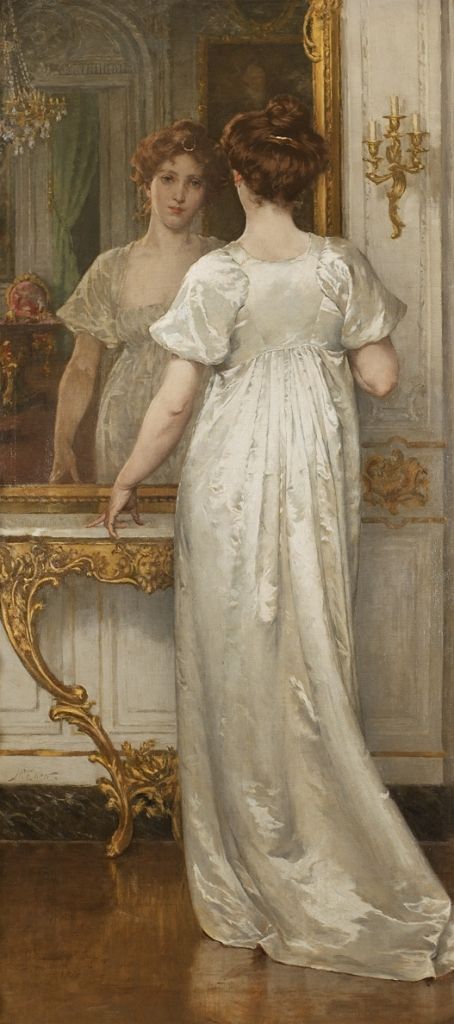
Tea with Minerva Avery

The Duchess of Haverford’s manner to her guest was, perhaps, a little warmer than usual. While she would never embarrass Lady Avery nor dishonour her husband by apologising for the duke’s behaviour, she was very aware that the Haverfords were indebted to the lady.

Minerva Avery was every inch a lady, whatever her origins, and whatever His Grace had implied when he took delivery of the wonderful new invalid chair that would give the insensitive, autocratic, lecherous old snake freedom from being confined to one room unless carried by a pair of robust footmen.

And to think that this dainty young woman had made the chair with her own delicate hands!

“Lord Avery must be very proud of you, my dear Lady Avery,” she said, as she poured the tea for which her guest had admitted a thirst.

Minerva coloured prettily. “Lord Avery is biased, Your Grace. He thinks anything I wish to do is perfectly acceptable. I know my work is not considered at all the thing in higher circles. I should be satisfied to supervise my servants, socialise with my peers, and shop.”

A ridiculous view in the duchess’s opinion. As if ladies did not work! And the greater the estate and the social position, the harder their role.

“People can be very foolish. I daresay your husband—Candle, is it not?—suggests that you ignore them.”

“Randal, Your Grace. But he has been called Candle since he was at school.”

Yes. The boy was long, thin, and pale, with a head of fiery hair. But a nice lad, and doing very well by his viscountcy and the trading enterprise he inherited from his mother’s family. His choice of bride had set the dovecotes fluttering. A carriage-maker’s daughter, and one with her own enterprise creating invalid chairs? The doors of Society were largely closed to the young couple.

The duchess smiled. Young Minerva had helped the Haverfords with the fruit of her labours. Now it was time to return the favour. Those closed doors would open soon enough when it was clear the Averys were her protégés.

“Tell me, my dear, do you have an engagement for this Friday? I am giving a ball, and I would be delighted if you and your Candle could attend.”

Min is the heroine of Candle’s Christmas Chair, which I’m currently giving away in a promotion. A number of my friends are also part of this week-long giveaway, including fellow Bluestocking Belles Caroline Warfield and Elizabeth Ellen Carter. Enter to win 45 Regency Romances, and to be in the draw for a Kindle Fire.

Here’s the link to enter: https://www.booksweeps.com/enter-win-45-regency-romances-feb-17/


Acts of caring in WIP Wednesday

In a lot of books, one main protagonist cares for the other during an illness or after an injury. It is a way for a hero or heroine to show that they care, an opportunity for each of them to see the kinder, gentler side of the other. Particularly in the mannered world of the Regency, this helps move the relationship along.

This week, I’m inviting you to post a passage about one of your characters caring for the other. Interpret that how you will.

My piece comes from A Raging Madness, where they pretty much take it in turns to be injured or ill, and to look after one another.

Light was filtering through the curtains when Ella woke. Her head felt stuffed with rags, and her thoughts skittered away from any kind of coherence. She had dreamed her nightmare, the old nightmare of the moment her girlhood ended. But this time, her assailant was not Gervase, and Alex was in the crowd, and did not turn away in disgust and horror.

She pulled herself up to sitting, and leant back against the pillows to give her head time to stop spinning. Out of the corner of her eye, she caught a glimpse of something that should not be in her bed chamber.

Was that Alex? Sleeping in her chair, with his head back and his mouth open? She shook her head and looked again. He had not faded like her other dreams, and besides, she had never dreamed him here, in her bed chamber in the Redepenning townhouse. And in a chair at that, not tucked beside her in the large comfortable bed.

She had a screaming thirst on her, as if she had been drugged again… And with the thought came disjointed memories from the previous night. Nothing in sequence or in detail, but enough that she whimpered, and Alex was awake in an instant.

“Ella, I have you safe. We will sort it out.”

Those words were among the memories; repeated over and over again in Alex’s dearly beloved voice. Something was very wrong that he felt the need for such reassurance.

She tried to speak, but her mouth was too dry and it came out as a croak. Alex filled a glass from the jug on the side table and brought it to her.

“What happened?” she asked, when she could speak. “What is wrong, Alex?”

“What do you remember?” He pulled the chair closer to the bed and sat beside her, possessing himself of one of her hands, and she clung to him as she tried to sort her fragments into a coherent picture.

Tea with David

The servant showed David Wakefield onto the terrace, where Eleanor Haverford waited.

The visit to the child in the nursery upstairs had calmed him, somewhat; his anger was banked though the duchess had no doubt it still burned under the controlled exterior.

“How did you find Antonia?” she asked, indicating that he should take the chair beside her.

“Worried about her mother.” He jerked as if he would leap to his feet again, but controlled the impulse. “What are you planning to do with her? Keep her here?”

Eleanor had already decided that the little girl would be better with her aunt, and would persuade David to that point of view if he did not agree, but he needed to hear that she acknowledged his claim. “It is not up to me, David. I am just a family friend. You and her aunt must make this decision, since her mother is… unavailable.”

He relaxed, fractionally, but at the last word he let out a huff of air that sounded almost like a sob. “Unavailable,” he repeated, bitterly.

“You intend to go after her, I assume.” Eleanor made it a statement, not a question. He had declared his intention an hour ago, when he had burst in unannounced, demanding to see his lover’s daughter and swearing vengeance on the Marquis of Aldridge.

“Yes. Yes, of course. I already have men on the docks trying to find the ship’s destination. Sailors talk. If the captain told his men, someone will know.”

“What can we do to help?” Eleanor handed David a cup of tea and began piling a plate with small savouries. He would need food and drink, and was unlikely to stop again today to find them.

“Your family has helped quite enough,” David snapped, then lowered his hazel eyes, so like those of her two sons, his half-brothers. “I beg your pardon, Your Grace. That was uncalled for.”

“You are upset, David. I am sure that Aldridge did not intend–”

David’s manners were usually impeccable, and it was a measure of his distress that he interrupted her. “Of course he didn’t. He would never deliberately put Gren in danger. Or Prue either, I suppose. I don’t blame him for choosing the wrong ship for your younger son’s journey. I blame him for suggesting that Prue left of her own accord.”

That raised Eleanor’s eyebrows. “Of her own… he thought it was an elopement?”

“Yes. He had the nerve to suggest Gren has legitimacy and wealth and so…”

“For an intelligent boy, my son Aldridge can occasionally be extremely stupid. No wonder you are cross with him.”

That, as she had hoped, fetched an amused quirk of the lips, though the smile did not reach his worried eyes.

David finished his tea, and stood to leave. “I’ll go after Prue, Your Grace, and Gren, too. Will you send Antonia to her aunt? She is at home there, and the wait will be easier for her. I’ll send word as soon as I can; as soon as I know whether they are…”

He trailed off, and the words he did not say hung between them. Dead or alive. Murdered or merely kidnapped.

In the months to come, Eleanor clung to the promise her husband’s base-born son had made her. No news at all was surely better than certain news of the deaths of her younger son and the young woman she had come to love almost as a daughter. But where were they, and had David found them?

This scene doesn’t appear in Concealed in Shadow, but it clearly happened. Here’s where it fits. After the end of Revealed in Mist, David arrives in London and finds that Prue has been missing for over a week and that the Marquis of Aldridge, heir to the Duke of Haverford, was the last person to see her. He questions Aldridge, to find that Prue had gone down to the wharves to farewell Lord Jonathan Grenford, Aldridge’s younger brother. Aldridge has his own jaundiced view of the couple’s disappearance. David ends up punching the man and storming off. It was inevitable that, after initiating the investigation into the ship on which Gren and Prue left, he’d head to Haverford House where Prue had left her daughter visiting for the day with the Duchess of Haverford.

I’m currently researching and writing character outlines and heroes’ journeys for Concealed in Shadow.

What is Waitangi Day?

Today, Aotearoa (better known in the rest of the world as New Zealand) acknowledges that this nation began with a treaty. A treaty that was misunderstood by both sides in the beginning, and thereafter frequently broken or ignored. But a treaty that, nonetheless, we have returned to again and again, to work out what our country means. It is not just an historic document, it is part of Aotearoa’s unwritten constitution; by law, government legislation and actions need to be measured against the principles of the Treaty.

On 6th February 1840, the Treaty of Waitangi was signed. The video below, first in a series of four, dramatises the lead up and the occasion.

The detainees of Verdun

He says: “Madame, permittez me, to pay my profound esteem to your engaging person! & to seal on your divine Lips my everlasting attachment!!!” A cynical and sensual grin indicates the character of his advances. She smiles with coy complacency, saying, “Monsieur, you are truly a well-bred Gentleman! – & tho’ you make me blush, yet, you Kiss so delicately, that I cannot refuse you; tho’ I was sure you would Deceive me again!!!” Above their heads are oval bust portraits of Napoleon (left) and George III (right), the two men extending their arms as if to shake hands; the King scowls, Napoleon regards him with brooding suspicion. The frames are bordered by olive branches and palm-branches. 1 January 1803

Even before the Peace of Amiens was officially signed in March 1802, people from England came flooding back into France. The country had been closed to them for ten years. Many had property in France they wanted to check on, others came as tourists or on business or to visit family.

Most came and went during the eighteen months of the peace. Some were trapped when, on 23 May 1803, Napoleon signed an edict to detain every male Briton between the ages of 16 and 60. The orders were carried out quickly and efficiently. At first, women and children were allowed to go, but soon every Briton, of whatever age, male and female (even British spouses of French citizens), found themselves prisoners of France for the next 11 years.

At first, they could remain where they were, but soon Napoleon ordered them to various cities, notably Verdun.

It was a sizeable town a long way from the sea, and the influx of (usually) wealthy English was welcomed. John Goldsworth Alger, in his 1904 account of the detentions, says a French newspaper compared the detainees to sheep enclosed in a fold to manure the soil.

The English were able to hire lodgings (at extortionate prices) and live much as normal, though if they could not afford living costs, or if they misbehaved in any way, they were liable to be imprisoned.

Verdun was a walled town, and within its walls the detainees lived much as they would have lived in London, though paying double the normal price for food and everything else.

Some behaved badly. One was sent to prison for seducing a townsman’s wife. Another struck a gendarme who reprimanded him for behaving indecently with his French mistress at the theatre. Still more gambled, insulted the French, and fought with the townspeople and one another.

Others occupied themselves with hobbies or work, or social activities, or raising subscriptions with which the wealthier detainees sought to help the poor.

General Virion was in charge of the detainees and the prisoners of war who soon joined them. The detainees made many complaints about his extortionate practices. One man, a regular social contact of the General, reported he had leave to go out into the country on a day that all leave was recalled. He was heading back into the town when two gendarmes stopped him and told him the order didn’t apply to him. Later, when he did return, he was arrested and faced with a choice: pay a huge fine or be imprisoned.

The general was summoned to Paris in 1810 to explain himself to a commission appointed by Napoleon, but shot himself before the investigation could begin. His successor was likewise asked to explain himself, but blamed all extortion on a subordinate. This man also shot himself, leaving a note that said he was innocent, but — having been blamed by the boss — he could not face dishonour.

I’m finding some wonderful stories and hints of stories about people caught up in the detentions; not just in Verdun but in other towns. As I continue to research for Concealed in Shadow, I’ll share some here.


Festivals on WIP Wednesday


Like its predecessor in the Golden Redepenning Series, part of  A Raging Madness takes place against a backdrop of every day village life. In early 19th Century England, the changes of the season and the festivals of the church gave the year a rhythm and a pattern, celebrated with feasts and fasts, particular traditions and practices, and foods specific to the time of year and often the place.

This week’s excerpt is about Easter in the Lincolnshire Wolds, where pride of place is given to Tansy Pudding. Do you have special celebrations in your books? Weddings? Birthdays? Feasts? Or perhaps a superstition or special practice? Share it with us in the comments.

Amy agreed that she was looking forward to the afternoon’s egg-rolling. “Grandmama says I shall soon be too old for such things, but I plan to enjoy it while I may.” She screwed up her nose at her Grandmother Cunningham’s opinion.

“Why, Miss Cunningham, then you shall be old enough for other traditions. Do you know, in Lincolnshire they say if you wait in the church porch on St Mark’s Eve, at midnight you will be passed by those who will be married during the year? I daresay half the maidens of the parish shall be there next Sunday evening, all trying to be silent.”

“In Gloucestershire, we try that kind of fortune-telling on All Hallow’s Eve,” Susan told him. “I can remember bobbing for apples, and then putting the apple I caught under my pillow so that I would dream of my future husband.”

“And did you, Mama?” Amy asked.

Susan demurred and turned the subject to putting bride cake under the pillow for the sake of the dream. Ella told the story she had heard from her mother about the Dumb Cake made on St Mark’s Eve in February. Two friends, working in silence, would mix and bake the cake, then break it in half, eat it, and walk backwards up the stairs to bed. If they had managed the whole process in silence, they would see a vision of their future husband below them on the stairs.

Mr Morris had yet another story, and even Mr Smithers joined in with a piece of folklore from Cheshire.

The dinner proceeded so merrily that the triumphal entry of the Tansy Pudding caught Ella by surprise. It looked magnificent in its deep pie dish, with its rich layer of golden orange preserve, and Mrs Broadley stood by beaming as Alex served Amy, who sat between him and Ella, and passed the plate on for Mr Morris to serve Susan.

As the men then served themselves, a maid put a much smaller dish—a little blue bowl—in front of Ella. She picked up a mouthful on her spoon and had it almost to her lips when Mrs Broadley gave a wordless shout and darted forward to dash it from Ella’s hands.

Conversation, movement, everything stopped. Mrs Broadley broke the silence. “I am so sorry, my lady. I don’t know how it happened, but you were meant to get the red bowl. Betty, you fool. I told you the bowl on the dresser. I used the blue dishes for the leftover mix from the main pudding, my lady. Oh I am that upset. You silly girl, Betty.”

The maid protested that she’d bought the only dish on the dresser, everything else for the Viscount’s table being lined up on the servery, and Ella assured Mrs Broadley that no harm had been done, thanks to the housekeeper’s quick action.

It soured the end of the dinner, though Alex sent Mrs Broadley off to the kitchen to investigate. Ella and Alex both tried to return the conversation to folklore, passing the incident off as a foolish mixup, but when griping pains hit first Amy, then Mr Morris, then all of those who had eaten the pudding, the mistake took on a much more sinister cast.

Tea with Susan


Unrelieved black suits few women, but Susan Cunningham is one of those whose beauty it enhances, her guinea-gold hair glowing under the black lace that covered it, her porcelain skin looking whiter by contrast.

“I sent my condolences when I heard, Susan, but may I say in person how sorry I was to hear that your husband’s ship was lost?” the Duchess of Haverford says, as she takes the younger woman’s hand and kisses her cheek.

“I still do not believe it,” Susan answers, taking her seat once the duchess does. “I keep expecting to get another letter from him, or have some false friend commiserate about his misbehaviour in some foreign port or see him walk in the door, upset the children, and waltz back out to find someone to get drunk with.”

She flushes. “Oh dear. I have no idea why I just said that, Aunt Eleanor.”

“Because you know that I knew the Captain,” the duchess says dryly, “and because you are tired of pretending to agree with all those false comforters that want only to sing his virtues.”

“His mother has him fitted for a halo,” Susan agrees, “but then, she never could see a fault in him.”

“Which is undoubtedly why he had so many.” Her Grace’s tone is drier still.

“He had virtues too, Aunt Eleanor. And I find I miss him far more than I expected. It is odd. He was seldom home, and that was just how I like it after we grew so far apart. But now that he will never come home again, I miss him.”


Today’s visitor appears in Farewell to Kindness and A Raging Madness as a support character. She is Rede’s cousin and Alex’s sister. She will be the heroine of The Realm of Silence, which is the next book in the Golden Redepennings series. She was not looking for a second husband. But I have my eye on her.

I write refreshment fiction

I have a few friends who say they’re backing away from writing, reading, or posting about what they call escapist fiction, because they feel world events are such that they have no right to be indulging in, or promoting, anything so frivolous.

They have a right to their view and their feelings. For my part, I don’t feel that way.

Why is it bad to escape?

We know, from the tone and context in which the term is used, that escapist fiction is a bad thing. But we don’t know why. Fiction, by its nature, permits the reader to leave their everyday world and enter a different reality, a world where events have some kind of structure and resolution. The qualifier ‘escapist’ at least implies that the fictional world will be different from the real world in that the resolution will be pleasing to the reader.

Escape has social, emotional, and health benefits, which is why we take weekends and holidays; why we go for a walk in a park or along a beach. If we need a break, we tend to do something that we find refreshing. Escape helps us return fit and ready for whatever life throws at us.

I have spent much of my life with ill health, and have at the same time been through the usual curve balls life throws at us (children with disabilities, financial downturns, betrayals by friends and family). Yes, fiction has always been my escape—an opportunity for a micro holiday someplace where whatever was happening wasn’t real, and I wasn’t the one who had to fix it.

No. Escape in itself is not a bad thing.

Is escapist fiction fundamentally bad fiction?

I was one of those young people told to stop reading rubbish and spend my time with worthwhile books, by which my mentors meant the classics or the earnest works of the current literary mavens. Leaving aside the fact that many of the classics were regarded as escapist in their day, what exactly do the critics consider escapist?

The following table is adapted from a university source.

Escapist fiction Literary fiction
Designed to entertain Designed to make the reader think
Simplistic, predictable, and often linear plots More complicated plots, often non-linear
Clear unambiguous endings, usually happy Ambiguous or unhappy endings
Simplistic, predicatable, flat characters Characters are more rounded, and neither wholly good nor wholly bad
Moral to the story is obvious and often cliched Moral may be non-existent
Plot driven, that is, the emphasis is on action rather than character Character driven, that is, the emphasis is on character development rather than action
Plot is the primary focus, with characters merely players in the action Plot is merely an aid to showing character

It’s a continuum, with books defined by these two columns at opposite ends. It should be easy to see that much genre fiction fits more to the literary end of the scale than the escapist. Some of the great works of the 20th Century were speculative fiction works like The Word for World is Forest and The Handmaid’s Tale. No open-minded person reading Grace Burrowes’ Captive Hearts series would deny that it ticks most of the boxes on the right side.

And the fact that a happy ending is regarded as more escapist than an unhappy one lights all kinds of fires for me, as I’ve discussed before.

But leaving that all aside, what in any of that list makes one book less escapist than another? I just don’t buy the basic idea that a book that shows ‘realism’ (by which the critics appear to mean one that mirrors the worst of the world) is somehow less worthy than one offering an adventure or a romance.

Is literary fiction better for us?

But, we are told, we should be reading fiction that makes us think, that improves us, that deals with real life issues.

You can keep your ‘shoulds’, but even if I admitted the point (which I don’t), the great writers of genre fiction show us that escape doesn’t mean denying or avoiding real life issues. Rather, it means packaging them in a way that helps readers to understand them. In fiction, we walk a mile in another person’s shoes, see the world through their eyes, feel what they feel, and come back into our own lives changed by the experience.

Fiction at its best provides both an escape and a way to understand, and perhaps improve, our reality.

Of all the genres, romance attracts the most censure. I’ve written about why I think this might be, and I think it a shame. Jane Austen’s books are widely recognised as literary (though not in her day), yet her modern successors, who also write about human character as developed in the crucible of a developing intimate relationship, are derided.

I don’t write escapist fiction, but I do write refreshment fiction

Looking down the list above, I’d say my books ignore the two extremes, which is not surprising. I’ve been a fence-sitter all my life. My stories are designed to both entertain and make people think. They generally have complicated plots and happy endings (though not necessarily happy for everyone). The plot is full of action, but exists to show the characters of my protagonists, and the development of those characters is the key point of the story. The characters are neither wholly good nor wholly bad, and my stories do have a moral.

So not escapist according to the definition above, nor entirely literary. But it is what I do and what I will continue to do. And it is my devout hope that readers will escape into my worlds, take a holiday from their real life, and returned refreshed and maybe armed with some strategies and understandings that will serve them well in the future.

Who wears the pants?

I went on a search to find out when fall fastenings on men’s trousers gave way to fly fastenings and fell down a lovely research rabbit hole. How did it come about that men wore trousers and women didn’t?

That turned out to be a Euro-centric question, but since my interest is the Regency period, where breeches were giving way to trousers, let it stand.

Riding horses on a cold winter’s day

Some researchers attach the whole dichotomy to horse riding, claiming that trousers provide better protection for vulnerable portions of the anatomy during the riding process. They suggest trouser wearing began with the hordes of the Eurasian steppes, who successfully invaded more southern, robe-wearing, civilisations, until their victims adopted trousers in order to ride more effectively and win.

Seems to me that the freedom of movement trousers give, as any Western woman can attest, may have factored into that. A fighter in a voluminous robe might be at a disadvantage when matched by one with both legs separately covered.

Other think that cold was a huge factor, and point to the fact that men and women in the far north both wore trousers and tunics of fur, and Pacific Islanders to this day wrap themselves in a length of cloth, with the way the garment is tied often the only difference between the clothing of men and women.

Probably both cold and ease of movement factor in to why, in colder climates, trousers have always been common working wear for both men and women, often under a robe or long tunic.

Once a knight is enough

But as I noted above, the strong line between trousers for women and dresses for men was a European thing, and the reason for that might go back to the knights.

The Celts and other tribes of Northern Europe wore leggings and tunics. Once the Romans, with their prejudice against such barbarous clothing, retreated to Rome and then to Constantinople, leggings and tunics became the favoured wear for everyone.

At that time, trousers were literally a pair — two tubes, usually made from woollen material. They were worn over an undergarment with a belt, and the tubes were attached to the belt. Men wore them, and women too when it was cold or when they were travelling.

Then came armour, first chain mail and then plate. If you’re strapping hunks of metal on and riding around in them for hours, you don’t want hunks of cloth creasing underneath it, so clothing for wealthy and powerful men adapted. Close-fitting one-piece lower garments answered the need for a measure of comfort when fully armoured. And, since one hardly wishes to hide the evidence of one’s social status under a long robe, tunics for the knightly class crept up to waist height and became doublets.

The parting of the ways

From that point on, the clothes of upper class men and women parted ways for centuries. The men’s hose and the breeches they developed to wear over them evolved into some fairly wonderful forms, and women went on wearing gowns.

It wasn’t until the 1970s that women could wear trousers to a business meeting or a classy social event without attracting comment and censure.

Culottes, sans-culottes, and men’s fashion

Breeches, by then reasonably form fitting and fastened just below the knee, continued as the wear for gentlemen until the French Revolution. The French called them culottes, and the sans-culottes, the men in working men’s trousers (called pantaloons in England) rather than breeches, became the heroes of the revolution.

In England, the fashionable adopted French pantaloons, if not French politics, as the 18th Century became the 19th. By the Regency, breeches were consigned to soft leather breeches for riding and silk for evening wear. And, of course, the unfashionable, the conservative, and the elderly.

Pantaloons slowly took over, or trousers as they came to be called. That term was first used in the military, and probably became common usage as the soldiers and sailors of England came home from the Napoleonic wars.

By the 1820s, the term was common, but ‘pants’ is an Americanism from the 1830s.

Keep it buttoned, darling

So there you have it. A brief history of men’s lower wear. Skipping shorts and knickerbockers, not to mention overalls and jeans. But then, why wouldn’t you?

Oh, and fly buttoning versus fall buttoning? The single row of buttons up the front first appeared some time in the 1830s and became common around the middle of the century, though it co-existed with fall buttoning for quite some time. (The fall became wider, requiring a row of at least four buttons along the waist line.) In case you wondered, Zippers didn’t get into our pants until the 1930s.

Beginnings in WIP Wednesday

I typed THE END twice yesterday: once on the novel A Raging Madness and once on the short story for my February newsletter. I hope today to finish the slightly longer short story I’m writing as a party prize, but meanwhile, I’ve edited the short story and written an entirely new beginning.

Novels show a journey: the beginning and the end might mirror one another, but they show the distance travelled. In short stories, we see a mere glimpse of the journey, and the focus is on one transformative moment for the main character. Since I mostly write romance, the focus is usually on making the relationship, and therefore the love, believable. So my beginning needs to kick us into the story quickly, and my end needs to tie the last knot neatly, preferably linking back to the beginning.

And the original beginning of ‘A souvenir from Scotland‘ just didn’t work.

This week, I’m inviting you to share a few paragraphs of beginning from your work in progress (novel, novella, or short story). The beginning of the work, if you will, or the beginning of a chapter if you prefer.

Here’s mine. (If you’d like to know what happens next, the full story will be a gift in my February newsletter):

York, 23 December 1815

Her brother was home. Megan Walsh almost rushed straight out into the evening air when her husband told her he had passed Ned’s place and seen lights on the floor that Ned rented, but Thomas persuaded her to wait for morning, and she managed it, just, though she read the cryptic note Ned had sent another twenty times before at last it was a sufficiently civilised hour to go calling.

Yes, the landlady agreed, Mr Broderick was home, and Mrs Walsh would never guess…

But Megan hadn’t waited, hurrying up the stairs to knock on Ned’s door. He opened it himself, and she threw herself on him.

“Ned! I was so worried when you were a fortnight overdue and then I got your note. What a note, Ned. ‘On my way home. I have a surprise for you; something I found in Scotland. You told me I needed one, and you were right.’ I have racked my brains, Ned, and I cannot think what you mean.”

Ned took her arm, and led her through into the sitting room, and Thomas trailed behind. But they both stopped short when they found it was already occupied.

A small dark-haired woman, neatly dressed in a slightly old-fashioned gown, sat sipping tea by the fire, and she stood when they entered, looking wary.

“Ariadne, may I present my dear sister and her husband, Mr and Mrs Thomas Walsh? Megan, Thomas, please meet Mrs Broderick. Megan, I took your advice and got myself a wife.”

Ned looked so proud, and the woman so nervous, that Megan swallowed the sharply worded comment that came first to her tongue and instead just said, “How?”